

Roche's Xofluza Under FDA Review for Use in Children ≥1 Year and for Post-Exposure Prophylaxis
Mar 28, 2020 14:45
CST Updated
14:45

Roche
Oncology Drug Research, Development, and Manufacturing

March 28, 2020 /BioValleyBIOON/ -- Roche recently announced that the U.S. Food and Drug Administration (FDA) has accepted a New Drug Application (NDA) and two Supplemental New Drug Applications (sNDAs) for the influenza drug Xofluza (baloxavir marboxil). Specifically, the FDA accepted an NDA for a new formulation of Xofluza: single-dose granules (2 mg/mL) for oral suspension, which will provide a more convenient option for children and individuals with swallowing difficulties. Furthermore, this application seeks approval for Xofluza to treat acute uncomplicated influenza in healthy children aged 1 year to under 12 years whose symptoms have persisted for no more than 48 hours. The FDA also accepted two sNDAs seeking approval for Xofluza, including both the oral suspension and the currently available tablets, for post-exposure prophylaxis of influenza in individuals aged 1 year and older.FDAA review decision is expected to be made by November 23, 2020.
Dr. Levi Garraway, Chief Medical Officer and Global Head of Product Development at Roche, stated, “For children, there is an urgent need for additional treatment options to manage influenza in different ways, as this year has been one of the most severe flu seasons in the past decade. Today’s milestone brings us closer to providing a single-dose Xofluza regimen for pediatric patients with influenza. We also look forward to working with”FDAcooperation to use Xofluza as post-exposure prophylaxis for influenza.”
Xofluza Oral Suspension: The granules must be dissolved in 20 mL of sterile water to form an oral suspension for administration. If approved, Xofluza Oral Suspension will be administered as a single dose and is indicated for children aged 1 year to under 12 years, as well as for individuals with difficulty swallowing. Currently, Xofluza tablets have been approved in many countries worldwide for the treatment of influenza A and B.

These NDA and sNDA submissions are based on the positive results from two Phase III studies (miniSTONE-2 and BLOCKSTONE). The former study confirmed the efficacy and safety of a single-dose oral suspension of Xofluza in healthy pediatric patients aged 1 to under 12 years with influenza. The latter study confirmed the efficacy and safety of single-dose prophylactic treatment with Xofluza for post-exposure prevention of influenza in children aged 1 year and older and adults.
——miniSTONE-2(NCT03629184):This was a multicenter, randomized, double-blind Phase III study conducted in healthy children aged 1 to under 12 years with confirmed influenza infection and exhibiting influenza symptoms (temperature ≥38°C and one or more respiratory symptoms), to evaluate the safety, pharmacokinetics, and efficacy of a single dose of Xofluza compared with Tamiflu (oseltamivir). Study participants were enrolled in parallel into two cohorts: patients aged 5 to under 12 years, and patients aged 1 to under 5 years. In each cohort, participants were randomly assigned to receive either a single dose of Xofluza (2 mg/kg for body weight <20 kg; 40 mg for body weight ≥20 kg) or oseltamivir administered twice daily for 5 days (dosed by body weight). The primary endpoint was the proportion of patients experiencing adverse events or serious adverse events through Day 29. Secondary endpoints included pharmacokinetics, time to alleviation of influenza signs and symptoms, and duration of symptoms, including fever.
The results showed that the study met its primary endpoint, and the safety profile of Xofluza was consistent with its known safety characteristics. Specifically, from the start of the study through Day 29, the proportion of patients experiencing at least one adverse event or serious adverse event was 46.1% in the Xofluza treatment group and 53.4% in the oseltamivir group. The study also demonstrated that the efficacy of Xofluza was comparable to that of oseltamivir. Furthermore, consistent with data from adults and adolescents, Xofluza reduced the duration of influenza virus shedding by more than 2 days compared with oseltamivir (median duration of viral shedding: 24.2 hours vs. 75.8 hours), and showed comparability in key secondary endpoints, including time to alleviation of influenza symptoms and signs (median: 138.1 hours vs. 150.0 hours).
——BLOCKSTONE Study:This is a randomized, placebo-controlled, post-exposure prophylaxis study conducted by Shionogi during the 2018–2019 influenza season in Japan, enrolling healthy subjects (adults and children) whose family members tested positive for influenza via rapid testing.DiagnosisTesting confirmed influenza infection (i.e., the “index patient”). These subjects were randomly assigned to receive a single dose of Xofluza (dose based on body weight) or placebo as a measure to prevent the onset of influenza. The primary endpoint was to evaluate the proportion of subjects who tested positive for influenza virus, had fever, and experienced one or more respiratory symptoms during the observation period from Day 1 to Day 10.
The results demonstrated that a single oral dose of Xofluza had a significant prophylactic effect against influenza infection in healthy subjects with household members diagnosed with influenza, reducing the risk of developing influenza by 86%. Specifically, compared with the placebo group, the proportion of subjects who developed influenza infection in the Xofluza group was significantly reduced (proportion of subjects developing influenza virus infection, fever, and other influenza symptoms during the 10-day observation period: 1.9% vs. 13.6%, p < 0.0001). Regardless of the influenza A subtype, the therapeutic benefit of Xofluza remained statistically significant compared with placebo (H1N1 subtype: 1.1% vs. 10.6%, p = 0.0023; H3 subtype: 2.8% vs. 17.5%, p < 0.0001). Furthermore, this effect was observed in household contacts at higher risk for influenza-related complications (2.2% vs. 15.4%, p = 0.0435) and in children under 12 years of age (4.2% vs. 15.5%, p = 0.0339), populations who are more susceptible to influenza. The study also indicated that even when applying broader influenza criteria (proportion of participants with influenza, fever, or one or more respiratory symptoms), Xofluza still significantly reduced the risk of influenza among household members by 76% compared with placebo (3% vs. 22.4%, p < 0.0001). In the study, the safety profile of Xofluza was comparable to that of placebo, with adverse event incidence rates of 22.2% in the Xofluza group and 20.5% in the placebo group. No serious adverse events were reported in the Xofluza group.
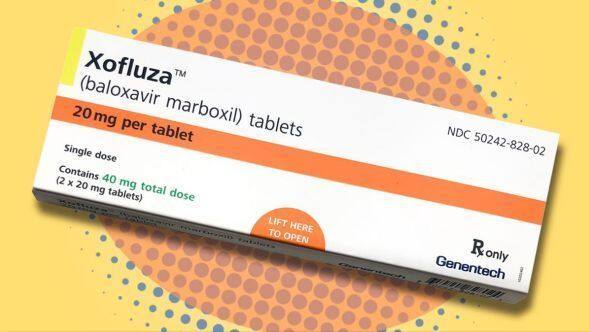
Influenza is one of the most common yet severe infectious diseases, posing a significant threat to public health. Globally, influenza causes 3–5 million cases of severe illness annually, results in millions of hospitalizations, and leads to up to 650,000 deaths.
Xofluza is a first-in-class, single-dose oral medication with a novel mechanism of action against influenza. As an endonuclease inhibitor, it is designed to inhibit the cap-dependent endonuclease in the influenza virus, an enzyme essential for viral replication. Xofluza is designed to combat both influenza A and B viruses, including oseltamivir (Tamiflu)-resistant strains andAvian InfluenzaStrains (H7N9, H5N1).
Tamiflu, an anti-influenza drug developed by Gilead and globally commercialized by Roche, is currently a widely used oral medication for influenza. It typically requires multiple days of continuous administration, with twice-daily dosing, and usually takes 72 hours to become effective. In contrast, Xofluza can eliminate the influenza virus within 24 hours (although some symptoms may take longer to resolve), and requires only a single oral dose, which is expected to significantly improve patient adherence.
Currently, Xofluza has been approved in multiple countries for the treatment of influenza A and B. The approved indications include: (1) treatment of acute, uncomplicated influenza in healthy individuals aged 12 years and older whose symptoms have been present for no more than 48 hours; (2) use in populations at high risk for influenza-related complications, specifically those withAsthma, patients with chronic lung disease, heart disease, or morbid obesity, or the elderly population aged ≥65 years.
Xofluza is the first and only single-dose oral medication approved for the treatment of influenza, as well as the first novel anti-influenza drug with a new mechanism of action in nearly 20 years. Discovered by the Japanese pharmaceutical company Shionogi, Xofluza is being jointly developed globally by Roche and Shionogi. Under the agreement, Roche holds global rights to the drug, excluding Japan and Taiwan, China. Robust clinical evidence demonstrates that Xofluza offers therapeutic benefits across multiple populations (healthy individuals with influenza, those at high risk for influenza complications, and children) and in various treatment settings (symptomatic influenza and post-exposure prophylaxis). Currently, Xofluza is being evaluated in a Phase III clinical development program, which includes studies in infants under one year of age (NCT03653364), hospitalized patients with severe influenza (NCT03684044), and an assessment of its potential to reduce influenza transmission from infected individuals to healthy contacts (NCT0396912). (Bioon.com)