

T-Cell Lymphoma New Drug! Eisai Submits Marketing Authorization Application in Japan for Recombinant Immunotoxin Ontak (Denileukin Diftitox)
Mar 28, 2020 21:46
CST Updated
21:46
Eisai
Pharmaceutical Product R&D and Manufacturer
March 28, 2020 /Bio ValleyBIOON/ -- Eisai recently announced that it has submitted a marketing authorization application (MAA) in Japan for the anticancer agent denileukin diftitox (recombinant; development code: E7777) for the treatment of relapsed or refractory cutaneous T-cell lymphoma (CTCL) and peripheral T-cell lymphoma (PTCL).
This application is based on data from a multicenter, open-label, single-arm Phase II clinical study (Study 205). Conducted in Japan, the study evaluated the efficacy and safety of denileukin diftitox in patients with relapsed or refractory cutaneous T-cell lymphoma (CTCL) or peripheral T-cell lymphoma (PTCL). The results demonstrated that the study met its primary endpoint and exceeded the prespecified threshold with statistical significance: the overall objective response rate (ORR) was 36.1% (95% CI: 20.8–53.8) for patients with CTCL and PTCL. The ORR was 31.6% (95% CI: 12.6–56.6) in the CTCL cohort (n=19) and 41.2% (95% CI: 18.4–67.1) in the PTCL cohort (n=17).
In this study, the five most commonly observedAdverse ReactionsThey were: elevated aspartate aminotransferase (AST) (89.2%), elevated alanine aminotransferase (ALT) (86.5%), hypoalbuminemia (70.3%), lymphopenia (70.3%), and fever (51.4%).
Mechanism of Action of Denileukin Diftitox (Ontak)

Denileukin diftitox (recombinant) is a fusion protein of the interleukin-2 (IL-2) receptor-binding site and diphtheria toxin, which specifically binds to IL-2 receptors on the surface of tumor lymphocytes. The anti-TumorIts mechanism of action depends on the intracellular delivery of diphtheria toxin, which inhibits protein synthesis and induces cell death.
Eisai retains the exclusive rights to develop and market denileukin diftitox in Japan and Asia. In other regions, Dr. Reddy's Laboratories Ltd. holds the development and marketing rights.
In the United States, denileukin diftitox received accelerated approval in February 1999 under the brand name Ontak for the treatment of persistent or recurrent cutaneous T-cell lymphoma (CTCL, an orphan drug indication). This accelerated approval was based on data regarding response rates and duration of response. In March 2006, the FDA revised the product labeling for Ontak to include new warnings about ocular adverse events, which were derived from post-marketing studies and spontaneous reports. In October 2008,FDAConvert Ontak from accelerated approval to regular approval.
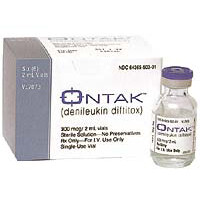
The efficacy of Ontak in the treatment of CTCL was confirmed in a placebo-controlled, multinational, dose-ranging study. A total of 144 patients were enrolled in this study.TumorPatients with stage Ia–III cutaneous T-cell lymphoma (CTCL) whose samples tested positive for CD25 expression and who had previously received ≤3 therapies. In the study, patients were randomized to receive intravenous infusions of Ontak at doses of 18 mcg/kg or 9 mcg/kg, or placebo (normal saline), administered on days 1–5 of each cycle (each cycle lasting 21 days, for up to 8 cycles).
The results showed that the overall response rates (ORR) for the 18 mcg/kg group, 9 mcg/kg group, and placebo group were 46%, 37%, and 16%, respectively, with median durations of response (DOR) of 220, 277, and 81 days, respectively. Furthermore, progression-free survival (PFS) was significantly improved in both Ontak dose groups: compared with the placebo group, the risk of disease progression or death was reduced by 73% (HR=0.27, p=0.0002) in the 18 mcg/kg group and by 58% (HR=0.42, p=0.02) in the 9 mcg/kg group. (Bioon.com)
Original source: Eisai, United StatesFDANew Drug Database