

Novartis Highlights Durable and Significant LDL-C Reduction with Inclisiran, a First-in-Class siRNA Therapy Administered Twice Yearly
Mar 29, 2020 13:52
CST Updated
13:52

Novartis
Drug Development and Manufacturing
March 29, 2020 /BioValleyBIOON/ --Novartis(Novartis) Announces Evaluation of First-in-Class Small Interfering RNA (siRNA) Three Pivotal Phase III Trials of the Cholesterol-Lowering Drug Inclisiran for the Treatment of Hyperlipidemia in AdultsClinical TrialPrespecified Analysis Results of Pooled Data. These data were presented at the recent American College of Cardiology Annual ScientificMeetingPresented at the Virtual World Congress of Cardiology (ACC.20/WCC Virtual). A pooled analysis of the ORION-9, -10, and -11 trials demonstrated that, over a 17-month treatment period, inclisiran, when used in combination with other lipid-lowering therapies (LLT), produced a sustained and potent 51% reduction in LDL-C levels compared with placebo. Prespecified analyses of the pooled data were consistent with the efficacy and safety results of each individual Phase III trial recently published in the New England Journal of Medicine (NEJM).
Furthermore, a prespecified exploratory analysis of safety reports from three trials indicated that inclisiran was associated with fewer major adverse cardiovascular events (MACE) compared with placebo (7.1% vs. 9.4%, respectively). The overall safety and tolerability profiles were broadly similar between the inclisiran and placebo groups. Although these preliminary observations are based on a limited number of events, they are consistent with the general concept that lowering LDL-C reduces the risk of future cardiovascular events. These data further support the ongoing Phase III ORION-4 trial, which aims to enroll up to 15,000 patients with atherosclerotic cardiovascular disease (ASCVD) who have not achieved their LDL-C goals across 150 clinical centers in the United States and the United Kingdom. The trial is expected to be completed in 2024 and will provide additional information on the impact of inclisiran on cardiovascular outcomes.
R. Scott Wright, MD, Professor of Medicine and Cardiology Consultant at the Mayo Clinic, as well as the Chief Investigator of the ORION-10 trial, stated, “Given the residual risk faced by many patients with ASCVD and the inability of oral lipid-lowering medications alone to achieve critical LDL targets, there remains an urgent need for new and novel LDL-C therapies. Inclisiran leverages the body’s natural RNA silencing mechanism to lower LDL-C. This pooled analysis confirms that twice-yearly treatment with inclisiran provides durable and effective LDL-C reduction in these Phase III studies.”
Pooled Analysis: Inclisiran Potently and Durably Lowers LDL-C, with Reduced Risk of MACE
Pooled analysis included data from the ORION-9, -10, and -11 trials. These were multicenter, double-blind, randomized, placebo-controlled, 18-month studies evaluating the efficacy and safety of inclisiran in patients with heterozygous familial hypercholesterolemia (HeFH) (ORION-9 study), patients with atherosclerotic cardiovascular disease (ASCVD) (ORION-10 study), and patients with ASCVD or ASCVD risk equivalents (ORION-11 study). The primary endpoints were the percent change in LDL-C from baseline to month 17 and the time-adjusted percent change in LDL-C from baseline to month 3 through month 18. All three trials met their primary endpoints, demonstrating that inclisiran, administered as two initial doses followed by subcutaneous injections twice yearly, produced sustained and effective reductions in LDL-C compared with placebo. In all three trials, the safety profile of inclisiran was similar to that of placebo, and it was well tolerated.
Pre-specified analyses of the pooled data demonstrated that: (1) at Month 17 of treatment, the placebo-adjusted reduction in LDL-C levels in the inclisiran group was 51%; (2) from Month 3 to Month 18 of treatment, the time-adjusted, placebo-adjusted reduction in LDL-C levels in the inclisiran group was 51%. In pre-specified exploratory analyses, the inclisiran group showed a significant reduction in major adverse cardiovascular events (MACE) compared with the placebo group (7.1% vs. 9.4%). MACE included: non-fatal myocardial infarction (5.2% vs. 7.8%),Stroke(0.9% vs 1.0%), cardiovascular death (0.9% vs 0.8%), and resuscitated cardiac arrest (0.9% vs 0.8%). The overall safety and tolerability of the inclisiran group and the placebo group were generally similar. There was no difference in adverse outcomes between the two groups.
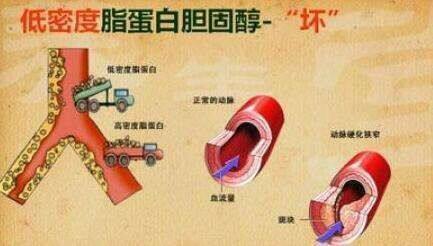
Currently, the U.S. Food and Drug Administration (FDA) and the European Medicines Agency (EMA) are reviewing the marketing authorization application for inclisiran, indicated for adult patients with atherosclerotic cardiovascular disease (ASCVD) or heterozygous familial hypercholesterolemia (HeFH) who have elevated LDL-C levels despite receiving maximally tolerated lipid-lowering therapy. If approved, inclisiran will become the first and only cholesterol-lowering agent in the small interfering RNA (siRNA) class.
Inclisiran is a first-in-class siRNA cholesterol-lowering drug developed by The Medicines Company (TMC). In November 2019, Novartis announced the acquisition of TMC for $9.4 billion, a transaction that was successfully completed in January 2020. Vas Narasimhan, CEO of Novartis, previously stated, “The acquisition of TMC and inclisiran enablesNovartis“We have a unique opportunity to open a new chapter in the treatment of the leading global causes of death and disability, using vaccine-like approaches.”
There is a genuine unmet medical need among patients with atherosclerotic cardiovascular disease (ASCVD) or familial hypercholesterolemia (FH) who fail to achieve low-density lipoprotein cholesterol (LDL-C) treatment goals despite receiving standard-of-care therapy and remain at significant risk for cardiovascular events. Inclisiran, administered via a unique subcutaneous regimen twice yearly, seamlessly integrates with routine healthcare provider (HCP) visits, thereby improving adherence and clinical outcomes in patients with ASCVD or FH.
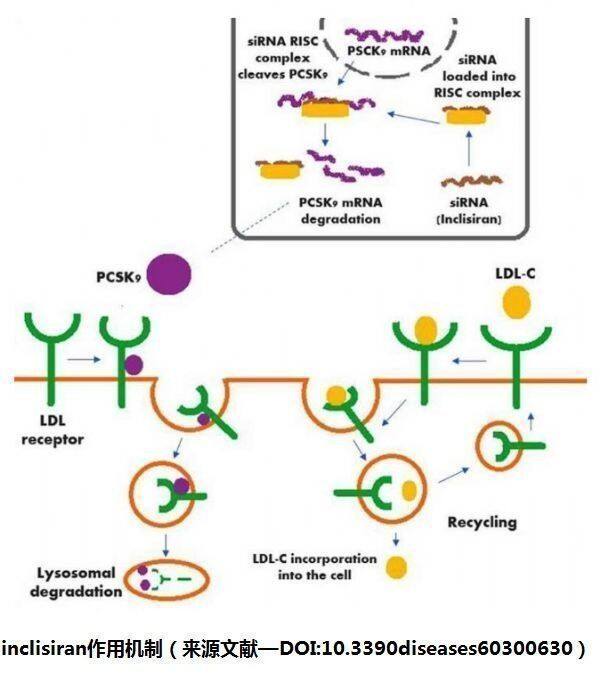
Inclisiran is the first cholesterol-lowering therapy in the small interfering RNA (siRNA or sir-nah) class, targeting proprotein convertase subtilisin/kexin type 9 (PCSK9), a key mechanism by which the human body regulates LDL-C. The PCSK9 protein reduces the liver’s ability to clear low-density lipoprotein cholesterol (LDL-C) from the bloodstream, and LDL-C is widely recognized as a major risk factor for cardiovascular disease (CVD). Targeting PCSK9 offers a completely novel therapeutic modality to combat LDL-C and is regarded as the most significant advance in lipid-lowering therapy since the introduction of statins (such as Lipitor).
To date, two monoclonal antibody drugs targeting the inhibition of the PCSK9 protein have been approved for market launch: Amgen’s Repatha and Sanofi/Regeneron’s Praluent. Unlike monoclonal antibody PCSK9 inhibitors, inclisiran, as an RNAi therapeutic, works by directly silencing the production of PCSK9 protein in the liver. Inclisiran is a small interfering RNA (siRNA) that leverages the body’s natural RNA interference process. It binds to the messenger RNA (mRNA) encoding the PCSK9 protein, reducing mRNA levels through RNA interference and thereby preventing hepatic production of PCSK9. This mechanism enhances the liver’s ability to clear low-density lipoprotein cholesterol (LDL-C) from the bloodstream, resulting in reduced LDL-C levels.
Currently, inclisiran is in Phase III clinical development to evaluate its ability to lower LDL-C with twice-yearly dosing. Inclisiran was developed by Alnylam Pharmaceuticals using its proprietary Enhanced Stabilization Chemistry (ESC)-GalNAc conjugation technology, which enables GalNAc chemical modification of RNA fragments to enhance stability and facilitate liver-targeted drug delivery. The Medicines Company (TMC) entered into a license and collaboration agreement with Alnylam, securing global rights for the development, manufacturing, and commercialization of inclisiran.
Despite lagging behind other PCSK9 inhibitors, inclisiran’s convenience of requiring only twice-yearly subcutaneous injections during the maintenance phase offers it strong market penetration opportunities in the cholesterol-lowering drug market. Credit Suisse previously predicted that inclisiran’s global annual sales would reach $1.13 billion in 2024. (Bioon.com)