

ONO and BMSKK Submit Supplemental Application in Japan for Opdivo + Yervoy with Limited Chemotherapy as First-Line Treatment for Unresectable Advanced or Recurrent NSCLC
Mar 29, 2020 13:52
CST Updated
13:52

Ono
Innovative Drug Developer
Bristol-Myers Squibb
Biopharmaceutical and Nutritional Product R&D and Sales

March 29, 2020 News /BioValleyBIOON/ -- Ono Pharmaceutical Co., Ltd. and Bristol-Myers Squibb K.K., the Japanese subsidiary of Bristol-Myers Squibb, recently announced jointly that they have submitted a supplemental application in Japan seeking approval for the first-line treatment of unresectable, advanced or recurrent non-small cell lung cancer (NSCLC) with the anti-PD-1 therapy Opdivo (nivolumab) in combination with Yervoy (ipilimumab) and a limited course of platinum-doublet chemotherapy.
This application is based on the results of the pivotal Phase III CheckMate-9LA study. This was a global, multicenter, randomized, open-label study conducted in collaboration with Ono Pharmaceutical Co., Ltd. and Bristol-Myers Squibb Company. It evaluated the first-line treatment of unresectable, advanced or recurrent non-small cell lung cancer (NSCLC) patients with Opdivo + Yervoy + platinum-doublet chemotherapy (2 cycles) combination therapy versus platinum-doublet chemotherapy alone, regardless of PD-L1 expression and histology. In the study, the experimental group received Opdivo (360 mg every three weeks, Q3W) + Yervoy (1 mg/kg every six weeks, Q6W) + chemotherapy (2 cycles), for up to two years or until disease progression or unacceptable toxicity. The control group received chemotherapy (up to 4 cycles) followed by optional pemetrexed maintenance therapy (if eligible), continuing until disease progression or toxicity. The primary endpoint was overall survival (OS) in the intent-to-treat (ITT) population, and secondary endpoints included progression-free survival (PFS), objective response rate (ORR), and according toBiomarkersEvaluation of Therapeutic Efficacy.
The results showed that the study met its primary endpoint of overall survival (OS) in a pre-specified interim analysis: the Opdivo + Yervoy + chemotherapy group demonstrated a significant improvement in OS compared to the chemotherapy group. In this study, the safety profile of Opdivo combined with low-dose Yervoy and two cycles of chemotherapy was consistent with the known safety profiles of immunotherapy and chemotherapy components in first-line NSCLC.
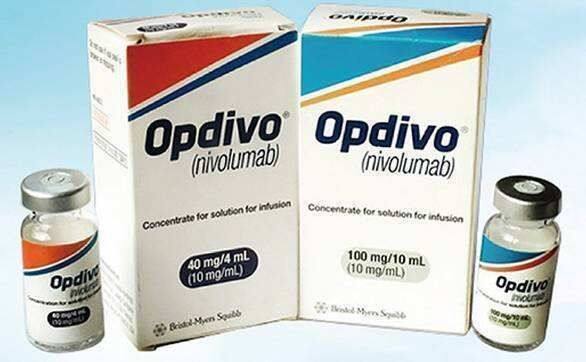
Opdivo is a programmed death-1 (PD-1) immune checkpoint inhibitor designed to uniquely harness the body’sAutoimmunitySystem helps restore resistanceTumorImmune Response. Opdivo was first approved in Japan in July 2014, becoming the world’s first approved PD-1 immunotherapy, with therapeutic indications forMelanoma. By leveraging the human bodyAutoimmunitySystemic Cancer Therapy: Opdivo Has Become a Key Treatment Option for Multiple Cancers
In Japan, Ono Pharmaceutical Co., Ltd. launched Opdivo in September 2014 for the treatment of unresectable melanoma. Since then, Opdivo has been successively approved in Japan for multiple cancer indications, including: (1) unresectable, advanced or recurrent non-small cell lung cancer; (2) unresectable or metastatic renal cell carcinoma; (3) relapsed or refractory classical Hodgkin lymphoma; (4) recurrent or metastatic head and neck cancer; (5) unresectable advanced or recurrent gastric cancer that has progressed after chemotherapy; (6) unresectable advanced or recurrent malignant pleural mesothelioma that has progressed after chemotherapy; and (7) adjuvant therapy.Melanoma; (8) Unresectable advanced or recurrent esophageal cancer; (9) Unresectable advanced or recurrent microsatellite instability-high (MSI-H) colorectal cancer.
Ono Pharmaceutical Co., Ltd is the original developer of Opdivo. In 2011, the company entered into a collaboration with Bristol-Myers Squibb, granting Bristol-Myers Squibb the rights to develop and commercialize Opdivo in all regions except Japan, South Korea, and Taiwan, China. In July 2014, the two parties further expanded their strategic partnership to develop and commercialize multiple immunotherapies (including monotherapies and combination therapies) for cancer patients in Japan, South Korea, and Taiwan, China. To date, Opdivo has been approved in more than 60 countries and regions, including Japan, South Korea, China, the United States, and the European Union. (Bioon.com)