

Lilly's Taltz® (ixekizumab) Receives U.S. FDA Approval as First IL-17A Inhibitor for Pediatric Plaque Psoriasis in Patients Aged 6–18
Mar 31, 2020 08:32
CST Updated
01:42

Eli Lilly
Global Pharmaceutical R&D and Production Company

FDA
U.S. Food and Drug Administration
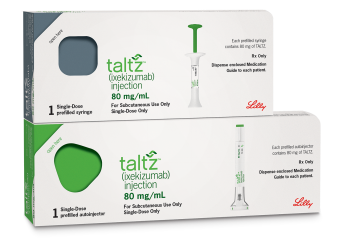
March 30, 2020 /BioValleyBIOON/ --Eli Lilly(Eli Lilly) recently announced that the U.S. Food and Drug Administration (FDA) has approved Taltz (ixekizumab, 80 mg/mL injection) for the treatment of pediatric patients (aged 6 to under 18 years) with moderate-to-severe plaque psoriasis who are candidates for systemic therapy or phototherapy. Psoriasis affects nearly 8 million people in the United States, with many patients experiencing symptom onset during childhood. Notably,Taltz is the first and only IL-17A antagonist approved for the treatment of patients in this age group.
This approval is based on the results of a randomized, double-blind, placebo-controlled Phase III pediatric study (NCT03073200). In this study, a total of 171 patients aged 6 to under 18 years with moderate-to-severe plaque psoriasis were randomized to receive Taltz (weight-adjusted dosing: 20 mg for <25 kg, 40 mg for 25–50 kg, and 80 mg for >50 kg, administered through Week 12; initial loading doses were 40 mg, 80 mg, and 160 mg, respectively) or placebo. The co-primary endpoints were the proportion of patients achieving a 75% improvement from baseline in the Psoriasis Area and Severity Index (PASI75) at Week 12, and the proportion of patients achieving clear or almost clear skin as defined by a static Physician’s Global Assessment (sPGA) score of 0 or 1. Key secondary endpoints included the proportions of patients achieving PASI90, sPGA(0), and PASI100 at Week 12; the proportion of patients with a baseline Itch Numerical Rating Scale (Itch NRS) score ≥4 who achieved an improvement of at least 4 points in Itch NRS at Week 12; and the proportions of patients achieving PASI75 and sPGA(0,1) at Week 4. The study also evaluated the proportion of patients achieving a score of 0 or 1 on the Children’s Dermatology Life Quality Index (CDLQI; for patients aged 6–16 years) or the DLQI (for patients aged ≥17 years) at Week 12.
The results showed that at Week 12 of treatment,The proportion of patients achieving the co-primary endpoints in the Taltz treatment group was higher than that in the placebo group, with statistically significant differences (p < 0.001)., specifically: (1) the proportion of patients achieving PASI 75 was 89% in the Taltz group versus 25% in the placebo group; (2) the proportion of patients achieving sPGA (0,1) was 81% in the Taltz group versus 11% in the placebo group. Furthermore, Taltz met all key secondary endpoints compared with placebo.
In this study, the overall safety profile of Taltz was consistent with previously reported results. The safety of Taltz has been established in 13 studies involving adult patients with plaque psoriasis.Clinical Trialevaluated, with over 5,000 patients receiving Taltz treatment and total exposure exceeding 17,000 patient-years.
Psoriasis can have a significant impact on children and adolescents, causing challenging symptoms and affecting their self-esteem and ability to interact with peers. The aforementioned positive results from pediatric studies support the therapeutic potential of Taltz in patients with moderate-to-severe plaque psoriasis.
Taltz is a monoclonal antibody administered via subcutaneous injection that selectively binds to the cytokine interleukin-17A (IL-17A) and inhibits its interaction with the IL-17 receptor, without binding to the cytokines IL-17B, IL-17C, IL-17D, IL-17E, or IL-17F. IL-17A is a naturally occurring cytokine involved in normal inflammatory and immune responses. Taltz inhibits the release of proinflammatory cytokines and chemokines.
In the United States, Taltz was first approved in March 2016, becoming the secondNovartisThe Second IL-17A Inhibitor Approved in the US After the Blockbuster Anti-Inflammatory Drug Cosentyx (secukinumab)Monoclonal Antibody DrugsTo date, Taltz has been approved for three indications: (1) for the treatment of moderate-to-severe plaque psoriasis (PsO) in pediatric patients (aged 6 to under 18 years) and adult patients who are candidates for systemic therapy or phototherapy; (2) for the treatment of active psoriatic arthritis (PsA) in adult patients; and (3) for the treatment of active ankylosing spondylitis (AS, also known as radiographic axial spondyloarthritis [r-axSpA]) in adult patients. (Bioon.com)