

Impact of New Hospital Investments Leads to 2.6% Decline in China Medical & Healthcare Corporation's 2019 Net Profit

C-MER Medical
Ophthalmology Medical Chain Institution
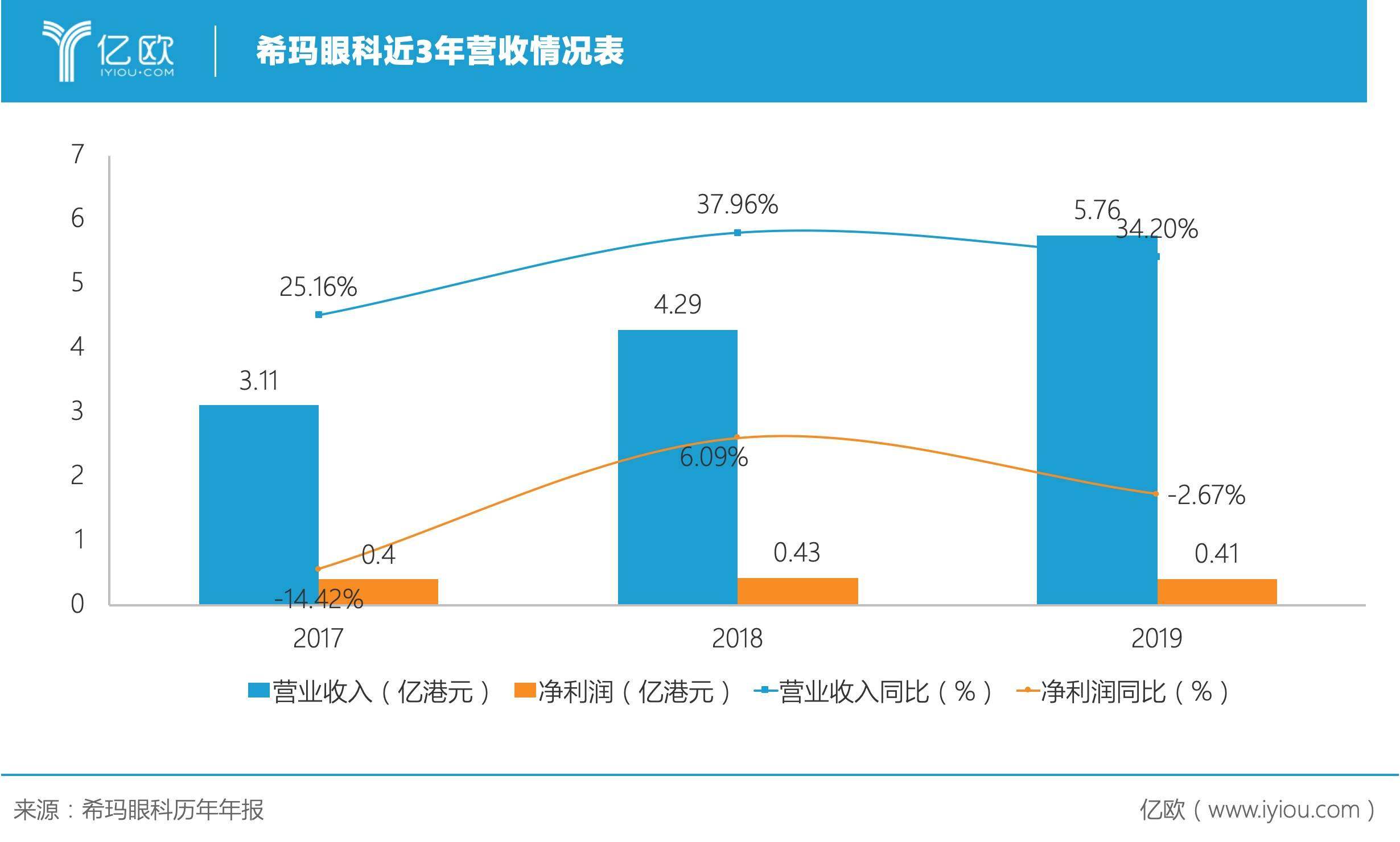
April 1, Yiou Health News: C-MER MedicalOphthalmologyIn its announcement, the company reported that it achieved revenue of HK$576 million in 2019, a year-on-year increase of 34.2%; profit attributable to equity holders amounted to HK$41.435 million, a year-on-year decrease of 2.6%.
C-MER MedicalThe company stated that the decline in net profit was attributable to the fact that its new eye hospitals in Kunming and Shanghai, as well as the satellite clinic in Bao’an, Shenzhen, were still in the investment phase, coupled with the depreciation of the RMB during the reporting period, which led to a decrease in net profit compared to the previous year.
The announcement revealed that in 2019, C-MER Medical Kunming Hospital incurred a net loss of HK$12 million; the Shanghai hospital and three clinics incurred a net loss of HK$8 million; the Bao'an satellite clinic incurred a net loss of HK$700; and Beijing Eye Hospital incurred a net loss of HK$13 million.
However, the directors of C-MER Medical Holdings Limited hold a relatively optimistic view, believing that performance will continue to improve in 2020. Although their Beijing Eye Hospital has been operating at a loss since its inception, revenue has been steadily growing. The net loss of the Beijing Eye Hospital amounted to HK$23 million in 2018, and the loss has narrowed by HK$10 million this year.
C-MER Medical was founded in 2012 and successfully listed on the Hong Kong Stock Exchange in January 2018. As its founder, Dr. Lin Shunchao, is a prominent figure in the industry, the company has maintained significant public attention since its inception. During its initial public offering, C-MER Medical received subscriptions 1,500 times oversubscribed, marking the highest retail investor subscription multiple among new stock issuances valued at USD 50 million or more on the Hong Kong stock market in the past 11 years.
Focus on the Greater Bay Area, and accelerate expansion in cities such as Kunming and Shanghai
Unlike other ophthalmic institutions, C-MER Medical originated in Hong Kong,Operating two day-surgery centers and four satellite clinics in Hong Kong. In 2019, C-MER Medical generated revenue of HK$285 million in the Hong Kong region, representing a year-on-year increase of 30.7%, with ophthalmology consultation fees and otherMedical ServicesThe cost is 105 million yuan, and the surgery fee is 177 million yuan.
In addition to developing its business in Hong Kong, accelerating expansion in mainland China has been an important strategy for C-MER Medical in recent years.In 2013, C-MER Medical opened its first wholly foreign-owned hospital in Shenzhen—Shenzhen C-MER Shun Chiu Lam Eye Hospital—which achieved break-even within one year of operation.
After tasting the benefits, C-MER Medical has continuously accelerated its development in mainland China. In January and November 2018, C-MER Medical officially operated a hospital and an ophthalmology satellite clinic in Beijing and Shenzhen, respectively. The HK$468 million raised during its listing in 2018 was used for the construction of chain ophthalmology hospitals in mainland China.
In March and September 2019, C-MER Medical completed the acquisitions of an ophthalmic hospital in Kunming, as well as an ophthalmic hospital and three clinics in Shanghai. These represent its third and fourth ophthalmic hospitals operating in mainland China. The Kunming ophthalmic hospital became fully operational in June last year, while the Shanghai operations commenced in November.
In terms of revenue, mainland China's revenue exceeded that of Hong Kong for the first time last year, amounting to approximately RMB 291 million and accounting for 50.5% of total revenue.In terms of growth rate, the mainland China region achieved a 37.8% increase last year, outpacing Hong Kong’s revenue growth of 30.7%.
During its expansion on the Chinese mainland, the Guangdong-Hong Kong-Macao Greater Bay Area has been the top priority for C-MER Medical. Shenzhen C-MER Lin Shunchao Eye Hospital underwent expansion at the end of 2019, increasing its floor area by 1,725 square meters. Meanwhile, the Bao’an outpatient clinic is being prepared for upgrade to a hospital, with an additional 1,818 square meters of space; approval is expected in the second or third quarter of 2020.
In addition, C-MER Medical was introduced by the Shenzhen Municipal Government as a key project in December 2019, with land allocated in Pingshan for the construction of a high-end ophthalmic hospital and the Greater Bay Area headquarters. Meanwhile, C-MER Medical’s fifth ophthalmic hospital on the Chinese mainland will be located in Huizhou, Guangdong Province, and is expected to commence operations in the second half of 2020. The Group also plans to establish its sixth and seventh ophthalmic hospitals in Zhuhai and Guangzhou, respectively.
Extend the service chain and expand businesses such as internet healthcare.
C-MER Medical specializes in cataract, glaucoma, strabismus, and refractive surgeries, as well as ocular surface diseases. Accordingly, its revenue is primarily derived from fees charged to patients for consultations, other medical services, and surgical procedures, as well as from the sale of vision aid products, such as spectacles and lenses.
In 2019, ophthalmic services revenue amounted to HK$529 million, representing a year-on-year increase of 32.2%; revenue from vision aid products reached HK$47.66 million, a year-on-year increase of 61.7%.
To further deepen the development of its ophthalmology services, C-MER Medical has also been exploring internet healthcare business since last year.Shenzhen C-MER Shun Chiu Lam Eye Hospital was approved in December 2019 to provide “Internet-based Diagnosis and Treatment Services,” with a trial launch in May 2020. At that time, patients with eye conditions could access real-time online consultations, follow-up visits, remote multidisciplinary consultations, and prescription medication services via computer and mobile phone apps.
Furthermore, in January this year, C-MER Medical acquired a 5% stake in Avalon Global for HK$38.875 million.To expand the Group’s development of innovative technology projects in ophthalmic-related pharmaceuticals.
C-MER Medical stated that it is preparing to collaborate with Avalon Global on the research and development of genetic testing for hereditary eye diseases. The genetic tests will be conducted using blood or oral mucosal cells, which will aid in understanding the etiology, diagnosis, prognosis, and genetic research of eye diseases. The service is scheduled to launch in July 2020.
Copyright Notice
This article is sourced from Iyiou and published with its authorization. All rights reserved by the original author. For reprinting or content collaboration, please click here.Reprint Notice, Unauthorized reposting will be subject to legal action.