

Aria CV Secures $31 Million Series B Financing to Advance Implantable Pulmonary Hypertension Therapy Toward Commercialization

Aria CV
Medical Device Developer
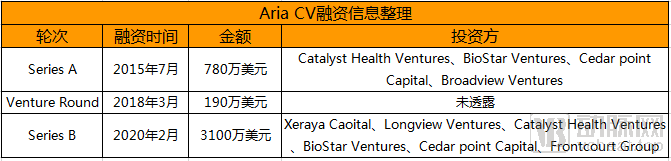
Recently, Aria CV announced the completion of its $31 million Series B financing round, thisThe round was led by Xeraya Capital, with participation from Longview Ventures, Catalyst Health Ventures, BioStar Ventures, Cedar Point Capital, Frontcourt Group, and others., the funds are primarily intended to conduct the first clinical study in the United States, aiming to evaluate the feasibility of long-term implantation of the Aria CV Pulmonary Hypertension System (Aria CV PH System) in patients with pulmonary arterial hypertension (PAH).
As early as July 2015, Aria CV completed its Series A financing to drive the development and research of the Aria CV PH System.
Aria CV, founded in 2010 and headquartered in Minnesota, USA, was established by John Scandurra and Karl Vollmers, both former researchers at the University of Minnesota’s Medical Device Center. This background has enabled Aria CV to secure licenses for certain University of Minnesota patents, facilitating the development of the Aria CV PH System.
John Scandurra holds 22 patents in the United States and at the University of Oxford, chairs the Scientific Advisory Board of Aria CV, provides medical guidance to the entire team, and assumed the role of Chief Scientific Officer (CSO) in 2019.
Since its inception, Aria CV has been dedicated to the treatment and management of pulmonary hypertension. Its developed implantable device for treating pulmonary hypertension, the Aria CV PH System, has reached the clinical research stage but has not yet been launched on the market.。
Following the completion of Aria CV’s Series B financing, Jason Rushton, Partner at Xeraya Capital, and Maria Berkman from Longview Ventures will join the Board of Directors of Aria CV. Jason Rushton stated, “The clinical needs of patients with pulmonary hypertension remain unmet. I am deeply impressed by the performance demonstrated by the Aria CV PH System, and I look forward to establishing a strong collaborative partnership with Aria CV.”
Aria CV plans to conduct more experiments and achieve commercialization in 2023. CEO Dan Gladney stated, “Aria CV is now ready to advance our clinical research findings and remains committed to providing innovative treatment options for patients with pulmonary arterial hypertension (PAH).”
Pulmonary hypertension is a highly malignant pulmonary vascular disease that is currently incurable, characterized by symptoms such as dyspnea, shortness of breath, chest tightness, and hemoptysis. It is difficult to cure after diagnosis and is referred to as the "cancer of cardiovascular diseases."
Pulmonary hypertension is classified into five major categories based on pathological manifestations, hemodynamic characteristics, and clinical management strategies:
① Arterial pulmonary hypertension;
② Pulmonary hypertension due to left heart disease;
③ Pulmonary hypertension caused by hypoxia and/or pulmonary diseases;
④ Chronic thromboembolic pulmonary hypertension;
⑤ Pulmonary hypertension caused by multiple mechanisms and/or unclear mechanisms.
Over the past two decades, various targeted therapies have been continuously developed, capable of treating and improving PAH to a certain extent; therefore, pharmacological treatment is currently the predominant clinical approach. However, despite these therapeutic options, pulmonary arterial hypertension remains considered a fatal, progressive, and highly debilitating disease.
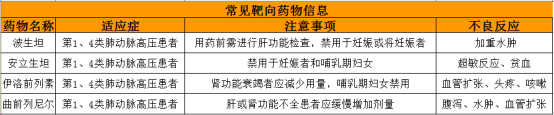
In response, Aria CV has introduced a novel solution—treatment with a permanently implanted device (the Aria CV PH System)—that achieves at least the efficacy of pharmacological therapy while offering further improvements, such as addressing issues related to blood pressure or cardiac output.。
Under normal physiological conditions, the pulmonary artery undergoes elastic expansion during systole, thereby minimizing the cardiac work required to maintain cardiac output. During diastole, the elastic recoil of the pulmonary arterial wall further propels blood flow distally, maximizing cardiac output. In the setting of pulmonary hypertension, both pulmonary arterial stiffness and vascular resistance increase. These changes elevate the afterload on the right ventricle, leading to right heart failure and subsequent mortality.
The primary purpose of the Aria CV PH System is to restore healthy, elastic arterial function, thereby reducing right ventricular load, decreasing cardiac workload, and enhancing blood flow. The Aria CV PH System reportedly consists of four main components: a gas-filled reservoir bag, an anchoring device, a ventilation catheter, and a balloon. A balloon is inserted into the artery and inflated or deflated using gas drawn from the reservoir bag implanted in the patient’s abdominal wall; this gas is similar in composition to gases already present in the bloodstream. As the heart pumps and blood flows, the system guides the pulmonary artery to open and close naturally.
Currently, the Aria CV PH System has undergone a clinical study in Vienna, Austria. The study enrolled 10 patients with pulmonary arterial hypertension (PAH) receiving standard medical therapy to evaluate and analyze the short-term outcomes following implantation of the Aria CV device. The findings revealed that pulmonary artery compliance improved shortly after activation of the Aria CV device, with resting cardiac output increasing by 9% and exercise cardiac output increasing by 24%, without any adverse events. This study demonstrated the safety of the Aria CV PH System, as well as its efficacy in reducing pulmonary pressure and enhancing cardiac output.
With the support of a new round of funding, Aria CV will conduct an initial feasibility study in collaboration with its U.S. medical partners. The study, expected to last approximately six months and involve 15 to 30 patients, will entail permanent implantation of the Aria CV PH System in participants. The results are scheduled to be published in 2021.
Reportedly, Medtronic also launched the Remodulin Implantable System in 2019 for the treatment of patients with pulmonary arterial hypertension (Remodulin is a targeted therapy drug for pulmonary arterial hypertension). The system utilizes Medtronic’s SynchroMed II implantable drug infusion pump, paired with a newly developed intravascular catheter, to deliver Remodulin via an external infusion pump to patients who have previously received drug therapy.
The Remodulin implantable system consists of a programmable pump, clinical procedures, and an implantable intravascular catheter.
The surgeon inserts an intravascular catheter through the vein at the superior vena cava–right atrial junction and connects the catheter to a pump implanted beneath the abdominal skin. The pump settings are then programmed and verified using a programmer device. Once the pump is programmed, the Remodulin implantable system delivers the injectable solution intravascularly via the catheter.
This treatment modality is essentially device-assisted pharmacotherapy; therefore, patient tolerance to Remodulin must still be considered in clinical practice.
Aria CV’s proprietary implantable treatment device enables it to quickly capture market attention, while its existing clinical research findings provide customers with a solid basis for purchase decisions. What Aria CV needs to do is fully leverage its strengths, establish a distinctive brand identity, and gain market recognition. Meanwhile, the company can build a user platform to monitor patient usage, facilitate communication among patients, and partner with healthcare institutions to remotely address patient issues through the platform.
In terms of funding, Aria CV has also received strong support from numerous well-known investment institutions. Darshana Zaveri from Catalyst Health Ventures stated, “Aria CV’s unique solution for pulmonary hypertension meets market demands, which aligns perfectly with Catalyst Health Ventures’ investment strategy.”
Although implantable devices are not a mainstream treatment for pulmonary hypertension, this presents an opportunity for Aria CV from another perspective.