

JenaValve Secures $50 Million Series D Financing to Advance Next-Gen TAVI System for Aortic Regurgitation and Stenosis

JenaValve
Developer of Transcatheter Heart Valve Solutions
Recently, medical device company JenaValve Technology announced the completion of a $50 million Series D financing round. The round was led by Bain Capital Life Sciences, with participation from existing investors Andera Partners, Gimv, Legend Capital, NeoMed Management, RMM, Valiance Life Sciences, and VI Partners AG.
These funds will be used to support JenaValve’s ongoing clinical programs, including an international trial involving patients with severe aortic regurgitation and stenosis who are not suitable candidates for conventional open-heart surgery.
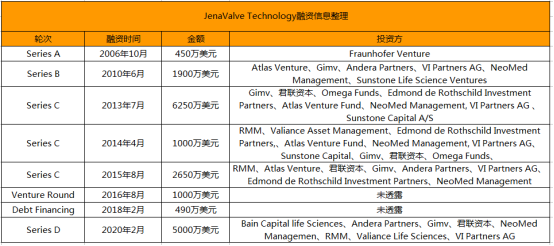
Past financing records reveal that Legend Capital, a prominent Chinese investment firm, has been investing in JenaValve since 2013 and has consistently participated in follow-on rounds. What makes JenaValve so appealing that it has attracted and retained the steadfast support of Chinese investors?
JenaValve Technology, Inc. was founded in 2006 and is headquartered in California, USA. It was co-founded by Dr. med. Hans-Reiner Figulla and Markus Ferrari. The company is currently primarily developing its second-generation transcatheter delivery system for transapical and transfemoral implantation. From the outset, the company’s development and clinical teams clearly recognized that product safety, precision, and durability are key to successful treatment.
Hans-Reiner Figulla is a cardiologist who has served as Professor of Internal Medicine and Director of the Department of Internal Medicine at Friedrich Schiller University since 1997. Previously, he held the position of Professor of Internal Medicine at the University of Göttingen for nine years, beginning in 1988. Dr. Figulla’s research primarily focuses on the pathogenesis of cardiomyopathies, therapeutic strategies for heart failure, and the development of interventional devices. Holding over 80 patents, he is recognized as one of the leading innovators in the field of cardiology.
The university clinic led by Hans-Reiner Figulla has consistently been ranked among the top clinics in the annual selection by FOCUS magazine. The clinic itself has received numerous awards and honors, most recently in 2011, when Prof. Figulla was awarded the Sven-Effert Prize by the German Cardiac Society.
To better adapt to the market, in January 2019, JenaValve announced the appointment of John T. Kilcoyne as CEO, who would also serve as a member of the Board of Directors. Prior to joining JenaValve, he served as CEO of Micrus Endovascular and led the company through its initial public offering (IPO) in 2005.
In September 2019, JenaValve announced that Vinny Podichetty, a senior medical device executive, would serve as Vice President of Clinical Affairs, and Jeff Thiel would serve as Vice President of Operations. Dr. Podichetty brings 20 years of regulatory affairs experience, while Dr. Thiel has over 30 years of operational and executive leadership experience in the medical device sector, primarily working with venture capital-backed, high-growth medical device companies.
Currently, JenaValve has branches in Munich, Germany, and Irvine, California, USA, primarily engaged in the development and future distribution of its products. It is reported that JenaValve also plans to apply for regulatory approval for its TAVI products in China.
In recent years, the incidence of degenerative valvular disease has been steadily increasing, with aortic stenosis gradually becoming the most common valvular heart disease. For patients with severe aortic stenosis, surgical aortic valve replacement (SAVR) was once the only treatment option capable of prolonging life. However, many patients are unsuitable for surgery due to advanced age, frailty, or severe comorbidities. Statistics indicate that approximately one-third of patients with severe aortic stenosis cannot undergo traditional open-heart surgery due to high surgical risk or contraindications.
For these high-risk patients or those with contraindications to cardiac surgery, Transcatheter Aortic Valve Implantation (TAVI) is a clinically recognized and effective treatment modality. TAVI refers to the catheter-based delivery and implantation of a pre-assembled aortic valve into the aortic root to replace the native aortic valve, thereby functionally achieving aortic valve replacement; hence, it is also referred to as Transcatheter Aortic Valve Replacement (TAVR).
Currently, there are four approaches for catheter insertion to implant a prosthetic aortic valve in TAVI: transfemoral approach; transapical approach; subclavian artery approach; and transaortic approach. Among these four methods, the transfemoral approach is the least invasive and is generally the preferred option. If the transfemoral approach is unsuitable due to thinning or tortuosity of the thoracoabdominal vessels, the transapical approach can be selected.
The advantage of TAVI lies in its minimally invasive nature, which imposes a lesser physiological burden on patients as it does not require open-heart surgery. In Japan, TAVI has been covered by insurance since 2013. Although TAVI is a relatively new approach for treating severe aortic stenosis, its therapeutic efficacy is undoubtedly impressive.
JenaValve’s currently developed second-generation transcatheter delivery system enables both transapical and transfemoral implantation of prosthetic aortic valves. As early as 2011, the company’s first-generation transapical delivery system received CE certification for the treatment of aortic stenosis, and subsequent innovations built upon this foundation led to the development of the second-generation product.
This product is used in implantation procedures. Due to the complexity of the surgical operation, it requires multidisciplinary collaboration among cardiology, cardiac surgery, and medical imaging departments to formulate a comprehensive diagnosis and treatment plan. Therefore, the target customers for this product are various medical institutions, and partnerships with numerous medical institutions and clinics will be established in the future.
JenaValve’s TAVI system comprises a bioprosthetic valve and a self-expanding nitinol stent delivered via the aorta. Characterized by its self-expanding design and absence of a stent mesh, the system significantly reduces the risk of obstructing the coronary artery ostia. The TAVI system is available in three sizes, suitable for aortic annuli with diameters ranging from 21 mm to 27 mm, with additional models currently under development. However, the TAVI system remains in the clinical stage and is not yet commercially available.
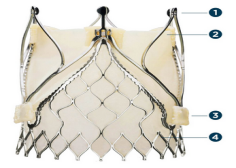
(① Nitinol stent; ② Bioprosthetic valve; ③ Valve locator; ④ Sealing ring)
Currently, JenaValve is conducting a global clinical program for the treatment of patients with severe aortic regurgitation and other mixed aortic valve diseases. Upon completion of the clinical trials, JenaValve will submit a Pre-Market Approval (PMA) application to the FDA based on patient treatment outcomes, and plans to apply for CE marking for both aortic stenosis and aortic regurgitation in the second half of the year.
TAVI, as the third treatment modality following surgical aortic valve replacement and medical therapy, is characterized by its minimally invasive nature, reduced trauma, and shorter procedural time. It offers a new therapeutic option for patients who are not candidates for open-heart surgery, particularly the elderly. However, TAVI still carries the risk of complications, such as paravalvular regurgitation and arrhythmias.
As the developer of medical devices used in TAVI procedures, JenaValve is well-positioned to drive further product innovations and conduct more in-depth research into related mechanisms. Currently, there are multiple access routes for TAVI, with the transfemoral approach being the preferred option; however, this method is not suitable for all patients. The key to successful TAVI lies in determining the optimal procedural approach for each patient. In response, JenaValve can appropriately update and improve its products to meet these clinical needs. In the near future, the transradial approach for treating aortic stenosis may also become a commonly used treatment modality.
Jan Keltjens, Chairman of the Board of JenaValve, once stated, “Competing in the TAVI market requires strong financial backing.” Based on the current situation, JenaValve faces no significant financial constraints; its immediate priority is to successfully conduct clinical trials to provide truly differentiated solutions for patients in need, without being confined to a single therapeutic approach. In recent years, TAVI technology has advanced rapidly. The procedure has been adopted in more than 30 countries worldwide, and the TAVI market continues to expand. JenaValve should seize this opportunity to leverage the favorable momentum and expand its market presence.