

Sanofi/Regeneron’s Dupixent Achieves Success in Phase 3 Trial for Severe Atopic Dermatitis in Children Aged 6–11
Apr 07, 2020 17:47
CST Updated
17:47

Sanofi
Pharmaceutical R&D Developer

Regeneron
Biopharmaceutical Manufacturer

April 07, 2020 News /BioonBIOON/ -- Sanofi and its partner Regeneron recently at the 2020 Revolutionizing Atopic Dermatitis (RAD) virtualMeetingPublished the pivotal pediatric Phase III trial of the anti-inflammatory drug Dupixent (dupilumab) for the treatment of adolescents (aged 6-11 years) with uncontrolled severe atopic dermatitis (AD)Clinical Trials(NCT03345914) results. The data showed that Dupixent in combination with standard-of-care topical corticosteroids (TCS) significantly improved disease symptoms and health-related quality of life.Based on these results, Dupixent is the first biologic to demonstrate positive outcomes in this pediatric (aged 6–11 years) population with atopic dermatitis (AD).
Currently, Dupixent for the treatment of children aged 6 to 11 yearsThe supplemental Biologics License Application (sBLA) for patients with severe atopic dermatitis is undergoing priority review by the U.S. FDA. This sBLA seeks approval for Dupixent as an add-on maintenance treatment for moderate-to-severe atopic dermatitis (AD) in pediatric patients aged 6 to 11 years whose disease is not adequately controlled with topical prescription therapies, or when such therapies are not advisable. The FDA has assigned a Prescription Drug User Fee Act (PDUFA) target action date of May 26, 2020. In 2016,FDABreakthrough Therapy Designation Granted to Dupixent for the Treatment of Severe Atopic Dermatitis in Children Aged 6 Months to 11 Years with Inadequate Control Using Topical Prescription Medications
Presented at the RAD virtual conference was a randomized, double-blind, placebo-controlled study evaluating the efficacy and safety of Dupixent in combination with standard-of-care topical corticosteroids (TCS) for the treatment of children with severe atopic dermatitis (AD), affecting on average nearly 60% of body surface area. The study enrolled a total of 367 patients aged 6 to 11 years with severe AD whose condition was not adequately controlled with topical medications. Overall, 92% of patients had at least one comorbidity, such as allergic rhinitis,Asthmaand food allergies.
Throughout the study, all patients received topical corticosteroid (TCS) therapy. These patients were randomized into three treatment groups for a 16-week treatment period: Group 1 received Dupixent 300 mg via subcutaneous injection every 4 weeks (with an initial dose of 600 mg); Group 2 received Dupixent 100 mg or 200 mg via subcutaneous injection every 2 weeks (weight-adjusted dosing: 100 mg for <30 kg and 200 mg for ≥30 kg), with initial doses of 200 mg or 400 mg, respectively; Group 3 received placebo via subcutaneous injection every 2 weeks or every 4 weeks. The primary endpoint was the proportion of patients achieving an Investigator’s Global Assessment (IGA) score of 0 (clear) or 1 (almost clear) within 16 weeks, along with a 75% improvement in the Eczema Area and Severity Index (EASI-75, the co-primary endpoint outside the United States).
The results showed that the study met both its primary and secondary endpoints. The data demonstrated that, in pediatric patients with severe atopic dermatitis (AD), Dupixent combined with topical corticosteroids (TCS) significantly improved outcomes in overall disease severity, skin lesion clearance, pruritus, and health-related quality of life compared to TCS alone. Furthermore, the safety profile was consistent with previously reported data in patients aged 12 years and older, including a numerically lower rate of skin infections compared to placebo.
Treatment outcomes at 16 weeks included: (1) 33% and 30% of patients in Group 1 and Group 2, respectively, achieved an Investigator’s Global Assessment (IGA) score of 0 (clear) or 1 (almost clear), compared with 11% in the placebo group (p<0.0001 and p=0.0004, respectively). (2) 70% and 67% of patients in Group 1 and Group 2, respectively, achieved at least a 75% improvement in skin severity (EASI-75), compared with 27% in the placebo group (both p<0.0001). (3) The mean EASI scores improved by 82% and 78% from baseline in Group 1 and Group 2, respectively, compared with a 49% improvement in the placebo group (both p<0.0001). (4) Dupixent demonstrated significant pruritus relief and improved patient-reported outcomes, including anxiety, depression, and health-related quality of life for parents and family members.
During the 16-week treatment period, the overall incidence rates of adverse events were 65% in Group 1 and 67% in Group 2, compared with 73% in the placebo group. Adverse events more commonly associated with Dupixent treatment included conjunctivitis (7% in Group 1, 15% in Group 2, and 4% in the placebo group), nasopharyngitis (13% in Group 1, 7% in Group 2, and 7% in the placebo group), and injection-site reactions (10% in Group 1, 11% in Group 2, and 6% in the placebo group). Other prespecified adverse events included skin infections (6% in Group 1, 8% in Group 2, and 13% in the placebo group) and herpes viral infections (2% in Group 1, 3% in Group 2, and 5% in the placebo group).
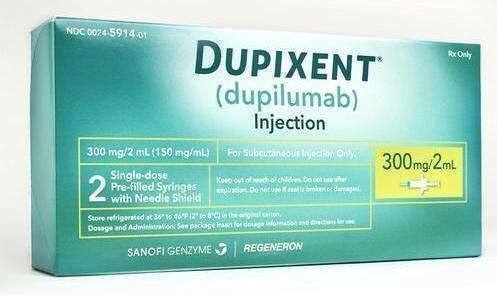
Dupixent targets the key drivers of type 2 inflammation. This fully human monoclonal antibody specifically inhibits the overactivated signaling of two key proteins, IL-4 and IL-13. IL-4 and IL-13 are two inflammatory cytokines considered to be the key drivers of intrinsic inflammation in allergic diseases and other type 2 inflammatory conditions, including atopic dermatitis,Asthma, eosinophilic esophagitis, grass allergy, peanut allergy, etc.
Dupixent was launched in late March 2017, becoming the first biologic agent for the treatment of moderate-to-severe atopic dermatitis worldwide. To date, the drug has been approved in multiple countries and regions, including the United States, the European Union, and Japan. In the United States, Dupixent is currently approved for the treatment of three diseases driven by type 2 inflammation: moderate-to-severe atopic dermatitis (in patients aged ≥12 years), moderate-to-severeAsthma(≥12 years of age), chronic rhinosinusitis with nasal polyps (CRSwNP, adult patients).
Currently, Sanofi and Regeneron are also conducting an extensive clinical program to evaluate Dupixent for the treatment of diseases caused by allergies and other type 2 inflammation, including: pediatric patientsAsthma(ages 6–11 years, Phase III), pediatric atopic dermatitis (6 months to 5 years, Phase II/III), eosinophilic esophagitis (Phase III), chronic obstructive pulmonary disease (Phase III), and food and environmental allergies (Phase II). In addition, both parties plan to conduct a clinical study to evaluate the combination therapy of Dupixent with REGN3500, an IL-33-targeting monoclonal antibody.
Dupixent is another key product co-developed by Sanofi and Regeneron following their collaboration on the PCSK9 inhibitor lipid-lowering drug Praluent, and it holds promise as a game-changing therapy. Currently, the indications for Dupixent are steadily expanding. EvaluatePharma, a renowned pharmaceutical market research firm, previously predicted that the drug’s global sales could reach $8 billion in 2024. (Bioon.com)
Original Source: Dupixent (dupilumab) Phase 3 data show significant improvement in severe atopic dermatitis for children aged 6 to 11 years