

FDA Approves Koselugo (selumetinib), First Therapy for Pediatric Patients with Symptomatic, Inoperable Plexiform Neurofibromas in NF1
Apr 16, 2020 17:11
CST Updated
Apr 11, 21:25
Onco360
One of the largest independent providers of oncology pharmacy services in the United States

AstraZeneca
Biopharmaceutical Manufacturer
April 11, 2020 /BioValleyBIOON/ -- The U.S. Food and Drug Administration (FDA) Recently approvedAstraZeneca(AstraZeneca) The targeted anticancer drug Koselugo (selumetinib) is indicated for pediatric patients aged ≥2 years with neurofibromatosis type 1 (NF1). Specifically, it is approved for the treatment of symptomatic, inoperable plexiform neurofibromas (PN) associated with NF1. Notably, Koselugo isFDAThe first approved drug for the treatment of NF1. In the United States and the European Union, Koselugo has been granted orphan drug designation for the treatment of NF1. In the United States, Koselugo has also been granted Breakthrough Therapy Designation (BTD) for the treatment of NF1.
Director of the FDA Oncology Center of Excellence,FDACenter for Drug Evaluation and ResearchTumorRichard Pazdur, M.D., Acting Director of the Office of Oncologic Diseases, stated:“During the COVID-19 pandemic, everyone’s daily life was disrupted. At this critical juncture, we want patients to know that,”FDAStill committed to helping patients with rareTumorPrioritizing patients with life-threatening diseases and their unique needs, we are continuing to accelerate product development for these patients. Koselugo is one example, now providing the firstFDAApproved drug for the treatment of NF1-associated rare plexiform neurofibromas (PN).”
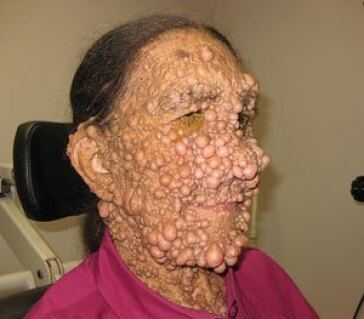
Plexiform Neurofibroma (PN) (Image source: cancerworld.info)
NF1 is a neurological disorderGeneticsneurofibromatosis, which causes tumors to grow on nerves. These tumors can develop anywhere in the body, including the face, limbs, around the spine, and in deep areas of the body that may affect organs. Koselugo is a kinase inhibitor, meaning it works by targeting key enzymes to blockTumorCell Growth.
NF1 is a debilitating, progressive, and often disfiguring rare disease that typically begins in early life and is caused by mutations or defects in a specific gene. NF1 is usually diagnosed in early childhood, affecting approximately 1 in 3,000 infants. It is characterized by changes in skin pigmentation, nerve and bone damage, and the development of both benign and malignant tumors throughout life.Tumorrisk. 30% to 50% of patients with NF1 develop one or more PNs.
This approval is based on the positive results from the SPRINT Phase II Stratum 1 trial, sponsored by the Cancer Therapy Evaluation Program (CTEP) of the National Cancer Institute (NCI). The trial enrolled pediatric patients with neurofibromatosis type 1 (NF1) and inoperable plexiform neurofibromas (PNs), defined as PNs that could not be completely resected but did not pose a risk of severe morbidity to the patient. Efficacy outcomes were derived from 50 patients who received the recommended dose, with regular assessments conducted during the trial to evaluate changes in tumor size and tumor-related symptoms. During the trial, patients received Koselugo orally at a dose of 25 mg/m² twice daily until disease progression or unacceptableAdverse Reactions. ThisClinical TrialsThe overall response rate (ORR) was determined, defined as: complete or partial response confirmed by MRI at 3–6 months (PNTumorproportion of patients with a volume reduction ≥20%).
Data shows that,Koselugo demonstrated an overall response rate (ORR) of 66% (n=33/50) as a twice-daily oral monotherapy.All patients achieved partial response (PR). Among these patients,82% of patients experienced remission lasting 12 months or longer.Other clinical outcomes in patients during Koselugo treatment, including changes in PN-related deficits, symptoms, and functional impairments. Although the sample size for assessing each PN-related morbidity (such as deficits, pain, strength and mobility issues, airway compression, visual impairment, and bladder or bowel dysfunction) was small,There appeared to be a trend toward improvement in PN-related symptoms or functional deficits during treatment.
Common side effects in patients taking Koselugo include vomiting, rash, abdominal pain, diarrhea, nausea, dry skin, fatigue, musculoskeletal pain (body pain affecting bones, muscles, ligaments, tendons, and nerves), fever, acneiform rash (acne), stomatitis (inflammation of the lips and mouth), headache, paronychia (infection of the skin around the toenails or fingernails), and pruritus (itching).
Koselugo can also cause serious side effects, including heart failure (manifested as reduced ejection fraction, or abnormal contraction of the left ventricular myocardium) and ocular toxicity (acute and chronic eye injuries), including retinal vein occlusion, retinal pigment epithelium detachment, and visual impairment. Patients should undergo regular cardiac and ophthalmologic evaluations before initiating Koselugo therapy and during treatment. Koselugo can also lead to elevated creatine phosphokinase (CPK) levels. CPK is an enzyme found in the heart,
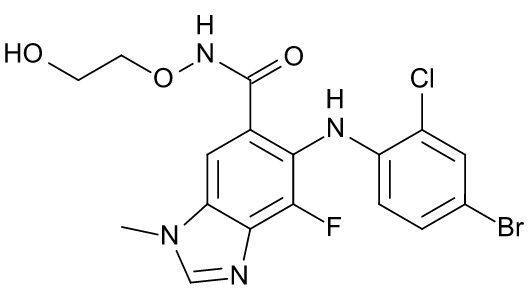
Chemical Structure of Selumetinib (Image Source: Wikipedia)
The active pharmaceutical ingredient of Koselugo is selumetinib, an oral, potent, and selective MEK1/2 kinase inhibitor. The NF1 gene encodes neurofibromin, a protein that negatively regulates the RAS/MAPK pathway, thereby helping to control cell growth, differentiation, and survival. Mutations in the NF1 gene may lead to dysregulation of the RAS/RAF/MEK/ERK signaling pathway, which can result in uncontrolled cell growth, division, and replication, potentially leading to tumor growth. Selumetinib potentially inhibits tumor growth by suppressing MEK enzymes within this pathway. Currently, selumetinib is being evaluated in clinical studies as a monotherapy and in combination with other therapies for the treatment of various typesTumorpotential.
Selumetinib was discovered by Array BioPharma, and AstraZeneca obtained exclusive global rights to the compound through a license agreement in 2003. In July 2018, AstraZeneca reached an agreement with Merck & Co.Tumorstrategic collaboration to jointly develop and commercialize selumetinib and the PARP inhibitor Lynparza on a global scale. Currently, both parties are conducting the Phase I/II SPRINT clinical study to explore the potential benefits of selumetinib in pediatric patients with inoperable NF1-related plexiform neurofibromas (PN).
Neurofibromatosis type 1 (NF1) is an incurable genetic disorder, with an incidence of approximately 1 in 3,000 to 4,000 infants. The disease is caused by a spontaneous mutation in the NF1 gene orHereditycaused by mutations and associated with many symptoms, including soft lumps on the skin surface and within the skin (subcutaneous neurofibromas), skin pigmentation (café-au-lait spots), and benign nerve sheath tumors in 20%-50% of patients.Tumor(Plexiform Neurofibroma [PN]). These plexiform neurofibromas (PN) can cause conditions such as pain, motor dysfunction, and disfigurement.
Patients with NF1 may experience many other complications, such as learning difficulties, spinal twisting and curvature,Hypertensionand epilepsy. NF1 also increases a person's risk of developing other cancers, including malignant brain and peripheral nerve sheathTumorandLeukemia. Symptoms of this disease begin in early childhood, with varying severity that can reduce life expectancy by up to 15 years. (Bioon.com)