

Koselugo (Selumetinib): First FDA-Approved Therapy for Pediatric NF1 with Inoperable Plexiform Neurofibromas Demonstrates Sustained Tumor Shrinkage and Clinical Benefit
Apr 21, 2020 16:30
CST Updated
16:30

AstraZeneca
Biopharmaceutical Manufacturer
April 21, 2020 /BioValleyBIOON/ -- Recently, evaluationAstraZenecaThe results of the open-label Phase II SPRINT Stratum 1 trial (NCT01362803) evaluating AstraZeneca’s targeted anticancer drug Koselugo (selumetinib) for the treatment of symptomatic, inoperable plexiform neurofibromas (PN) in pediatric patients with neurofibromatosis type 1 (NF1) were published online in the New England Journal of Medicine (NEJM), a premier international medical journal. The article is titled:Selumetinib in Children with Inoperable Plexiform Neurofibromas。
NF1 is a neurologicalGeneticsNeoplastic diseases, leading to tumor growth on nerves, theseTumor(Plexiform neurofibromas) can grow anywhere in the body, including the face, limbs, around the spine, and in deep areas of the body that may affect organs. The most commonNeurofibroma-associated symptoms include disfigurement, motor dysfunction, and pain.。Data from the SPRINT Stratum 1 trial demonstrate that Koselugo treatment provides significant clinical benefits to patients, which canContinued ReductionTumorVolume, pain relief, improvement in daily function, and overall health-related quality of life.
Koselugo is a novel oral kinase inhibitor that received approval from the U.S. FDA in mid-April this year for the treatment of symptomatic, inoperable plexiform neurofibromas (PN) associated with neurofibromatosis type 1 (NF1) in pediatric patients aged ≥2 years. Notably,Koselugo is an AmericanFDAThe first approved drug for the treatment of NF1.Previously, Koselugo was granted Orphan Drug Designation (ODD) and Breakthrough Therapy Designation (BTD) for the treatment of NF1. Koselugo is a kinase inhibitor, meaning it acts by targeting key enzymes to blockTumorCell Growth.
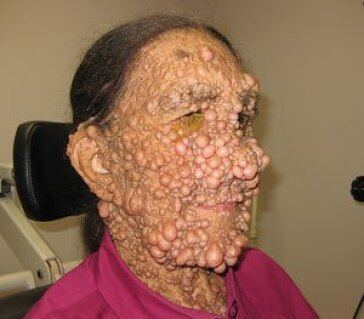
Plexiform Neurofibroma (PN) (Image source: cancerworld.info)
NF1 is a debilitating, progressive, and often disfiguring rare disease that typically begins in early life and is caused by mutations or defects in a specific gene. NF1 is usually diagnosed in early childhood, affecting approximately 1 in 3,000 infants, and is characterized by changes in skin pigmentation, nerve and bone damage, and an increased risk of developing benign and malignant tumors throughout life. Between 30% and 50% of patients with NF1 develop one or more plexiform neurofibromas (PN). The primary treatment for PN is surgical resection. Unfortunately, due to theseTumorlocation or volume, many patients are not suitable for surgery. Furthermore, NP typically recurs after optimal surgical resection, thus representing an important area with unmet medical needs.
The SPRINT Stratum 1 trial, sponsored by the Cancer Therapy Evaluation Program (CTEP) of the U.S. National Cancer Institute (NCI), enrolled 50 pediatric patients (median age: 10.2 years; range: 3.5–17.4 years) with neurofibromatosis type 1 (NF1) and inoperable plexiform neurofibromas (PNs), defined as PNs that cannot be completely resected without posing a significant risk of severe morbidity to the patient. The most common NF1-related symptoms were disfigurement (44 patients), motor dysfunction (33 patients), and pain (26 patients). In the trial, patients received oral Koselugo at a dose of 25 mg/m² twice daily (the approved recommended dose) until disease progression or unacceptableAdverse Reactions. During the trial, routine assessments were conducted on changes in tumor volume and tumor-related disease symptoms in patients, and the overall response rate (ORR) was determined, defined as: complete or partial response confirmed by MRI within 3–6 months (PNTumorProportion of patients with a volume reduction of ≥20%.
Data published in the New England Journal of Medicine (NEJM) showed that as of March 29, 2019, 35 out of 50 patients achieved confirmed response, resulting in an overall response rate (ORR) of 70% (n=35/50) with Koselugo administered orally twice daily as monotherapy. All responses were partial responses (PR). Among the 35 patients with confirmed response, 28 (80%) demonstrated durable responses (duration of response ≥1 year). Furthermore,
The trial also evaluated the impact of Koselugo on other clinical outcomes in patients, including changes in PN-related morbidities, symptoms, and functional impairments. Although the sample size for each PN-related morbidity (such as disfigurement, pain, strength and mobility issues, airway compression, visual impairment, and bladder or bowel dysfunction) was small, improvements in PN-related morbidities, symptoms, and functional impairments were also observed during treatment.
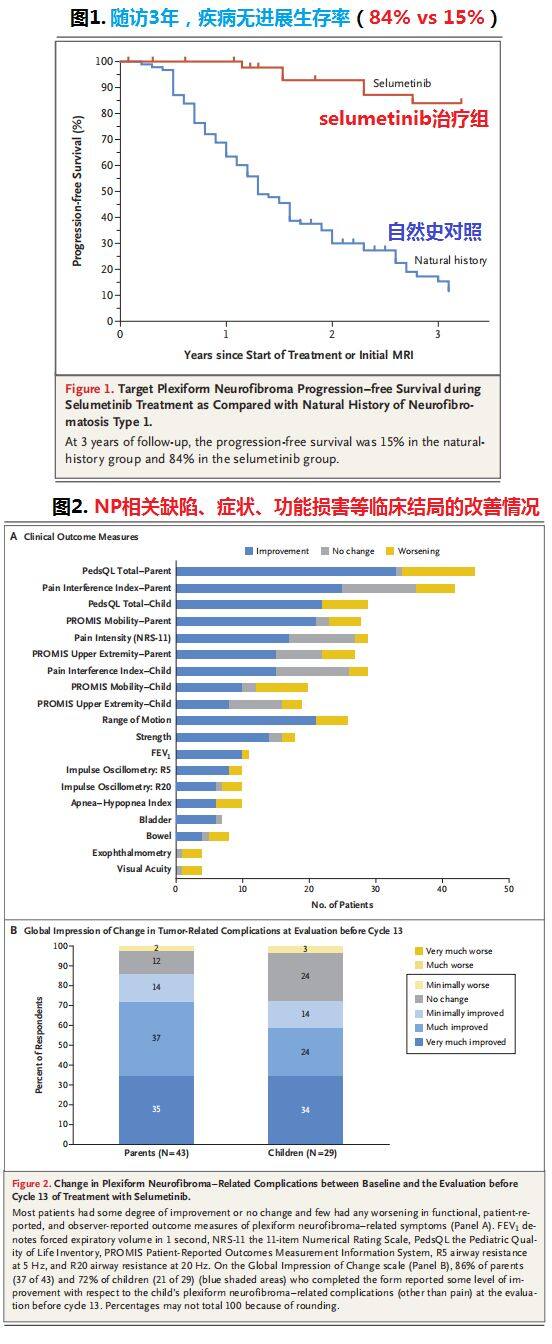
Specifically: After 1 year of treatment, patient-reportedTumorThe mean reduction in pain intensity score was 2 points, which is considered a clinically meaningful improvement. Furthermore, clinically meaningful improvements were also observed in functional outcomes, including child-reported and parent-reported daily functioning (38% and 50%, respectively), overall health-related quality of life (48% and 58%, respectively), strength (56%), and range of motion (38%).
At the 3-year follow-up,The progression-free survival rate in the Koselugo treatment group was 84%, compared to only 15% in the natural history control group. During the trial,Five patients discontinued treatment due to toxicities potentially related to Koselugo, and six patients experienced disease progression. The most common toxicities were nausea, vomiting, diarrhea, asymptomatic elevation of creatine phosphokinase levels, acneiform rash, and paronychia.

The active pharmaceutical ingredient of Koselugo is selumetinib, an oral, potent, and selective MEK1/2 kinase inhibitor. The NF1 gene encodes neurofibromin, a protein that negatively regulates the RAS/MAPK pathway, thereby helping to control cell growth, differentiation, and survival. Mutations in the NF1 gene may lead to dysregulation of the RAS/RAF/MEK/ERK signaling pathway, which can result in uncontrolled cell growth, division, and replication, potentially leading to tumor growth. Selumetinib potentially inhibits tumor growth by suppressing the MEK enzymes within this pathway. Currently, selumetinib is being evaluated in clinical studies as a monotherapy and in combination with other therapies for the treatment of various typesTumorpotential.
Selumetinib was discovered by Array BioPharma, and AstraZeneca obtained exclusive global rights to the compound through a license agreement in 2003. In July 2018, AstraZeneca reached an agreement with Merck & Co.TumorStrategic collaboration to jointly develop and commercialize selumetinib and the PARP inhibitor Lynparza globally. Currently, both parties are conducting the SPRINT Phase I/II clinical study to explore the potential benefits of selumetinib in pediatric patients with inoperable NF1-related plexiform neurofibromas (PN).
Neurofibromatosis type 1 (NF1) is an incurable genetic disorder with an incidence of approximately 1 in 3,000 to 4,000 infants. The disease is caused by a spontaneous mutation in the NF1 gene orHeredityCaused by mutations, it is associated with many symptoms, including soft lumps on the skin surface and within the skin (subcutaneous neurofibromas), skin pigmentation (café-au-lait spots), and in 20%-50% of patients, it also causes benign nerve sheath tumors.Tumor(Plexiform Neurofibroma [PN]). These plexiform neurofibromas (PN) can cause conditions such as pain, motor dysfunction, and disfigurement.
Patients with NF1 may experience many other complications, such as learning difficulties, spinal distortion and curvature,Hypertensionand epilepsy. NF1 also increases an individual's risk of developing other cancers, including malignant brain and peripheral nerve sheathTumorandLeukemia. Symptoms of this disease begin in early childhood, with varying severity that can reduce life expectancy by up to 15 years. (Bioon.com)
Original Source:Selumetinib in Children with Inoperable Plexiform Neurofibromas