

Novartis Announces Mayzent® (Siponimod) Demonstrates Sustained Disability and Cognitive Benefit Over Five Years in Secondary Progressive Multiple Sclerosis
Apr 22, 2020 14:30
CST Updated
14:15

Novartis
Drug Development and Manufacturing

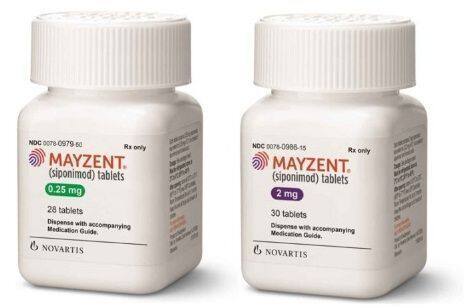
April 22, 2020 News /Bio ValleyBIOON/ --NovartisNovartis recently announced that the latest data on Mayzent (siponimod), a multiple sclerosis drug, have been published in the April supplement of Neurology, the medical journal of the American Academy of Neurology. These data build upon existing clinical evidence: in patients with secondary progressive multiple sclerosis (SPMS),Mayzent has been proven to slow the progression of physical disability and provide cognitive benefits.Although the disease course of multiple sclerosis (MS) is unique for each patient, within 10 years after the onset of relapsing-remitting multiple sclerosis (RRMS), one-quarter of RRMS patients transition to secondary progressive multiple sclerosis (SPMS) during treatment.
The data published from the 5-year EXPAND open-label extension trial evaluated the long-term efficacy and safety of Mayzent in patients with SPMS. In the extension trial, patients either continued receiving Mayzent treatment (Mayzent group) or switched from placebo to Mayzent treatment (placebo-switch group). The data showed that,Compared with the placebo switch group, patients in the Mayzent group had a significantly reduced likelihood of confirmed disability progression (CDP) at 3 and 6 months (p=0.0064 and p=0.0048, respectively), highlighting the benefits of early treatment.Following the cancellation of the 2020 American Academy of Neurology Annual Meeting (AAN 2020) due to the novel coronavirus disease (COVID-19), these data were included in the April supplement of Neurology, continuing to demonstrate Mayzent’s ability to help patients maintain long-term independence through its sustained effects in delaying disease progression and cognitive impairment.
New data also show that, compared with the placebo switch group,The Mayzent group showed a 52% reduction in the annualized relapse rate (ARR).(p < 0.0001). Compared with the placebo switch group,The Mayzent group showed a 23% reduction in the risk of confirmed cognitive impairment worsening at 6 months (as assessed by the Symbol Digit Modalities Test).(p=0.0014). Observed in the Mayzent groupThese clinical treatment benefits persisted for 5 years, highlighting the advantages of early intervention.。The incidence of adverse events was consistent with that observed during the controlled treatment period. The EXPAND open-label extension is ongoing and will continue for a total duration of up to 7 years.
Other Mayzent data shared in the same issue of Neurology included a new post hoc analysis from EXPAND, which demonstrated that Mayzent consistently reduced cortical gray matter (cGM) and thalamic atrophy in patients with secondary progressive multiple sclerosis (SPMS), including those with lower disease activity and more advanced disease. In the studied subgroups, Mayzent reduced cGM atrophy by 48–116% compared with placebo (p < 0.01 at both Month 12 [M12] and Month 24 [M24]) and reduced thalamic atrophy by 30–68% (p < 0.05 at both M12 and M24, except in the subgroup with disease duration >15 years, where p = 0.1029 at M12). Taken together with other analyses, these findings may translate into favorable effects on long-term clinical outcomes, including disability progression and cognitive decline.
Building on existing preclinical evidence suggesting that Mayzent may promote repair mechanisms in the central nervous system (CNS), further analysis was conducted to evaluate the impact of Mayzent on changes in magnetization transfer ratio (MTR) in patients with secondary progressive multiple sclerosis (SPMS). MTR is a widely used technique for assessing myelin content in the brain. The MTR results demonstrated that Mayzent significantly reduced demyelination, thereby confirming prior preclinical findings regarding remyelination.
Bruce Cree, MD, Professor of Multiple Sclerosis at the University of California, San Francisco School of Medicine, stated, “These data underscore the critical importance of early therapeutic intervention with disease-modifying therapies (such as Mayzent) to ensure the best possible long-term outcomes for MS patients experiencing disease progression. It is never too early to stay ahead of the course of multiple sclerosis, as early detection of physical and cognitive changes—even subtle ones—can indicate disease progression, thereby enabling timely intervention.”
Although the course of multiple sclerosis (MS) is unique for each patient and influenced by various factors, including the use of disease-modifying therapies (DMTs) for MS, it is estimated that up to 80% of patients with relapsing-remitting multiple sclerosis (RRMS) will eventually transition to secondary progressive multiple sclerosis (SPMS). Therefore, initiating treatment early to slow disability progression is crucial for patients. Disability progression most commonly includes, but is not limited to, impacts on mobility, which may result in the need for walking aids or wheelchairs, bladder dysfunction, and cognitive decline.
The active pharmaceutical ingredient of Mayzent is siponimod, a next-generation, selective sphingosine-1-phosphate (S1P) receptor modulator that selectively binds to S1P1 and S1P5 receptors. Upon binding to the S1P1 receptor subtype on lymphocytes, siponimod prevents lymphocytes from egressing from lymph nodes, thereby blocking their entry into the central nervous system (CNS) of patients with multiple sclerosis (MS) and exerting an anti-inflammatory effect. Furthermore, siponimod can penetrate the CNS and directly bind to S1P5 and S1P1 receptor subtypes on specific cells within the CNS (oligodendrocytes and astrocytes), promoting remyelination and preventing inflammation.
Mayzent was approved in the United States in March 2019FDAApproved for the treatment of adult patients with relapsing forms of multiple sclerosis (RMS), including active secondary progressive multiple sclerosis (SPMS), relapsing-remitting multiple sclerosis (RRMS), and clinically isolated syndrome (CIS). In the European Union, Mayzent was approved in January 2020 for the treatment of adult patients with SPMS, specifically those with active disease evidenced by inflammatory activity on imaging (e.g., gadolinium-enhancing T1 lesions or active, new, or enlarging T2 lesions), to delay the progression of physical disability.
It is worth noting that,Mayzent is the first oral medication approved for patients with active secondary progressive multiple sclerosis (SPMS), and the first therapeutic agent approved for this patient population in nearly 15 years.This drug has been proven to effectively delay disease progression, addressing a significant unmet medical need in the population of patients with active secondary progressive multiple sclerosis (SPMS).
Novartis is committed to bringing Mayzent to patients worldwide, with regulatory filings currently underway in multiple countries, including China. The success of Mayzent hasNovartisThis is crucial, as Gilenya, another blockbuster oral multiple sclerosis (MS) drug from the company with annual sales of $3 billion, is facing increasingly fierce competition. The industry holds a very optimistic view of Mayzent's commercial prospects, with analysts predicting that its peak annual sales could reach $3 billion. (Bioon.com)