

Janssen Submits New Drug Application in Japan for Darzalex (Daratumumab) Subcutaneous Formulation, Cutting Administration Time from 3 Hours to 5 Minutes
Apr 28, 2020 14:35
CST Updated
Apr 27, 18:40

Janssen Pharmaceuticals
Pharmaceutical R&D Developer

Johnson & Johnson
Healthcare Product Manufacturers, Health Service Providers

FDA
U.S. Food and Drug Administration

European Medicines Agency
The European Medicines Agency (EMA) is a decentralized agency of the European Union (EU), located in London. It began operations in 1995. The agency is responsible for the scientific evaluation, supervision, and safety monitoring of medicines developed by pharmaceutical companies for use in the EU. By ensuring that all medicines available on the EU market are safe, effective, and of high quality, the EMA protects public and animal health in the 28 EU Member States and countries of the European Economic Area.

April 27, 2020 News /Bio ValleyBIOON/ -- Janssen Pharmaceuticals, a subsidiary of Johnson & Johnson (JNJ), recently submitted a New Drug Application (NDA) to the Japanese Ministry of Health, Labour and Welfare (MHLW), seeking approval for the subcutaneous (SC) formulation of Darzalex (兆珂®, generic name: daratumumab) for the treatment of patients with multiple myeloma (MM). This formulation was developed using Halozyme’s ENHANZE drug delivery technology and contains recombinant human hyaluronidase PH20 (rHuPH20). In July 2019, Janssen Pharmaceuticals also submitted an application to the U.S.FDASubmitted a supplemental application for Darzalex SC to the European Medicines Agency (EMA). The currently marketed Darzalex product is an intravenous (IV) formulation.
This new formulation exemplifies Johnson & Johnson’s unwavering commitment to seeking innovative treatment options to support patients with multiple myeloma. Importantly, the efficacy of the Darzalex SC formulation is comparable to that of the existing IV formulation, while reducing the incidence of infusion-related reactions and significantly shortening the time required for administration—from several hours to approximately five minutes.
This application is based on data from the Phase II clinical study PLEIADES (MMY2040) and the Phase III clinical study COLUMBA (MMY3012). COLUMBA is a randomized, open-label study that evaluated the non-inferiority of Darzalex SC versus Darzalex IV in patients with multiple myeloma who had previously received at least three prior lines of therapy (including a proteasome inhibitor [PI] and an immunomodulatory drug [IMiD]) or were refractory to both PI and IMiD.
The results demonstrated non-inferiority of Darzalex SC versus Darzalex IV in terms of efficacy (overall response rate: 41% vs. 37%; ratio=1.11; 95% CI: 0.89–1.37) and pharmacokinetics (daratumumab trough concentration [Ctrough]: 499 mg/L vs. 463 mg/L; ratio=108%; 90% CI: 90%–122%), while offering a shorter administration time (5 minutes vs. >3 hours) and a lower incidence of infusion-related reactions (13% vs. 35%).
Darzalex (ZHAOKE®, daratumumab): China’s First CD38-Targeting Monoclonal Antibody, Redefining Myeloma Treatment
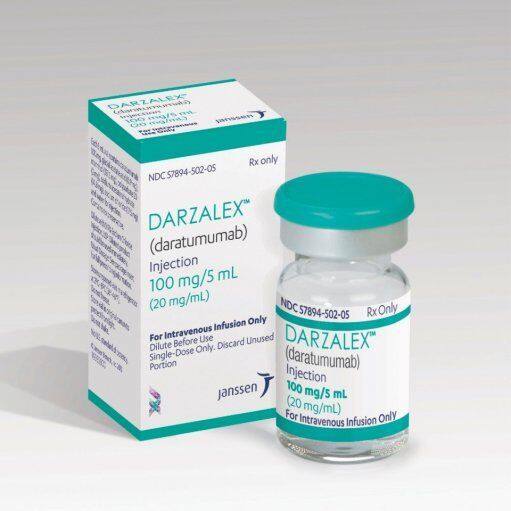
In China, Darzalex (Zhaoke®, daratumumab) was approved for marketing in October 2019. This drug is indicated as monotherapy for adult patients with relapsed and refractory multiple myeloma, specifically those who have received prior therapies including proteasome inhibitors and immunomodulatory agents and experienced disease progression during their last treatment. As the first CD38 monoclonal antibody targeted therapy approved in China, this innovative regimen is poised to redefine the treatment landscape for multiple myeloma domestically.
Darzalex is the first globally approved CD38-mediated, cytolytic antibody drug with broad-spectrum killing activity. It targets and binds to the CD38 molecule, a transmembrane extracellular enzyme highly expressed on the surface of multiple myeloma cells and various solid tumor cells, inducing rapid tumor cell death through multiple immune-mediated mechanisms of action, including complement-dependent cytotoxicity (CDC), antibody-dependent cell-mediated cytotoxicity (ADCC), antibody-dependent cellular phagocytosis (ADCP), and viaApoptosis(apoptosis). Furthermore, Darzalex has also been demonstrated to targetTumorImmunosuppressive cells in the microenvironment thus exhibit immunomodulatory activity.
Darzalex was first approved for marketing in November 2015, with sales reaching $2.998 billion in 2019. Currently, the drug has been approved in many countries worldwide for first-line, second-line, and multi-line treatment of multiple myeloma (MM). The specific approved indications vary by country, including: (1) In November 2015, as a monotherapy for adult patients with MM who have previously received at least three prior therapies (including a proteasome inhibitor [PI] and an immunomodulatory drug [IMiD]) or who are double-refractory to PIs and IMiDs; (2) In November 2016, in combination with lenalidomide and dexamethasone, or in combination with bortezomib and dexamethasone, for adult patients with MM who have received at least one prior therapy; (3) In June 2017, in combination with pomalidomide and dexamethasone, for adult patients with MM who have previously received at least two prior therapies (including lenalidomide and a PI); (4) In May 2018, in combination with bortezomib, melphalan, and prednisone, for patients ineligible for autologousStem Cellsnewly diagnosed multiple myeloma (MM) adult patients undergoing autologous stem cell transplantation (ASCT). This approval makes Darzalex the first approved treatment for newly diagnosed MM.Monoclonal Antibody Drugs(5) In June 2019, in combination with lenalidomide and dexamethasone, for adult patients with newly diagnosed multiple myeloma (MM) who are ineligible for autologous stem cell transplantation (ASCT). (6) In September 2019, in combination with bortezomib, thalidomide, and dexamethasone, for adult patients with newly diagnosed MM who are eligible for ASCT. This approval made Darzalex the first biologic agent approved for use in patients with newly diagnosed MM who are eligible for ASCT.
In February 2019, a split-dose regimen of Darzalex was also approved by the U.S.FDAApproved. This protocol will allow healthcare professionals to choose, as needed, when treating MM patients, to administer the first intravenous infusion of Darzalex as split doses over two consecutive days instead of a single one-time infusion.
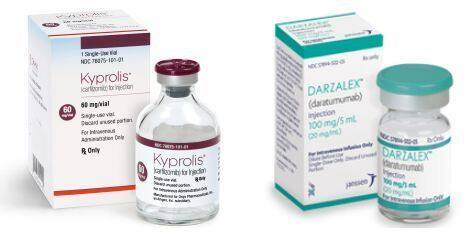
In February this year, Janssen Pharmaceuticals, a subsidiary of Johnson & Johnson, to the United StatesFDAA supplemental Biologics License Application (sBLA) was submitted to seek approval for the combination regimen of Darzalex with Kyprolis (carfilzomib) and dexamethasone (DKd) for the treatment of patients with relapsed or refractory multiple myeloma (R/R MM). This sBLA is based on the results of the Phase III CANDOR study (NCT03158688). Notably, this is the first Phase III study evaluating the combination of two drugs with distinct key mechanisms of action—Darzalex (an anti-CD38 monoclonal antibody) and Kyprolis (a proteasome inhibitor)—for the treatment of multiple myeloma (MM). Data showed that at a median follow-up of 17 months, the study met its primary endpoint of progression-free survival (PFS): compared with the Kd treatment group, the DKd treatment group demonstrated a statistically significant 37% reduction in the risk of disease progression or death (HR=0.630; 95% CI: 0.464, 0.854; p=0.0014). The median PFS was 15.8 months in the Kd group and had not been reached in the DKd group. In addition to meeting the primary endpoint, DKd demonstrated significant efficacy over Kd in key secondary endpoints, including: overall response rate (ORR) (84.3% vs. 74.7%, p=0.0040), minimal residual disease (MRD)-negative complete response rate at month 12 of treatment (12.5% vs. 1.3%, representing a nearly tenfold increase, p<0.0001), and overall survival (OS) (median not reached in either group; HR=0.75; 95% CI: 0.49, 1.13; p=0.08). In the study, the safety profile of the DKd regimen was consistent with the known safety profiles of each individual drug in the regimen.
Currently,Darzalex and Kyprolis have become important foundational therapies for the treatment of multiple myeloma (MM)Results from the CANDOR study provide robust evidence that the KdD regimen induces deep and durable responses in patients with relapsed disease. The combination of Kyprolis (a proteasome inhibitor) and Darzalex (an anti-CD38 monoclonal antibody), two potent targeted agents, represents a highly promising novel approach for the treatment of patients with relapsed or refractory multiple myeloma. (Bioon.com)
Original Source: Halozyme Announces Janssen Submits New Drugapplication In Japan For Daratumumab Subcutaneous Formulation Utilizing Halozyme's ENHANZE® Technology For Patients With Multiple Myeloma