

BMS/Nektar's Bempegaldesleukin Granted FDA Orphan Drug Designation for Stage IIB-IV Melanoma
Apr 28, 2020 14:03
CST Updated
Apr 27, 18:40

Nektar Therapeutics
Pharmaceutical R&D Developer
Bristol-Myers Squibb
Biopharmaceutical and Nutritional Product R&D and Sales

FDA
U.S. Food and Drug Administration
April 27, 2020 News /BioValleyBIOON/ -- The U.S. Food and Drug Administration (FDA) Recently granted orphan drug designation (ODD) to Nektar Therapeutics’ immune-stimulating therapy bempegaldesleukin (bempeg, NKTR-214) for the treatment of stage IIB–IVMelanomaCurrently, Bristol-Myers Squibb (BMS) is collaborating with Nektar Therapeutics to develop an immunotherapy combination regimen of bempeg and the anti-PD-1 therapy Opdivo (brand name: Opdivo; generic name: nivolumab), for the treatment of various typesTumor。
Orphan Drug refers to drugs used for the prevention, treatment,DiagnosisOrphan drugs, while rare diseases are a collective term for conditions with extremely low incidence rates, also known as "orphan diseases." In the United States, rare diseases refer to those affecting fewer than 200,000 individuals. Incentives for orphan drug development include various clinical development incentives, such as tax credits related to clinical trial costs,FDAUser fee waiver,Clinical TrialIn DesignFDAassistance, as well as a 7-year market exclusivity period for the approved indications after the drug is launched.
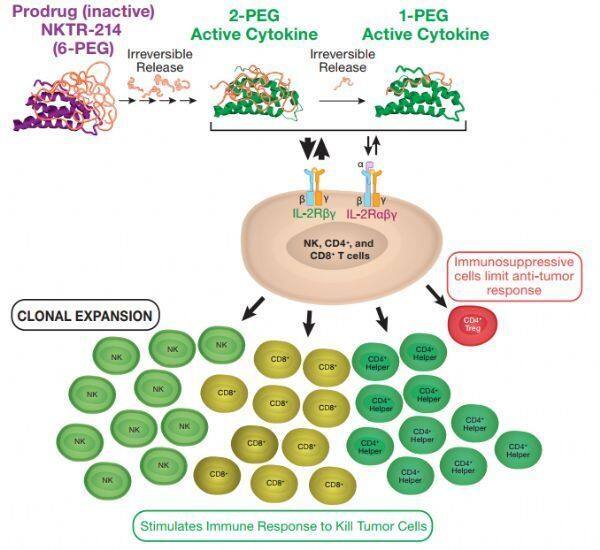
Bempeg is a CD122-biased IL-2 pathway agonist that stimulates the proliferation of anticancer immune cells in vivo by targeting the CD122-specific receptors present on the surface of natural killer (NK) cells, CD4+ T cells, and CD8+ T cells.CD122, also known as the interleukin-2 receptor beta subunit, is an important signaling receptor known to enhance the proliferation of these effector T cells. In preclinical and clinical studies, bempeg treatment led to rapid expansion and mobilization of these cells toTumorinto the microenvironment.
Opdivo is a PD-1 immune checkpoint inhibitor designed to overcome immunosuppression, while bempeg is an immunostimulatory therapy that has been shown to increase tumor-infiltrating cells, T-cell clonality, and PD-1 expression. Opdivo and bempeg have two distinct, complementary mechanisms of action; combining the two enhances the body’s immune system ability to combat cancer.This combination has been proven to reduce baselineTumorTransition from PD-L1 negative (<1%) to PD-L1 positive (≥1%).
Increase in the bodyTumorSupplementing the immune system with tumor-infiltrating lymphocytes (TILs) is crucial, as many patients lack sufficient TIL populations and therefore derive limited benefit from currently approved immune checkpoint inhibitors.Combining immune checkpoint inhibitors with T-cell proliferation can produce a synergistic effect, thereby providing patients with a new therapeutic option.
Bempeg stimulates the proliferation of anti-cancer immune cells
In September 2016, BMS entered into a clinical collaboration with Nektar to evaluate the combination of the anti-PD-1 therapy Opdivo (brand name in China: Oudiwo; generic name: nivolumab) and bempeg for the treatment of various types of cancer. In February 2018, the two parties further reached a global strategic development and commercialization partnership valued at up to $3.6 billion, jointly developing bempeg in combination with Opdivo and Opdivo plus Yervoy across nineTumorCombination applications across more than 20 types of indications, as well as combinations with other anticancer drugs from two companies or third parties.
In January this year, the two parties revised the strategic collaboration agreement for bempeg+Opdivo. The revision includes launching a new joint development plan, under which both parties will expand the current clinical development program of the bempeg+Opdivo combination from three ongoing registration trials (first-line treatment for metastatic melanoma, first-line treatment for cisplatin-ineligible metastatic urothelial carcinoma, and first-line treatment for metastatic renal cell carcinoma) to include two additional registration trials (adjuvant therapy).Melanoma, muscle-invasive bladder cancer). In addition, to support future registration trials, the parties will initiate a Phase I/II dose-escalation and expansion study to evaluate the efficacy of bempeg plus Opdivo in combination with axitinib as first-line treatment for renal cell carcinoma (RCC). The costs of these studies will be shared in accordance with the cost-sharing provisions outlined in the original collaboration agreement. As part of the new strategic collaboration agreement, Bristol-Myers Squibb will independently conduct and fund a Phase I/II dose-optimization and expansion study evaluating bempeg plus Opdivo as first-line treatment for non-small cell lung cancer (NSCLC).
Currently, the bempeg+Opdivo immunotherapy combination has entered three Phase III clinical trials, including:First-line treatment for unresectable or metastaticMelanoma(NCT03635983)、First-line Treatment for Advanced Renal Cell Carcinoma (NCT03729245)、First-line Treatment for Muscle-invasive Bladder Cancer Unsuitable for Cisplatin-based Chemotherapy (NCT04209114)。
In the treatment of melanoma, in August 2019, the United StatesFDABreakthrough Therapy Designation (BTD) Granted to the Bempeg + Opdivo Immune Combination for First-Line Treatment of Unresectable or Metastatic Melanoma
This BTD is based on the metastatic (Stage IV) data from the Phase I/II PIVOT-02 clinical studyMelanomaPatient cohort data. The results showed that, as of March 29, 2019, with a median follow-up of 12.7 months, among the 38 efficacy-evaluable patients who received first-line treatment with the NKTR-214 plus Opdivo immunotherapy combination,Overall Response Rate (ORR) was 53% (20/38)、Complete response rate (CR) was 34% (13/38).The disease control rate (DCR: CR+PR+SD, complete response + partial response + stable disease) was 74%. In the subgroups of baseline PD-L1 negative (n=14), PD-L1 positive (n=21), unknown PD-L1 status (n=3), lactate dehydrogenase higher than the upper limit of normal reference value (LDH > ULN, n=11), and liver metastasis (n=10), the overall response rates were 43%, 62%, 33%, 45%, and 50%, respectively. (Bioon.com)
Original Source: United StatesFDAOrphan Drug Database, Nektar Therapeutics, BMS