

Merck Announces First Clinical Results for KEYTRUDA® (pembrolizumab) Six-Week Dosing Regimen, Demonstrating Comparable Efficacy to Three-Week Schedule
Apr 28, 2020 09:51
CST Updated
03:55

MSD
Pharmaceutical R&D and Manufacturer

April 27, 2020 News /BioValleyBIOON/ -- Merck & Co. recently announced data on the treatment of metastatic cancer with its anti-PD-1 therapy Keytruda (generic name: pembrolizumab)MelanomaInterim data from Cohort B of the Phase I KEYNOTE-555 study. The data show that,The efficacy and safety of the Keytruda 400 mg every 6 weeks (400 mg Q6W) dosing regimen are comparable to those of the currently approved 200 mg every 3 weeks (200 mg Q3W) dosing regimen.Interim data show that patients treated with Keytruda 400 mg Q6W,Overall Response Rate (ORR) was 38.6%(n=17/44; 95% CI: 24.4-54.5). It is worth noting that,These data represent the first clinical results evaluating the Keytruda Q6W dosing regimen.
Just recently, Merck & Co., Inc. (MSD) resubmitted to the U.S. Food and Drug Administration (FDA) submitted a supplemental Biologics License Application (sBLA) to update the dosing frequency of Keytruda, incorporating the 400 mg every 6 weeks (Q6W) regimen option across all approved adult indications. Currently, the dosing regimen for Keytruda is 200 mg every 3 weeks (200 mg Q3W, administered via intravenous infusion over no less than 30 minutes). If approved, the 400 mg Q6W regimen will provide patients with a more convenient treatment option, reducing the frequency of administration and benefiting both patients andTumorprovides physicians with greater therapeutic flexibility.
The results of KEYNOTE-555 supported this sBLA submission. In the European Union, in March 2019, the European Commission approved the 400 mg Q6W dosing regimen for Keytruda monotherapy for all approved monotherapy indications, covering fiveTumoreight indications of the type, including: non-small cell lung cancer (NSCLC),Melanoma, bladder cancer, head and neck cancer, classical Hodgkin lymphoma.
Dr. Scot Ebbinghaus, Vice President of Clinical Research at Merck & Co., Inc. Research Laboratories, stated, “We remain committed to improving cancer treatment, including providing greater flexibility in Keytruda therapy. These data, together with extensive model-based evaluations, provide robust evidence supporting the Q6W dosing regimen for Keytruda.”
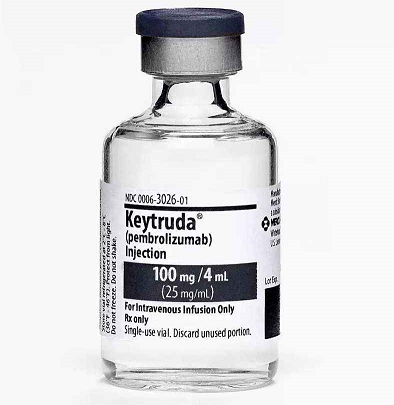
KEYNOTE-555 (NCT03665597) is a Phase I, open-label trial evaluating subcutaneous versus intravenous administration of Keytruda for the treatment of unresectable Stage III or Stage IVMelanomaRelative Bioavailability in Patients. The primary endpoint of the study was the overall response rate (ORR), and secondary endpoints included pharmacokinetic (PK) exposure, progression-free survival (PFS), and safety.
In Cohort B, 100 patients were assigned to receive Keytruda 400 mg Q6W. An analysis was conducted on the first 44 patients with sufficient follow-up data to assess efficacy.The objective response rate (ORR) in the Keytruda 400 mg Q6W regimen treatment group was 38.6% (n=17/44; 95% CI: 24.4–54.5), with a complete response (CR) rate of 9.1% (n=4/44) and a partial response (PR) rate of 29.5% (n=13/44). The efficacy outcomes were consistent with those previously reported for Keytruda monotherapy.MelanomaThe trial results were comparable.
Furthermore, the pharmacokinetic (PK) exposure of Keytruda 400 mg every 6 weeks (Q6W) falls within the range of clinical experience observed with other tested dosing regimens. The trough concentration of the 400 mg Q6W regimen is comparable to that of Keytruda 200 mg or 2 mg/kg administered every 3 weeks (Q3W), while the peak concentration is lower than that of the Keytruda 10 mg/kg every 2 weeks (Q2W) regimen.
The safety profile of Keytruda 400 mg Q6W is consistent with that of Keytruda 200 mg Q3W, the latter of which has been established in more than 12Tumorconfirmed in the type. 97.7% (n=43/44) of patients experienced all-grade, all-cause adverse events. 25.0% (n=11/44) of patients experienced grade 3–4 all-cause adverse events. 68.2% (n=30/44) of patients experienced treatment-related adverse events (TRAEs). 2.3% (n=1/44) of patients experienced grade 3–4 metastasis. There were no treatment-related deaths.(Bioon.com)
Original Source: First Clinical Outcomes Evaluating Six-Week Dosing Schedule for Merck’s KEYTRUDA® (pembrolizumab) Presented at AACR Virtual Annual Meeting I