

Phase 3 Trial of Libtayo® (Cemiplimab) Monotherapy in First-Line PD-L1-High NSCLC Halted Early Due to Significant Overall Survival Benefit
Apr 28, 2020 09:56
CST Updated
03:55

Sanofi
Pharmaceutical R&D Developer
Regeneron
Biopharmaceutical Manufacturer
Independent Data Monitoring Committee
Independent Data Monitoring Committee (IDMC) is a group of independent experts external to the study who assess the progress of clinical research and accumulate safety and efficacy data throughout its course. The committee evaluates the risk–benefit balance of the study and makes recommendations regarding the continuation, modification, and/or publication of the trial.

April 27, 2020 News /BioonBIOON/ -- Sanofi and its partner Regeneron recently announced that a Phase III trial evaluating the anti-PD-1 therapy Libtayo (cemiplimab) for the treatment of non-small cell lung cancer (NSCLC) had met its primary endpoint of overall survival (OS). Based on the recommendation from the Independent Data Monitoring Committee (IDMC) to stop the trial early, modifications will be made to allow all patients to receive Libtayo. These data will serve as the basis for regulatory submissions in the United States and the European Union in 2020.
This is an open-label, randomized, multicenter Phase III trial in ≥50% of theTumorConducted in patients with advanced squamous or non-squamous NSCLC whose tumor cells tested positive for PD-L1, the study compared the efficacy and safety of Libtayo monotherapy versus platinum-based doublet chemotherapy as first-line treatment. A total of 712 patients were enrolled (710 included in the interim analysis), comprising those with locally advanced (stage IIIB/C) NSCLC who were not candidates for surgical resection or definitive chemoradiotherapy, or who experienced disease progression after definitive chemoradiotherapy, as well as those with previously untreated metastatic (stage IV) NSCLC. This trial provides the most critical evidence currently available for this patient population.Big DataCollection.
In the trial, patients were randomized in a 1:1 ratio to receive either intravenous infusions of Libtayo at a dose of 350 mg every 3 weeks for up to 108 weeks, or investigator’s choice of platinum-based doublet chemotherapy for 4–6 cycles (with or without pemetrexed maintenance therapy). The primary endpoints were overall survival (OS) and progression-free survival (PFS); secondary endpoints included overall response rate (ORR), duration of response (DOR), and quality of life.
This trial is designed to reflect current and emerging treatment paradigms. The inclusion criteria allow NSCLC patients with: controlled hepatitis B, hepatitis C, or HIV; pre-existing and stable brain metastases; and/or locally advanced disease that has progressed following definitive chemoradiotherapy. Patients who experience disease progression during the trial may change their treatment regimen: patients in the chemotherapy arm may cross over to the Libtayo arm, while patients in the Libtayo arm may combine Libtayo therapy with 4–6 cycles of chemotherapy.
A protocol-specified interim analysis conducted by the IDMC demonstrated a significant improvement in overall survival (OS) among patients receiving Libtayo monotherapy. Despite up to one-third of patients having enrolled in the trial within the past six months, and with all chemotherapy patients eligible to cross over to Libtayo upon disease progression, Libtayo significantly reduced the risk of death by 32.4% compared with platinum-based doublet chemotherapy (HR=0.676; CI: 0.525–0.870; p=0.002). No new safety signals for Libtayo were identified in the trial. Detailed trial data will be presented at an upcoming medicalMeetingpublished above.
Currently, another separate Phase III trial is underway to evaluate Libtayo in combination with chemotherapy as first-line treatment for patients with advanced NSCLC, regardless of PD-L1 expression levels. Patient enrollment for this trial is expected to be completed in 2020.
Dr. George D. Yancopoulos, Co-Founder, President, and Chief Scientific Officer of Regeneron, stated, “Although demonstrating a survival benefit for immunotherapy as first-line treatment for NSCLC has been challenging,”FDA“The approved anti-PD-1 monotherapy has changed the treatment paradigm. We are pleased with the results of this trial, which demonstrate the survival benefit of Libtayo for these patients, and we hope that this drug will become a potential alternative option for physicians and patients.”
John Reed, M.D., Global Head of Research and Development at Sanofi, stated, “This is the largest-scale study to evaluate a PD-1 inhibitor as first-line monotherapy in patients with advanced non-small cell lung cancer (NSCLC) with high PD-L1 expression.”Clinical Trials, these positive results are highly encouraging, and we look forward to bringing a potential new treatment option to these patients. We thank all the investigators and patients who participated in this global trial.”
Lung cancer is the leading cause of cancer-related deaths worldwide. It is projected that by 2020, there will be more than 2.2 million new cases diagnosed globally, with 228,800 new cases in the United States alone. Approximately 85% of lung cancers are non-small cell lung cancer (NSCLC), and an estimated 25% to 30% of these cases exhibit high PD-L1 expression (in ≥50% ofTumorPD-L1 positivity was detected in cells). In recent years, although immunotherapy has transformed the treatment landscape for patients with advanced non-small cell lung cancer (NSCLC), there remains a need to optimize the identification and management of patients with high PD-L1 expression.
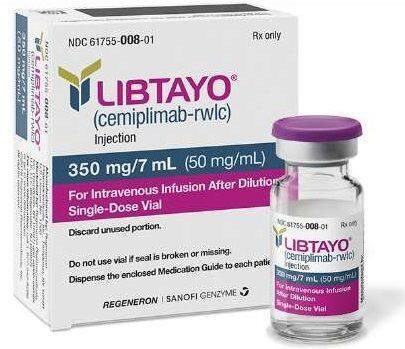
Libtayo is an anti-PD-(L)1 inhibitor, a class of cancer immunotherapies that has garnered significant attention. It aims to harness the body’s own immune system to fight cancer by blocking the PD-1/PD-L1 signaling pathway, thereby inducing cancer cell death, and is effective in treating various typesTumorpotential. Libtayo is a fully human monoclonal antibody that targets the immune checkpoint receptor PD-1 on T cells. By binding to PD-1, Libtayo has been shown to prevent cancer cells from inhibiting T cell activation via the PD-1 pathway.
In the United States, the European Union, and other countries, Libtayo has been approved for the treatment of adult patients with metastatic or locally advanced cutaneous squamous cell carcinoma (CSCC) who are not candidates for curative surgery or curative radiation therapy.
Libtayo was created and optimized using Regeneron’s proprietary VelocImmune technology platform and is currently being co-developed under the global collaboration agreement between Regeneron and Sanofi for the treatment of various types of cancer. Libtayo’s extensive clinical program focuses on refractory cancers, including skin cancer, cervical cancer, solid tumors, and hematologic malignancies. (Bioon.com)
Original Source: Phase 3 Trial of Libtayo® (cemiplimab) as Monotherapy for First-Line Advanced Non-small Cell Lung Cancer Stopped Early Due to Highly Significant Improvement in Overall Survival