

Takeda's Potent EGFR Tyrosine Kinase Inhibitor Mobocertinib Receives FDA Breakthrough Therapy Designation for Precision Treatment of Lung Cancer
Apr 28, 2020 10:00
CST Updated
03:54

Takeda
Biopharmaceutical Manufacturer

FDA
U.S. Food and Drug Administration

April 27, 2020 /Bio ValleyBIOON/ -- Takeda Pharmaceutical Company Limited (Takeda) recently announced that the U.S. Food and Drug Administration (FDA) has granted breakthrough therapy designation (BTD) to mobocertinib (TAK-788) for the treatment of patients with metastatic non-small cell lung cancer (NSCLC) harboring epidermal growth factor receptor (EGFR) exon 20 insertion mutations, whose disease has progressed during or after platinum-based chemotherapy. Currently, there are no approved therapies for this specific type of NSCLC. Mobocertinib is a small-molecule tyrosine kinase inhibitor (TKI) designed to selectively target EGFR and human epidermal growth factor receptor 2 (HER2) exon 20 insertion mutations.
Breakthrough Therapy Designation (BTD) is a new drug review pathway established by the FDA in 2012, aimed at accelerating the development and review of new drugs intended to treat serious or life-threatening diseases, where preliminary clinical evidence indicates that the drug may provide substantial improvement over existing therapies. Drugs granted BTD status receive, during development, includingFDAWith closer guidance, including from senior officials, new drug marketing applications are eligible for rolling review and priority review to ensure that new treatment options are made available to patients in the shortest possible time.
FDAGranting of Breakthrough Therapy Designation (BTD) to mobocertinib, based on the overall response rate (ORR) and long-term survival benefits observed in patients who responded to mobocertinib treatment in a Phase I/II study. This study is evaluating mobocertinib (160 mg, orally once daily) for the treatment ofTumorthe efficacy and safety in patients with locally advanced or metastatic non-small cell lung cancer (NSCLC) harboring EGFR exon 20 insertion mutations who have previously received systemic chemotherapy, a patient population for whom no targeted therapies are currently available and current treatment options offer limited benefit.
The data from this study mark a potentially significant advance in addressing the needs of such patients. The data show thatThe median progression-free survival (PFS) with mobocertinib treatment was 7.3 months.、The overall response rate (ORR) was 43% (n=12/28).In the study, the safety of mobocertinib was manageable (n=72). The most common treatment-related adverse events were diarrhea (85%), nausea (43%), rash (36%), vomiting (29%), and decreased appetite (25%).
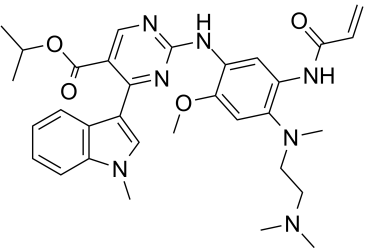
Chemical Structure of Mobocertinib (Image source: medchemexpress.cn)
TakedaTumorDr. Christopher Arendt, Head of Academic Therapeutics, stated: “We are delightedFDA“The therapeutic potential of mobocertinib for patients with non-small cell lung cancer (NSCLC) harboring EGFR exon 20 insertion mutations has been recognized, addressing an urgent need for effective treatment options. At Takeda, we are committed to developing innovative medicines for difficult-to-treat diseases. The Breakthrough Therapy designation of mobocertinib marks a significant step forward in our efforts to transform the standard of care for this underserved population.”
Lung cancer is the leading cause of cancer-related deaths worldwide, with non-small cell lung cancer (NSCLC) being the most common type, accounting for approximately 85% of all lung cancer cases. Patients with EGFR exon 20 insertion mutations constitute only 1–2% of those with NSCLC and have a poorer prognosis compared to other EGFR mutations. Currently, there are no targeted therapies approved specifically for exon 20 mutations, and the benefits of currently available EGFR tyrosine kinase inhibitors (TKIs) and chemotherapy for these patients are limited.
Mobocertinib is a potent small-molecule tyrosine kinase inhibitor (TKI) designed to selectively target EGFR and HER2 exon 20 insertion mutations. In 2019, the United StatesFDAGranted orphan drug designation (ODD) to mobocertinib for the treatment of lung cancer patients with HER2 mutations or EGFR mutations (including exon 20 insertion mutations).
The development program of mobocertinib started in the NSCLC population and is expected to expand to otherTumorother underserved populations of this type. Mobocertinib is an investigational drug whose efficacy and safety have not yet been established.(Bioon.com)
Original Source: Takeda Announces U.S.FDA Breakthrough Therapy Designation for Mobocertinib (TAK-788) for the Treatment of NSCLC Patients with EGFR Exon 20 Insertion Mutations