

AstraZeneca and Wuxi Launch I·Campus to Build a Global Life Science Innovation Hub with Green Approval and International Resources

AstraZeneca
Biopharmaceutical Manufacturer
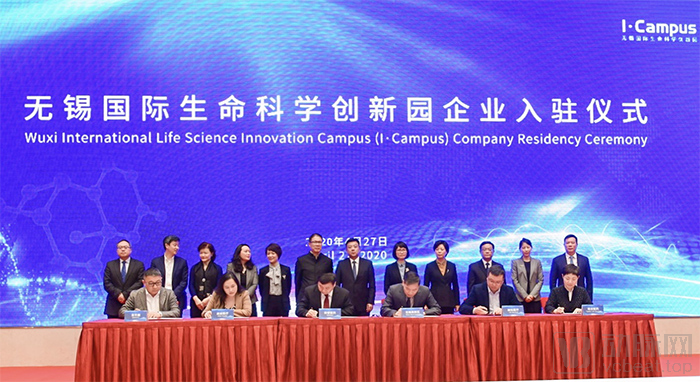
On April 27, AstraZeneca’s Wuxi I·Campus Life Science Park was officially fully launched, with an occupancy ceremony held to mark the occasion. A total of ten companies, including five newly signed enterprises, received their keys and moved into the park. I·Campus is committed to becoming the preferred hub for life science innovation enterprises from both China and overseas to develop their presence in the Chinese market and connect with global markets, fostering a global life science ecosystem through robust government-enterprise collaboration.
The relationship between industrial parks and enterprises is one of mutual reinforcement and collaborative prosperity. Supporting park services, industrial clusters, talent pipelines, policy assistance, and management training significantly contribute to corporate growth. The economic effects of industrial parks have attracted increasing attention from businesses. By developing industrial parks, governments foster industrial agglomeration; through resource sharing and policy support, they can drive the development of related industries. So, in today’s highly competitive and homogeneous life science parks, how does I·Campus, the collaboration between AstraZeneca and Wuxi, serve innovative enterprises? What sets it apart from other parks? VCBeat (WeChat ID: Vcbeat) has compiled an analysis on this topic.
In 2019, AstraZeneca once again topped the list of the top 100 taxpayers in Wuxi, following its lead in 2018. AstraZeneca China has also developed into the largest multinational pharmaceutical company in China's prescription drug market and one of the fastest-growing multinational pharmaceutical companies in China. Behind these achievements, business model innovation has played a significant role.
AstraZeneca aims to transform from a traditional pharmaceutical company into an innovation-driven platform enterprise. For this pharma giant’s transformational journey, a stage broader than just innovation centers is required. Thus, the blueprint for I-Campus was born.
VCBeat’s summary and analysis suggests that, compared with other parks, I·Campus has its own unique advantages in operational model, government policies, commercialization and resource acquisition, funding acquisition, and access to professional services.
First, I·Campus is a rare industrial park operated through public-private partnership, giving it a comparative advantage over other parks.
Second, government policy support. Wuxi City has tailored a one-stop green approval process and a package of preferential policies for I·Campus, alleviating the concerns of start-up enterprises.
Third, AstraZeneca provides its own resources and global network to help startups rapidly commercialize their products and potentially become partners of AstraZeneca.
Finally, the park is also equipped with venture capital funds and professional services, addressing the financial and service-related pressures faced by startups.
Exclusive Government-Enterprise Collaborative Operations
Unlike previous models, I·Campus adopts a government-enterprise partnership-led operational model, which is relatively rare in China, thereby granting it unique advantages.
Currently, the operational and management models of biomedical industrial parks in China can be categorized into two types: government-led and enterprise-led. The government-led model typically adopts an operational approach characterized by “government leadership with enterprises as the main entities,” wherein the government constructs the park and conducts investment promotion, achieving profitability through property management and tax revenues.
This model is currently the most prevalent, typically characterized by substantial upfront investment and policy favoritism; however, in most cases, these advantages do not extend further. Due to homogeneous competition, localities often resort to simplistic and crude policy stacking to gain a competitive edge, which is detrimental to the long-term development of the industry.
Enterprise-led Model: Typically, industrial parks or incubators are spearheaded by one or several large enterprises, characterized by a high degree of market orientation and flexible operational mechanisms. However, such parks often struggle to secure preferential government policy support.
I·Campus adopts a co-led model by the government and enterprises, combining the strengths of both approaches: the Wuxi Municipal Government provides policy and infrastructure support, while AstraZeneca fully shares its insights into the Chinese market and industry, along with its global network resources.
Simply put, I·Campus “understands” businesses better than other parks; meanwhile, it also has a deeper “understanding” of the Chinese market.
Certainly, this model requires a considerable degree of mutual understanding and trust between the government and enterprises—Wuxi and AstraZeneca happen to be one of the few pairs that have achieved such a high level of mutual trust. It is therefore no surprise that I·Campus was jointly established by Wuxi and AstraZeneca.
Policy Support: Wuxi to Leverage I·Campus to Build a Global Hub for the Life Sciences Industry
Compared with Wuxi’s three existing specialized biomedical parks—Mashan, Jiangyin, and Huishan—I·Campus boasts the most complete industrial chain and the broadest ecosystem, serving as a vital component of Wuxi’s life sciences industry. It will shoulder the responsibility of advancing the 4D sectors (pharmaceuticals, medical devices, diagnostics, and digital health) by building an innovation incubation platform that covers the entire life sciences lifecycle, from R&D to incubation and from demonstration to commercialization.
The Wuxi Municipal People’s Government recently released the “Several Measures on Accelerating the Development of Wuxi’s Modern Biopharmaceutical Industry” and the “Three-Year Action Plan for High-Quality Development of Wuxi’s Modern Biopharmaceutical Industry (2020–2022).” The frequent mention of I·Campus in these documents underscores its strategic importance.
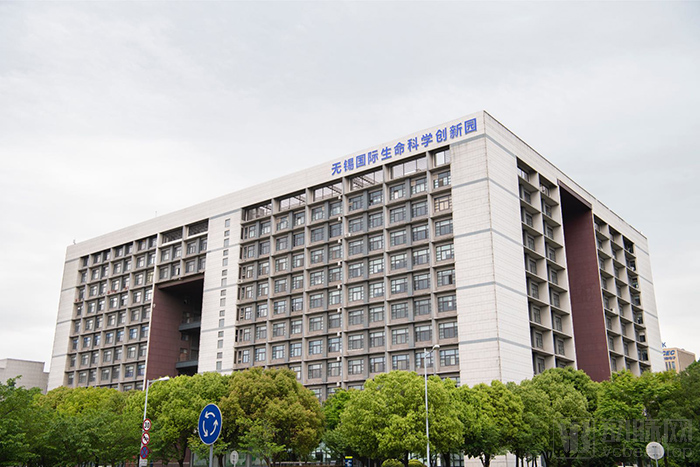
Accelerating the review and approval of drugs and medical devices is undoubtedly one of the most significant policies Wuxi has introduced to support I·Campus. At the park’s inauguration ceremony on April 27, the Jiangsu Provincial Medical Products Administration and the Wuxi Municipal People’s Government entered into a strategic cooperation agreement, establishing the “Wuxi High-Tech Zone Biopharmaceutical Industry Innovation Development Service Center” within I·Campus to provide specialized guidance on regulatory submission processes.
The Center provides guidance to enterprises in the industrial park, under the oversight of the National Medical Products Administration (NMPA) and the Jiangsu Provincial Medical Products Administration, and offers professional services including policy, regulatory, and technical consultation; review of market access documentation; centralized submission; and guidance on corrective actions.
Through this pilot “Green Channel for Drug and Medical Device Market Access,” the product registration applications and related services for high-quality innovative life science projects from domestic and overseas enterprises can be significantly accelerated, thereby addressing the long-standing pain points faced by these companies.
Meanwhile, the one-stop services provided by CRO commercialization service providers such as SAS (Cloud Brain) and Tigermed, combined with Wuxi’s municipal clinical resource platform, will significantly shorten the time required for clinical trials and regulatory submissions, thereby improving approval efficiency.
Compared to other regions, Wuxi’s longstanding focus on the life sciences industry has enabled its local government to gain a deeper understanding of the sector. This has allowed it to tailor policies specifically to address the pain points faced by enterprises.
Since the inception of the Wuxi International Life Science Innovation Park, Xin’an Medical Technology, an Indian company specializing in AI-driven electrocardiography (ECG) solutions, has closely monitored its competitive advantages and development prospects. For an innovative foreign enterprise like Xin’an Medical, taking the first step in a new market is crucial. The business environment diligently cultivated by the Wuxi Municipal Government left a deep impression on Xin’an Medical. With government assistance, Xin’an Medical rapidly established an efficient and compliant business model, accelerating the implementation of its innovative solutions in China. In September 2019, Xin’an became one of the first overseas companies to sign agreements, and in April 2020, it was among the first batch of enterprises to settle in the park.
From personalized guidance to commercial collaborations, I·Campus will serve as the gateway to AstraZeneca’s comprehensive solutions.
AstraZeneca supports the development of the industrial park and its tenant enterprises through its global network resources, international management expertise, and commercialization platform.
Specifically, enterprises settling in the park can receive a wide range of support from AstraZeneca, including expert consultation, corporate guidance, solution integration, commercial collaboration, and investment.
I·Campus maintains regular communication and engagement with all tenant companies, providing tailored resources and support based on their specific needs. Recently, government officials and the AstraZeneca leadership team also held face-to-face discussions with tenant companies to gain insights into their development status and requirements, offering on-site guidance or facilitating resource connections accordingly.
Commercialization channels are a key lever for parks to attract and nurture enterprises, as well as an important condition for companies to rapidly scale up and strengthen. Especially for early-stage life science innovators, the opportunity to integrate with AstraZeneca’s patient-centric therapeutic solutions, thereby gaining further access to AstraZeneca’s global resource network, holds immense appeal.
Xin’an Medical, for example, has benefited significantly from AstraZeneca’s extensive industry resources and its understanding of the Chinese market. Currently, Xin’an Medical has entered into a cooperation agreement with AstraZeneca’s Cardiovascular Business Unit to explore comprehensive, substantive collaboration in the field of electrocardiographic (ECG) diagnosis.
This is not an isolated case. I·Campus is drawing on successful examples of its commercial collaboration with AstraZeneca to actively align the 14 innovative integrated diagnosis-and-treatment solutions from the AstraZeneca China Health Internet of Things Innovation Center with AstraZeneca’s various pharmaceutical business units.
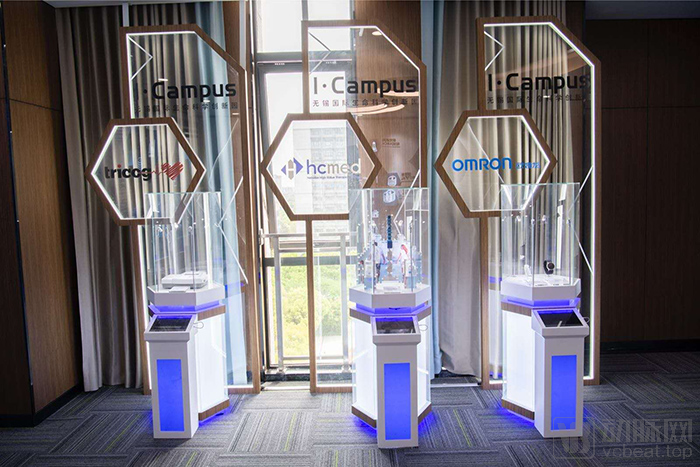
Leveraging AstraZeneca’s omnichannel commercialization platform and innovation network, I·Campus provides resident enterprises with services such as domestic and international market insights, product concept validation, commercial innovation collaboration, sales licensing, and agency promotion, thereby further building a comprehensive commercialization channel system. I·Campus can be positioned as one of the primary entry points for innovative projects to access AstraZeneca’s integrated solutions.
After gaining access to AstraZeneca’s comprehensive solutions, companies also have the opportunity to expand globally with the support of AstraZeneca’s global network. In fact, AstraZeneca has already established multiple innovation centers similar to I·Campus around the world, demonstrating the grand strategic vision behind I·Campus.
Currently, I·Campus has established a sister-park relationship with AstraZeneca’s Skolkovo Innovation Center in Russia, and has formed strategic partnerships with the National Association of Software and Service Companies (NASSCOM) in India, the BioIndustry Association (BIA) in the UK, the Hong Kong Innovation Medical Society, and the Australian Trade and Investment Commission.
This global network support creates a two-way, bidirectional driving force. On one hand, it helps overseas companies interested in China’s vast market to enter the country. In fact, among the first batch of enterprises to join I-Campus, some international companies gained access through AstraZeneca’s global network. On the other hand, it assists Chinese enterprises in developing their local markets and further expanding overseas, thereby achieving their internationalization goals.
Global Capital Convergence, Partner Collaboration
Behind every successful project lies the concerted effort of multiple partners, a necessity that is even more pronounced in the increasingly sophisticated life sciences industry. Accordingly, I·Campus has also engaged partners across the industrial chain to collaborate and join forces.
First, global capital support. Companies stationed at I·Campus can access the substantial funding needed for development—AstraZeneca and CICC Capital have jointly established a $1 billion global healthcare industry fund to provide financing to promising projects, including those within I·Campus. Furthermore, companies that secure financing will receive a comprehensive package of supporting services during their expansion, including policy incentives and incubation acceleration.
Meanwhile, enterprises in the park can also receive investment evaluations from other top-tier fund partners. Currently, these funds include Legend Capital, Lilly Asia Ventures, Vivo Capital, Qiming Venture Partners, DFB Life Science Capital, and FSD Capital.
Meanwhile, as a critical component of the modern biomedical industry, professional services—including Contract Research Organizations (CROs)—are indispensable. Leveraging their deep understanding of industry development patterns, AstraZeneca and Wuxi City have equipped I·Campus with high-caliber professional services.
Among the first batch of enterprises to settle in the park are Tigermed, a professional CRO service provider, and its subsidiary, Guanhe Medical Technology. Together, they will provide specialized third-party services to companies in the park, including clinical trial services, new drug R&D services, clinical drug testing services, and medical device testing services.
Unlike other government-led life science parks, I·Campus is the first life science park co-developed by a leading multinational life sciences enterprise and the government, featuring distinct internationalization and innovation characteristics.
Moreover, the future vision for this international innovation park extends far beyond its current scope. Both Wuxi City and AstraZeneca have expressed their hope to ultimately build a vast ecosystem through the exploration of this model, which will further advance the globalization of China’s healthcare sector and unlock greater industry potential.