

Roche’s OCREVUS (ocrelizumab) – Twice-Yearly Infusion Significantly Reduces Disability Progression and Thalamic Atrophy in Multiple Sclerosis, with Greater Benefits from Early Treatment
Apr 29, 2020 17:14
CST Updated
17:14

Roche
Oncology Drug Research, Development, and Manufacturing
April 29, 2020 /BioValleyBIOON/ -- Roche recently announced new analysis data from the Phase III OPERA I and OPERA II studies, as well as the open-label extension (OLE) period, for its new multiple sclerosis drug Ocrevus (ocrelizumab). These data indicate that Ocrevus treatment reduces the risk of disease activity and disability progression in patients with relapsing forms of multiple sclerosis (RMS) and primary progressive multiple sclerosis (PPMS).
OcrevusAdministered via intravenous infusion every 6 months, requiring only 2 infusions per year., which can significantly improve patients' treatment adherence.These new analyses provide additional evidence on the benefit-risk profile of Ocrevus, including the impact of multiple sclerosis (MS) on patients’ daily lives.
Levi Garraway, M.D., Chief Medical Officer and Global Head of Product Development at Roche, stated, “For patients with multiple sclerosis, maintaining mobility for as long as possible is critically important. We are encouraged by these new long-term analyses, which demonstrate that initiating treatment with Ocrevus early can reduce the risk of requiring a walking aid by nearly 50% over six years. Slowing the progression of MS early in the disease course—rather than solely treating relapses—may deliver more clinically meaningful outcomes for patients.”
——Impact of Ocrevus on Disability Progression and Risk of Requiring Walking Aids in Patients with RMS:
Early treatment with Ocrevus delays the risk of requiring a walking aid.This risk is measured by the duration of time during which patients maintain a score of 6 or higher on the Expanded Disability Status Scale (EDSS ≥6) for at least 48 weeks. A new post hoc analysis from the open-label extension (OLE) phases of two OPERA studies demonstrated that, compared with patients with relapsing multiple sclerosis (RMS) who switched to Ocrevus after receiving interferon beta-1a for 2 years during the double-blind period (resulting in a total Ocrevus treatment duration of 4 years), those who received continuous Ocrevus treatment from an earlier stage (resulting in a total Ocrevus treatment duration of 6 years) had a 49% reduced risk of requiring ambulatory assistance (4.3% vs. 7.2%, p=0.0042). The safety profiles during the double-blind and open-label extension periods were generally consistent.
——The Impact of Ocrevus on the Progression of Thalamic Atrophy:
Ocrevus Can Gradually Slow Thalamic Atrophy in Patients with RMS or PPMS(measured by changes in thalamic volume). Results from the double-blind phases of the Phase III OPERA I, OPERA II, and ORATORIO studies demonstrated that Ocrevus resulted in significantly less thalamic atrophy compared with interferon beta-1a and placebo (all p < 0.001). The thalamus is a deep gray matter structure in the brain that serves as a relay and integration center, playing a key role in alertness, motor control, cognition, and sensory processing. The thalamus is affected by MS-related damage, and its atrophy may serve as a useful marker of treatment efficacy.
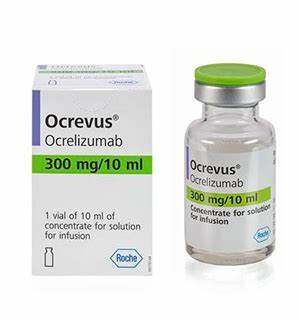
Ocrevus is a humanized monoclonal antibody that selectively targets CD20-positive B cells, a specific type of immune cell considered to be a key factor in causing myelin and axonal damage, which can lead to disability in patients with multiple sclerosis (MS). Preclinical studies have confirmed that Ocrevus selectively binds to the CD20 cell surface protein expressed on specific B cells, but does not bind to CD20 proteins on the surface of stem cells and plasma cells, thereby preserving important functions of the immune system.
Ocrevus was first approved by the U.S. FDA in March 2017 and has since received approval in more than 90 countries worldwide. It is the first medication approved for the treatment of relapsing forms of multiple sclerosis (RMS), including relapsing-remitting MS (RRMS), active or relapsing secondary progressive MS (SPMS), and clinically isolated syndrome (in the U.S. market), as well as primary progressive MS (PPMS). Administered via intravenous infusion every six months, with only two infusions required per year, Ocrevus significantly improves patient adherence to treatment. Real-world experience with Ocrevus is rapidly accumulating, with over 150,000 patients with multiple sclerosis having received this therapy globally.
Multiple Sclerosis (MS) is a chronic inflammatory, demyelinating disease of the central nervous system that affects approximately 2.3 million people worldwide, and there is currently no cure for the condition. MS occurs when the body’s immune system abnormally attacks the myelin—the insulating layer and supportive structure surrounding nerve cells—in the brain, spinal cord, and optic nerves, causing inflammation and associated damage. This damage can lead to a range of symptoms, including visual impairment, muscle weakness, speech difficulties, severe fatigue, and cognitive dysfunction; in severe cases, it can result in mobility impairments and disability. The average age of onset for multiple sclerosis is typically between 20 and 40 years, making it a leading cause of non-traumatic disability among young and middle-aged adults. (Bioon.com)
Original Source: New 6-year data for Roche’s OCREVUS (ocrelizumab) show earlier treatment initiation nearly halves risk of needing walking aid in relapsing multiple sclerosis