

Takeda's Maribavir Granted Clinical Trial Approval in China for CMV Infection in Transplant Recipients
May 06, 2020 14:41
CST Updated
14:41

Takeda
Biopharmaceutical Manufacturer
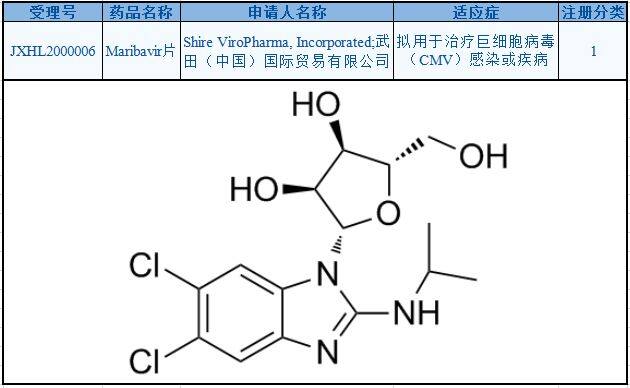
The latest public notice on the website of the Center for Drug Evaluation (CDE) under China’s National Medical Products Administration (NMPA) indicates that Takeda Pharmaceutical Company Limited’s antiviral drug has received implicit approval for clinical trials in China, with the indication being: for the treatment of cytomegalovirus (CMV) infection or disease.
Maribavir belongs to a class of drugs known as benzimidazole nucleosides. It is an orally bioavailable antiviral therapy currently in Phase III clinical development, evaluating its therapeutic potential in hematopoietic stem cell transplant or solid organ transplant recipients with cytomegalovirus (CMV) infection who are refractory or resistant to current standard CMV therapies.
Maribavir targets and inhibits the UL97 protein kinase of CMV, thereby potentially affecting several key processes in CMV replication, including viral DNA replication, viral gene expression, capsid assembly, and the escape of mature capsids from the nucleus of infected cells.
Maribavir has not yet been approved in any country. In the United States and the European Union, maribavir has been granted orphan drug status for the treatment of clinically significant CMV viremia in high-risk patient populations and for the treatment of CMV disease in immunocompromised patients. In the United States, maribavir has also been granted Breakthrough Therapy Designation (BTD) for the treatment of CMV infection in transplant recipients.
Currently, Takeda Pharmaceutical Company Limited is conducting two global Phase III clinical trials (NCT02927067, NCT02931539) to evaluate maribavir for the treatment of post-transplant cytomegalovirus (CMV) infection. The former trial compares the efficacy and safety of maribavir versus valganciclovir in treating CMV infection in hematopoietic stem cell transplant recipients, while the latter compares the efficacy and safety of maribavir versus investigator-assigned therapy in transplant recipients with CMV infection that is refractory or resistant to standard anti-CMV agents (ganciclovir, valganciclovir, foscarnet, or cidofovir).
The conduct of these two Phase III clinical trials was based on two previously completed and successful Phase II clinical trials. One of the Phase II trials enrolled 120 transplant recipients aged ≥12 years who were refractory or resistant to standard anti-CMV therapy. These patients were assigned to receive maribavir at one of three doses (400 mg, 800 mg, or 120 mg; orally twice daily) for 24 weeks. The results showed that 67% of patients had no detectable CMV DNA in plasma within 6 weeks of initiating treatment.
Another phase II clinical trial was conducted in 159 transplant recipients aged ≥18 years with CMV reactivation. These patients were assigned to receive one of three doses of maribavir (400 mg, 800 mg, or 1200 mg, orally twice daily) or valganciclovir (900 mg twice daily for weeks 1–3, then once daily from week 3 onward). The results showed that 62% of patients in the maribavir treatment groups (all doses combined) achieved undetectable CMV DNA in plasma within 3 weeks of treatment, compared with 56% in the valganciclovir group (hazard ratio=1.12; 95% CI: 0.84–1.49). By week 6, 79% of patients in the maribavir groups had achieved undetectable plasma CMV DNA, versus 67% in the valganciclovir group (hazard ratio=1.20; 95% CI: 0.95–1.51).
Cytomegalovirus (CMV) is a DNA virus belonging to the Betaherpesvirinae subfamily, characterized by high species specificity, with humans being the sole host for human cytomegalovirus (HCMV). CMV is a common virus that can infect individuals of all age groups. By the age of 40, more than half of adults have been infected with CMV, with most remaining asymptomatic and showing no clinical signs. However, in immunocompromised populations, including organ or stem cell transplant recipients, CMV infection constitutes a serious clinical complication that can lead to invasive tissue disease and ultimately prove fatal. Although existing antiviral therapies are available for the treatment of CMV, their application may be limited by side effects and/or drug resistance.
Original Source: CDE, Takeda Pharmaceutical Company Limited
Source: Bioon. For more information, please download the Bioon app (http://www.bioon.com/m/)