

Amgen's $13.2B Oral Anti-Inflammatory Drug Otezla Approved in EU for Third Indication: First-Ever Treatment for Behçet’s Disease-Associated Oral Ulcers
May 10, 2020 16:24
CST Updated
16:24

Amgen
Developer of Treatment Drugs for Serious Diseases

May 10, 2020 /BioValleyBIOON/ -- Amgen recently disclosed the latest regulatory updates for its oral anti-inflammatory drug Otezla (apremilast) in its first-quarter 2020 earnings report. According to the report, the European Commission (EC) approved a new indication for Otezla in April, for the treatment of oral ulcers associated with Behcet's disease (BD) in adult patients who are candidates for systemic therapy. Additionally, in April, the United StatesFDAA supplemental new drug application (sNDA) has been approved to add data on Otezla for the treatment of scalp psoriasis to the U.S. Prescribing Information.
Behçet’s Disease (BD) is a rare, chronic, multisystem inflammatory disorder that is difficult to treat. Oral ulcers are the most common manifestation of this disease, occurring in nearly all (more than 98%) patients with Behçet’s disease. Their recurrent nature is debilitating and can severely negatively impact patients’ quality of life.
Otezla is an oral, selective phosphodiesterase 4 (PDE4) inhibitor, this drug isThe first and only drug approved by regulators for the treatment of oral ulcers associated with Behçet's disease (BD). In the United States, Otezla was approved in July 2019FDAApproved for the treatment of oral ulcers associated with Behçet’s disease (BD) in adults.
Since its initial launch in 2014, Otezla has been approved globally3 Therapeutic Indications: (1) Treatment of adult patients with moderate to severe plaque psoriasis; (2) Treatment of adult patients with active psoriatic arthritis; (3) Treatment of adult patients with Behçet's disease-associated oral ulcers.
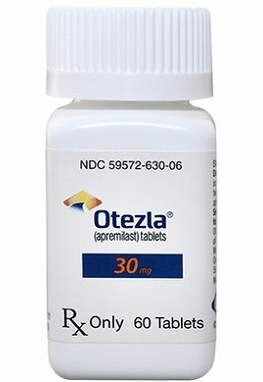
The European Commission (EC) approval of Otezla for the treatment of Behçet’s disease-associated oral ulcers was based on the efficacy and safety results from the randomized, placebo-controlled, double-blind Phase III RELIEF study. The study enrolled a total of 207 adult patients with Behçet’s disease who had active oral ulcers, had previously received at least one non-biologic therapy, and were candidates for systemic treatment. The study evaluated the efficacy and safety of Otezla versus placebo.
The results showed that in the Otezla 30 mg twice-daily (BID) treatment group, oral ulcer pain as measured by the Visual Analog Scale (VAS) decreased by 42.7 points from baseline at Week 12, compared with a decrease of 18.7 points in the placebo group. The proportion of patients achieving complete resolution of oral ulcers (no oral ulcers) at Week 12 was 52.9% in the Otezla group versus 22.3% in the placebo group. The proportion of patients who achieved complete resolution of oral ulcers by Week 6 and remained free of oral ulcers during the remaining 6 weeks of the 12-week treatment period was 29.8% in the Otezla group versus 4.9% in the placebo group. Over the 12-week treatment period, the mean daily number of oral ulcers was 1.5 in the Otezla group and 2.6 in the placebo group (based on oral ulcer counts measured at baseline and at Weeks 1, 2, 4, 6, 8, 10, and 12).
In the study, the most commonly observed adverse events were diarrhea (41.3% in the Otezla group vs. 20.4% in the placebo group), nausea (19.2% in the Otezla group vs. 10.7% in the placebo group), headache (14.4% in the Otezla group vs. 10.7% in the placebo group), and upper respiratory tract infection (11.5% in the Otezla group vs. 4.9% in the placebo group). The safety profile of Otezla was consistent with its known safety profile.

Behçet’s Disease (BD), also known as oral-genital-ocular syndrome, is a rare, chronic, multisystem inflammatory disorder characterized by recurrent oral ulcers, genital ulcers, ocular manifestations (such as uveitis and conjunctivitis), and other systemic involvement. The disease has a global distribution but exhibits significant geographical variation, being more prevalent in Mediterranean countries such as Greece, Middle Eastern countries such as Turkey, and East Asian countries including China, Korea, and Japan. Its distribution roughly coincides with the ancient Silk Road, hence it is also referred to as “Silk Road Disease.” In the United States, the incidence of Behçet’s disease is 5 per 100,000 population, classifying it as a rare disease.
Otezla (apremilast) is an oral small-molecule phosphodiesterase 4 (PDE4) inhibitor that regulates the network of pro-inflammatory and anti-inflammatory mediators intracellularly. PDE4 is a cyclic adenosine monophosphate (cAMP)-specific phosphodiesterase and the predominant PDE in inflammatory cells. Inhibition of PDE4 leads to increased intracellular cAMP levels, which is believed to indirectly modulate the production of inflammatory mediators. The specific mechanism by which Otezla exerts its therapeutic effect in patients remains unclear.
Otezla was originally a blockbuster drug from Celgene, with global sales exceeding $1.6 billion in 2018. In January 2019, Bristol-Myers Squibb announced its $74 billion acquisition of Celgene. As part of a consent decree agreement with the U.S. Federal Trade Commission (FTC), Otezla was divested. In August 2019, Amgen announced it would acquire Otezla for $13.4 billion, completing the transaction on November 21, 2019.
According to the earnings report released by Celgene, Otezla’s sales in the first, second, and third quarters of 2019 were $389 million, $493 million, and $547 million, respectively, totaling $1.429 billion for the first three quarters. In Amgen’s 2019 earnings report, Otezla generated $178 million in sales over approximately five weeks. Based on this, it is estimated that Otezla’s global sales in 2019 amounted to $2 billion.
According to Amgen’s first-quarter 2020 earnings report, Otezla’s global sales amounted to $479 million, with $377 million from the U.S. market and $102 million from markets outside the United States. (Bioon.com)
Original Source: Amgen Reports First Quarter 2020 Financial Results