

Lilly's $8B RET Inhibitor Approved by FDA Amid Fierce Competition with Blueprint/Summit's Pralsetinib

Eli Lilly
Global Pharmaceutical R&D and Production Company

FDA
U.S. Food and Drug Administration
On May 8 local time, the U.S. Food and Drug Administration (FDA) announced the approval of Retevmo (selpercatinib), a RET inhibitor developed by Loxo Oncology, a subsidiary of Eli Lilly, for the treatment of non-small cell lung cancer (NSCLC), medullary thyroid cancer (MTC), and thyroid cancer with RET gene fusions or mutations. Retevmo is the first therapy specifically designed for cancer patients with RET gene alterations. Previously, Retevmo had received Breakthrough Therapy Designation and Orphan Drug Designation from the FDA, and its New Drug Application was granted Priority Review.
The RET gene is located on the long arm of chromosome 10 and encodes a receptor tyrosine kinase. It is expressed in normal neurons, sympathetic and parasympathetic ganglia, thyroid C cells, adrenal medullary cells, urogenital tract cells, and testicular germ cells. Upon activation, the RET protein triggers downstream signaling pathways (including RAS, MAPK, ERK, PI3K, and AKT), leading to cell proliferation, migration, and differentiation. Activating mutations in the RET gene are associated with human malignancies; however, loss-of-function mutations in the RET gene can also lead to gastrointestinal developmental disorders, such as Hirschsprung disease.
Retevmo (selpercatinib, formerly known as LOXO-292) is a highly selective RET kinase inhibitor. Retevmo may affect both tumor cells and healthy cells, thereby causing side effects. Retevmo is an oral prescription medication administered twice daily at a total dose of 120 mg or 160 mg, depending on body weight (<50 kg or ≥50 kg), until disease progression or unacceptable toxicity occurs.
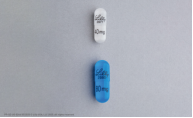
Image source: Eli Lilly official website
The FDA’s approval is based on the results of a clinical trial evaluating Retevmo in patients with three types of cancer. Among 105 adult patients with RET fusion-positive non-small cell lung cancer (NSCLC) who had previously received platinum-based chemotherapy, the objective response rate (ORR) was 64%. Among those who achieved a response, 81% maintained a duration of response of at least 6 months. The trial also assessed efficacy in 39 treatment-naïve patients with RET fusion-positive NSCLC, demonstrating an ORR of 84%. Among responders, 58% had a duration of response of at least 6 months. In adult and pediatric patients aged 12 years and older with RET-mutant medullary thyroid cancer (MTC), the ORR was 69% among 55 previously treated patients, with 76% of responders maintaining a duration of response of at least 6 months. Among 88 treatment-naïve patients, the ORR was 73%, and 61% of responders had a duration of response of at least 6 months.
In 2014, the American Association for Cancer Research (AACR) proposed that innovative clinical trials in precision oncology can be divided into two major categories: “Basket Trials” and “Umbrella Trials.” Figuratively speaking, a drug with a well-defined target acts as a “basket,” and placing different cancers harboring the same driver gene into this basket for investigation constitutes a basket trial. The essence of a basket trial is evaluating a single drug across multiple tumor types, and RET inhibitors are a prime example of this approach.
Pralsetinib (BLU-667), another RET inhibitor, was developed by Blueprint Medicines. Earlier this year, Blueprint Medicines initiated a rolling submission of a New Drug Application (NDA) to the U.S. Food and Drug Administration (FDA) for pralsetinib in the treatment of patients with RET fusion-positive non-small cell lung cancer (NSCLC). In 2018, CStone Pharmaceuticals entered into an agreement with Blueprint Medicines, securing exclusive rights to develop and commercialize pralsetinib in mainland China, Hong Kong, Macau, and Taiwan. The first Chinese patient was dosed in a Phase I registrational trial last year. Last month, Blueprint Medicines announced key data from the Phase I/II ARROW study evaluating pralsetinib for the treatment of thyroid cancers with RET gene alterations, demonstrating an objective response rate (ORR) of 60%, with 90% of patients achieving a duration of response of 18 months.
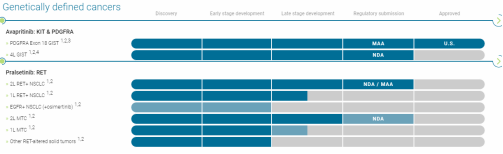
Data source: Blueprint Medicines
With the approval of Retevmo and the submission of the application for Pralsetinib, the competition between these two RET inhibitors has entered a white-hot phase. They previously attracted significant attention as LOXO-292 and BLU-667. Now that Retevmo has secured the first approval, how will the future landscape of the RET inhibitor market unfold? Will Retevmo dominate? Will Pralsetinib catch up and surpass it? Or will new competitors emerge? We shall wait and see.
Reference Source:
1、FDA Approves First Therapy for Patients with Lung and Thyroid Cancers with a Certain Genetic Mutation or Fusion
2. RET Gene Mutations and Targeted Therapies
3. [2019 CSCO] Cutting-Edge Advances in Pan-Cancer Treatment with Novel RET Inhibitors!

Responsible Editor: Squirtle
Disclaimer: The views expressed in this article are solely those of the author and do not represent the position of Yaozhi.com. Comments and supplementary discussions are welcome in the comment section. If reprinting, please be sure to cite the author and source.