

Lilly's Retevmo™ (Selpercatinib) Receives FDA Approval as First Therapy for RET-Driven Advanced Lung and Thyroid Cancers
May 09, 2020 11:10
CST Updated
May 11, 13:34

Eli Lilly
Global Pharmaceutical R&D and Production Company

FDA
U.S. Food and Drug Administration
May 9, 2020Eli LillyEli Lilly (NYSE: LLY) announced that the U.S. Food and Drug Administration (FDA) has approved Retevmo™ (selpercatinib 40 mg and 80 mg capsules), the first therapy approved specifically for the treatment of adult patients with metastatic non-small cell lung cancer (NSCLC) whose tumors are RET fusion-positive; adult and pediatric patients aged 12 years and older with advanced or metastatic medullary thyroid cancer (MTC) with RET mutations who require systemic therapy; and adult and pediatric patients aged 12 years and older with advanced or metastatic RET fusion-positive thyroid cancer who require systemic therapy and are refractory to radioactive iodine treatment (if applicable). Benefiting fromFDAaccelerated review pathway, the approval of Retevmo™ is based on the objective response rate (ORR) and duration of response (DoR) from the LIBRETTO-001 Phase I/II clinical trialClinical TrialEndpoints. Subsequent full approval for these indications is contingent upon confirmation of their clinical benefit in confirmatory trials.
Retevmo is an oral selective RET kinase inhibitor. Retevmo acts on bothTumorCells, which can also affect normal cells, may lead to the occurrence of drug side effects.
Dr. Alexander Drilon, Acting Head of Early Drug Development at Memorial Sloan Kettering Cancer Center and Lead Investigator of the LIBRETTO-001 study, stated: “InClinical TrialIn our observations, the majority of patients with metastatic lung cancer, including those with refractory brain metastases, achieved clinically meaningful responses during treatment with selpercatinib. The approval of selpercatinib represents a significant milestone in the treatment of non-small cell lung cancer (NSCLC), enabling cancers driven by RET genetic alterations to be managed with targeted therapy throughout the entire disease course, similar to cancers harboring activating EGFR and ALK alterations. I am encouraged by the emergence of new therapeutic options for these RET-driven cancers.”
The single-arm, multicenter Phase I/II LIBRETTO-001 trial evaluated Retevmo in the largest clinical trial to date for patients with RET-driven cancers (N=702). ThisClinical TrialThe study included both treatment-naïve patients and previously treated patients with various advanced solid tumors, including RET fusion-positive NSCLC, RET-mutant MTC, RET fusion-positive thyroid cancer, and other solid tumors with RET alterations.Tumor. The primary efficacy outcomes were ORR and DoR, as assessed by an independent review committee. Prespecified secondary endpoints included central nervous system (CNS) ORR and CNS DoR.
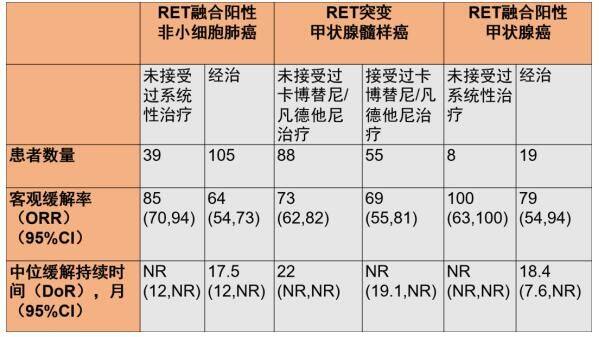
NR=Not Reached
Thyroid cancer includes: papillary carcinoma, Hürthle cell carcinoma, anaplastic carcinoma, and poorly differentiated carcinoma
Brain metastases are present in up to 50% of patients with RET fusion-positive non-small cell lung cancer (NSCLC).[1] Among previously treated NSCLC patients with detectable brain metastases, intracranial objective response (CNS ORR) was observed in 10 out of 11 patients, and the duration of response (DoR) in the central nervous system was ≥6 months for all 10 responders.
The warnings and precautions in the Retevmo package insert include: hepatotoxicity (evidence of hepatic dysfunction),Hypertension, QT interval prolongation, bleeding events, allergic reactions, risk of impaired wound healing, and embryo-fetal toxicity.
In the LIBRETTO-001 trial, the discontinuation rate due to adverse reactions (AR) was 5%. The most commonAdverse Reactions(≥25%), including laboratory abnormalities, such as dry mouth and diarrhea,Hypertension, elevated aspartate aminotransferase (AST), elevated alanine aminotransferase (ALT), fatigue, and constipation. In addition, the most common serious adverse reactions (≥2%) were elevated ALT, elevated AST, and pneumonia. No other seriousAdverse ReactionsReported in more than 2% of patients.
“RET alterations are present in the majority of patients with medullary thyroid cancer and a substantial proportion of those with other thyroid cancers. For these patients, the approval of selpercatinib means they now have a treatment option that selectively and potently inhibits RET,” said Dr. Lori J. Wirth, Medical Director of Head and Neck Cancers at the Cancer Center of Massachusetts General Hospital in the United States. “Based on the published data for this new drug and my personal experience in treating patients, it may be a favorable treatment option.”
Eli LillyTumorBusiness President Anne White stated, "We are delighted that Loxo Oncology andEli LillyThe ability of the merged Oncology Business Unit team to bring Retevmo to patients so quickly further demonstrates our commitment to providing life-changing medicines to cancer patients. Retevmo entered China in May 2017Clinical Trialsstage, now approved in less than three years, this is the industry developing multiple indicationsTumorThe fastest time for the drug. The approval of Retevmo is particularly significant for patients with advanced or metastatic RET-driven lung cancer and thyroid cancer, and we also extend ourFDA"Appreciation for the guidance and assistance provided!"
Retevmo is indicated only for patients with advanced or metastatic non-small cell lung cancer (NSCLC) or thyroid cancer harboring RET fusions, or for patients with advanced or metastatic medullary thyroid cancer harboring RET mutations. This requires determination through biomarker testing. Next-generation sequencing (NGS) performed on tumor tissue biopsies or via liquid biopsy can serve as an appropriate biomarker test to identify genetic alterations, including those involving RET. If NGS testing is not feasible, otherBiomarkersDetection methods for RET. Currently, there is noFDAApproved testing methods for the detection of RET fusions and RET mutations. In LIBRETTO-001, local laboratories prospectively determined plasma orTumorRET gene alterations in the tissue. Immunohistochemistry was not used for theseClinical Trial。
Andrea Ferris, President and Chief Executive Officer of LUNGevity, stated: “By leveraging comprehensiveBiomarkersTesting, patients with metastatic cancer are increasingly gaining access to treatments tailored to the specific genetic characteristics of their tumors. As the first approved therapy specifically for RET-drivenTumorFor patients, Retevmo represents a significant new advancement in this evolving field. We encourage patients to consult their physicians about a broad range of options, including those targeting RET alterations.BiomarkerTesting.”
Retevmo wasFDAOrphan drug designation granted for the treatment of RET fusion-positive non-small cell lung cancer (NSCLC) and for the treatment of RET fusion-positive and RET-mutant thyroid cancers, including poorly differentiated thyroid cancer, undifferentiated or anaplastic thyroid cancer, medullary thyroid cancer, and locally advanced or metastatic follicular or papillary thyroid cancer. Two confirmatory Phase III trials (LIBRETTO-431 and LIBRETTO-531) are currently enrolling patients.
About Retevmo™ (selpercatinib)
Retevmo (selpercatinib, formerly known as LOXO-292) is an oral, highly selective, and potent RET kinase inhibitor. Retevmo can simultaneously act onTumorcells and healthy cells, which may cause side effects.
About RET-Driven Cancers
Genomic alterations in the RET kinase, including fusions and activating point mutations, lead to hyperactive RET signaling and uncontrolled cell growth. RET fusions are found in approximately 2% of NSCLC cases, as well as in 10–20% of papillary, Hürthle cell, anaplastic, and poorly differentiated thyroid cancers. Activating RET point mutations account for approximately 60% of sporadic MTC cases and 90% of familial MTC cases. The proliferation and survival of RET fusion-positive cancers and RET-mutant MTC are primarily dependent on this single activated kinase. This dependence, commonly referred to as “oncogene addiction,” suchTumorThe degree of influence by targeted RET small-molecule inhibitors is very high. RET-driven alterations are largely mutually exclusive with other oncogenic drivers.
About LIBRETTO-001
LIBRETTO-001 Phase I/II Clinical Trial Is the Largest-Scale Study of RET Inhibitors for Treating Patients with RET-Driven CancersClinical Trial. The trial included a dose-escalation phase (Phase I) and a dose-expansion phase (Phase II). The Phase II trial covered the primary efficacy outcomes of ORR and DoR, with the prespecified secondary endpoints being CNS ORR and CNS DoR; these metrics were determined by an Independent Review Committee in accordance with the Response Evaluation Criteria in Solid Tumors (RECIST v1.1). Results from the NSCLC cohort were presented at the 2019 IASLC World Conference on Lung Cancer (WCLC), while results from the thyroid cancer cohort were presented at the 2019 European MedicalTumorpresented at the European Society for Medical Oncology (ESMO) Congress.
Source:
[1] Drilon A, Lin JJ, Filleron T, et al. Frequency of brain metastases and multikinase inhibitor outcomes in patients with RET rearranged lung cancers. J Thorac Oncol. 2018;13(10):1595-1601
Retevmo is an oral selective RET kinase inhibitor. Retevmo acts on bothTumorCells, which can also affect normal cells, may lead to the occurrence of drug side effects.
Dr. Alexander Drilon, Acting Head of Early Drug Development at Memorial Sloan Kettering Cancer Center and Lead Investigator of the LIBRETTO-001 study, stated: “InClinical TrialIn our observations, the majority of patients with metastatic lung cancer, including those with refractory brain metastases, achieved clinically meaningful responses during treatment with selpercatinib. The approval of selpercatinib represents a significant milestone in the treatment of non-small cell lung cancer (NSCLC), enabling cancers driven by RET genetic alterations to be managed with targeted therapy throughout the entire disease course, similar to cancers harboring activating EGFR and ALK alterations. I am encouraged by the emergence of new therapeutic options for these RET-driven cancers.”
The single-arm, multicenter Phase I/II LIBRETTO-001 trial evaluated Retevmo in the largest clinical trial to date for patients with RET-driven cancers (N=702). ThisClinical TrialThe study included both treatment-naïve patients and previously treated patients with various advanced solid tumors, including RET fusion-positive NSCLC, RET-mutant MTC, RET fusion-positive thyroid cancer, and other solid tumors with RET alterations.Tumor. The primary efficacy outcomes were ORR and DoR, as assessed by an independent review committee. Prespecified secondary endpoints included central nervous system (CNS) ORR and CNS DoR.
NR=Not Reached
Thyroid cancer includes: papillary carcinoma, Hürthle cell carcinoma, anaplastic carcinoma, and poorly differentiated carcinoma
Brain metastases are present in up to 50% of patients with RET fusion-positive non-small cell lung cancer (NSCLC).[1] Among previously treated NSCLC patients with detectable brain metastases, intracranial objective response (CNS ORR) was observed in 10 out of 11 patients, and the duration of response (DoR) in the central nervous system was ≥6 months for all 10 responders.
The warnings and precautions in the Retevmo package insert include: hepatotoxicity (evidence of hepatic dysfunction),Hypertension, QT interval prolongation, bleeding events, allergic reactions, risk of impaired wound healing, and embryo-fetal toxicity.
In the LIBRETTO-001 trial, the discontinuation rate due to adverse reactions (AR) was 5%. The most commonAdverse Reactions(≥25%), including laboratory abnormalities, such as dry mouth and diarrhea,Hypertension, elevated aspartate aminotransferase (AST), elevated alanine aminotransferase (ALT), fatigue, and constipation. In addition, the most common serious adverse reactions (≥2%) were elevated ALT, elevated AST, and pneumonia. No other seriousAdverse ReactionsReported in more than 2% of patients.
“RET alterations are present in the majority of patients with medullary thyroid cancer and a substantial proportion of those with other thyroid cancers. For these patients, the approval of selpercatinib means they now have a treatment option that selectively and potently inhibits RET,” said Dr. Lori J. Wirth, Medical Director of Head and Neck Cancers at the Cancer Center of Massachusetts General Hospital in the United States. “Based on the published data for this new drug and my personal experience in treating patients, it may be a favorable treatment option.”
Eli LillyTumorBusiness President Anne White stated, "We are delighted that Loxo Oncology andEli LillyThe ability of the merged Oncology Business Unit team to bring Retevmo to patients so quickly further demonstrates our commitment to providing life-changing medicines to cancer patients. Retevmo entered China in May 2017Clinical Trialsstage, now approved in less than three years, this is the industry developing multiple indicationsTumorThe fastest time for the drug. The approval of Retevmo is particularly significant for patients with advanced or metastatic RET-driven lung cancer and thyroid cancer, and we also extend ourFDA"Appreciation for the guidance and assistance provided!"
Retevmo is indicated only for patients with advanced or metastatic non-small cell lung cancer (NSCLC) or thyroid cancer harboring RET fusions, or for patients with advanced or metastatic medullary thyroid cancer harboring RET mutations. This requires determination through biomarker testing. Next-generation sequencing (NGS) performed on tumor tissue biopsies or via liquid biopsy can serve as an appropriate biomarker test to identify genetic alterations, including those involving RET. If NGS testing is not feasible, otherBiomarkersDetection methods for RET. Currently, there is noFDAApproved testing methods for the detection of RET fusions and RET mutations. In LIBRETTO-001, local laboratories prospectively determined plasma orTumorRET gene alterations in the tissue. Immunohistochemistry was not used for theseClinical Trial。
Andrea Ferris, President and Chief Executive Officer of LUNGevity, stated: “By leveraging comprehensiveBiomarkersTesting, patients with metastatic cancer are increasingly gaining access to treatments tailored to the specific genetic characteristics of their tumors. As the first approved therapy specifically for RET-drivenTumorFor patients, Retevmo represents a significant new advancement in this evolving field. We encourage patients to consult their physicians about a broad range of options, including those targeting RET alterations.BiomarkerTesting.”
Retevmo wasFDAOrphan drug designation granted for the treatment of RET fusion-positive non-small cell lung cancer (NSCLC) and for the treatment of RET fusion-positive and RET-mutant thyroid cancers, including poorly differentiated thyroid cancer, undifferentiated or anaplastic thyroid cancer, medullary thyroid cancer, and locally advanced or metastatic follicular or papillary thyroid cancer. Two confirmatory Phase III trials (LIBRETTO-431 and LIBRETTO-531) are currently enrolling patients.
About Retevmo™ (selpercatinib)
Retevmo (selpercatinib, formerly known as LOXO-292) is an oral, highly selective, and potent RET kinase inhibitor. Retevmo can simultaneously act onTumorcells and healthy cells, which may cause side effects.
About RET-Driven Cancers
Genomic alterations in the RET kinase, including fusions and activating point mutations, lead to hyperactive RET signaling and uncontrolled cell growth. RET fusions are found in approximately 2% of NSCLC cases, as well as in 10–20% of papillary, Hürthle cell, anaplastic, and poorly differentiated thyroid cancers. Activating RET point mutations account for approximately 60% of sporadic MTC cases and 90% of familial MTC cases. The proliferation and survival of RET fusion-positive cancers and RET-mutant MTC are primarily dependent on this single activated kinase. This dependence, commonly referred to as “oncogene addiction,” suchTumorThe degree of influence by targeted RET small-molecule inhibitors is very high. RET-driven alterations are largely mutually exclusive with other oncogenic drivers.
About LIBRETTO-001
LIBRETTO-001 Phase I/II Clinical Trial Is the Largest-Scale Study of RET Inhibitors for Treating Patients with RET-Driven CancersClinical Trial. The trial included a dose-escalation phase (Phase I) and a dose-expansion phase (Phase II). The Phase II trial covered the primary efficacy outcomes of ORR and DoR, with the prespecified secondary endpoints being CNS ORR and CNS DoR; these metrics were determined by an Independent Review Committee in accordance with the Response Evaluation Criteria in Solid Tumors (RECIST v1.1). Results from the NSCLC cohort were presented at the 2019 IASLC World Conference on Lung Cancer (WCLC), while results from the thyroid cancer cohort were presented at the 2019 European MedicalTumorpresented at the European Society for Medical Oncology (ESMO) Congress.
Source:
[1] Drilon A, Lin JJ, Filleron T, et al. Frequency of brain metastases and multikinase inhibitor outcomes in patients with RET rearranged lung cancers. J Thorac Oncol. 2018;13(10):1595-1601