

Dual Blockade of TIGIT and PD-L1: Roche’s Tiragolumab plus Tecentriq Demonstrates Strong Efficacy in First-Line PD-L1-Positive Lung Cancer
May 14, 2020 13:33
CST Updated
13:33

Roche
Oncology Drug Research, Development, and Manufacturing

Genentech
Pharmaceutical R&D Manufacturer
May 14, 2020 /BioValleyBIOON/ -- Genentech, a member of the Roche Group, recently announced positive results from the Phase II CITYSCAPE trial. The trial evaluated the efficacy and safety of the combination therapy of the anti-PD-L1 agent Tecentriq (atezolizumab) and tiragolumab versus Tecentriq monotherapy as initial (first-line) treatment in patients with PD-L1-positive metastatic non-small cell lung cancer (NSCLC).
Tiragolumab is a novel cancer immunotherapy that targets and binds to the immune checkpoint protein TIGIT expressed on immune cells. Both TIGIT and PD-L1 play important roles in immune suppression. Blocking these two pathways can enhance anti-TumorActivity.
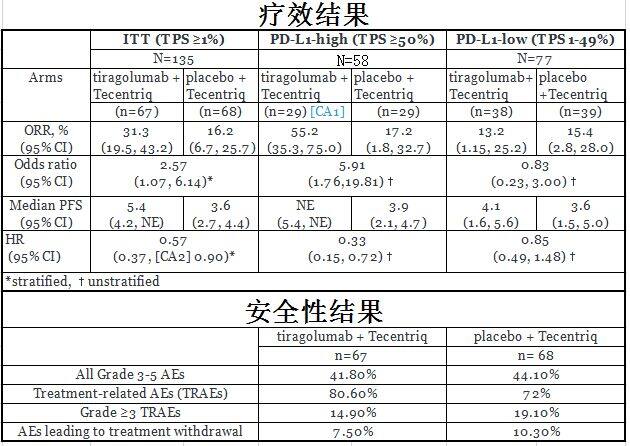
The primary endpoint analysis of the CITYSCAPE trial demonstrated that, in the intent-to-treat (ITT) population, Tecentriq plus tiragolumab combination therapy met both primary endpoints compared with Tecentriq monotherapy: a significantly higher objective response rate (ORR) (31.3% vs. 16.2%) and a significant 34% reduction in the risk of disease progression or death (progression-free survival [PFS]; median PFS: 5.4 months vs. 3.6 months; HR=0.47, 95% CI: 0.37–0.90).
An exploratory analysis in patients with high PD-L1 expression (TPS ≥50%) demonstrated that, compared with Tecentriq monotherapy, the combination of Tecentriq and tiragolumab significantly improved the objective response rate (ORR) (55.2% vs 17.2%) and reduced the risk of disease progression or death by 67% (median PFS: not reached vs 3.9 months; HR=0.33, 95% CI: 0.15–0.72).
At the 6-month follow-up, the Tecentriq plus tiragolumab combination therapy group demonstrated sustained improvements in both ORR and PFS in the ITT population and the PD-L1 high-expression population, with no new safety signals observed. In this trial, the combination of Tecentriq and tiragolumab was well tolerated, and the incidence of all-cause grade 3 or higher adverse events (AEs) was similar between the combination therapy and Tecentriq monotherapy (41.8% vs. 44.1%). The full results of the CITYSCAPE trial will be presented at the American Society of Clinical Oncology (ASCO) 2020 Virtual Scientific Meeting, held from May 29 to 31.
Levi Garraway, M.D., Ph.D., Chief Medical Officer and Global Head of Product Development at Roche, stated: “We are pleased to share the results from the first randomized trial of an anti-TIGIT therapy, which demonstrate encouraging efficacy and safety for our novel cancer immunotherapy tiragolumab in combination with Tecentriq. TIGIT is an immune checkpoint protein expressed on immune cells, identified by our own scientists. By simultaneously blocking the TIGIT and PD-L1 pathways, we aim to deepen patients’ responses to immunotherapy and expand the range of populations who may benefit.”
Tiragolumab is a monoclonal antibody that targets and binds to TIGIT, a protein receptor expressed on immune cells. By binding to TIGIT, tiragolumab blocks the interaction between TIGIT and poliovirus receptor (PVR, also known as CD155). The binding of TIGIT to PVR suppresses the body’s immune response.
Tecentriq belongs to the anti-PD-(L)1 therapy class; this drug is a monoclonal antibody that targets and binds to tumor cells andTumorTecentriq blocks the interaction of PD-L1, a protein expressed on infiltrating immune cells, with its receptors PD-1 and B7.1. By inhibiting PD-L1, Tecentriq activates T cells and has the potential to serve as a foundational combination therapy for cancer immunotherapy, targeted agents, and various chemotherapy regimens.
Blocking TIGIT and PD-L1 may synergistically activate T cells and enhance the anti-Tumoractivity. This constitutes the scientific basis for the combination study of tiragolumab with Tecentriq.
As part of Genentech’s commitment to exploring novel immunotherapy regimens and combinations, the company recently initiated two Phase IIIClinical Trial, evaluating the efficacy of the tiragolumab plus Tecentriq combination therapy in patients with specific types of lung cancer (SKYSCRAPER-01, SKYSCRAPER-02). Tiragolumab is also being investigated in other solid tumors and hematologicTumorevaluated, and additional Phase Ia/b results of the drug in treating solid tumors will also be presented at the ASCO 2020 Virtual Meeting.
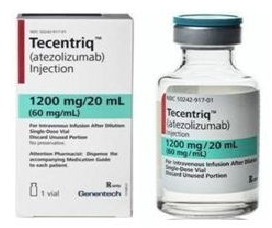
To date, Tecentriq has been approved in the United States, the European Union, and other countries worldwide as monotherapy, as well as in combination with targeted therapy and/or chemotherapy, for the treatment of various types of non-small cell lung cancer (NSCLC) and small cell lung cancer (SCLC), certain types of metastatic urothelial carcinoma (mUC), and PD-L1-positive triple-negativeBreast Cancer(TNBC)。
In China, Tecentriq (atezolizumab) was approved in February 2020 for first-line treatment of patients with extensive-stage small cell lung cancer (ES-SCLC), in combination with chemotherapy (carboplatin + etoposide).
It is worth mentioning that Tecentriq was approved by the National Medical Products Administration on December 10, 2019AstraZenecaFollowing the approval of the anti-PD-L1 therapy Imfinzi (brand name: Yingfeifan; generic name: durvalumab), this is the second PD-L1 inhibitor approved in China. Together with six PD-1 inhibitors, there are now a total of eight PD-1/PD-L1 drugs available on the Chinese market. (Bioon.com)
Original Source: Genentech to Present First Clinical Data on Novel Anti-TIGIT Cancer Immunotherapy Tiragolumab at ASCO