

Shuimu Biosciences Secures Tens of Millions in Angel Funding to Advance Cryo-EM-Driven Drug Discovery

Shuimu Biosciences
Novel Drug Developer

Gaorong Ventures
Venture Capital Institution

Puhua Capital
Venture Capital and Management Business Institutions

BOHE Angel Fund
Pharmaceutical and Healthcare Angel Investment Fund
36Kr learned that,Shuimu Biosciences Ltd.(hereinafter referred to as “Shuimu Biosciences,” English name: Shuimu Biosciences Ltd.) has secured tens of millions of RMB in angel-round financing, jointly invested by Gaorong Ventures, Puhua Capital, and Peppermint Angel Fund, with Wanshi Capital serving as the exclusive financial advisor. According to Dr. Guo Chunlong, Co-founder and CEO of Shuimu Biosciences, the proceeds from this financing round will primarily be used to strengthen the company’s technological foundation.
Shuimu Biosciences, established in late 2017 and headquartered in Beijing, China, specializes in leveraging breakthrough technologies to significantly accelerate new drug development and enhance the druggability of challenging targets.
Guo Chunlong pointed out that since its establishment, Shuimu Biosciences has built a commercial structural analysis platform centered around 300kV cryo-electron microscopy (the industry’s top-tier configuration). Leveraging Tsinghua University’s resources and its self-developed revolutionary methodologies for structural analysis, as well as structure-based and computational drug discovery technologies, the company has constructed a next-generation drug discovery platform. This platform provides comprehensive technical services to global pharmaceutical R&D enterprises and institutions, including new drug target validation, compound library screening, candidate compound discovery, and therapeutic antibody development, in order toAddressing the drawbacks of traditional drug development methods, such as unknown target structures, high randomness, long development cycles, and high costs.
What Makes Cryo-Electron Microscopy So Remarkable? It is understood that cryogenic sample preparation and transfer technology for scanning electron microscopy (Cryo-SEM) enables direct observation of liquid, semi-liquid, and electron-beam-sensitive samples, such as biological specimens and polymeric materials.In layman's terms,It has made the determination of three-dimensional structures of biological macromolecular complexes increasingly easy and routine, thereby holding revolutionary significance in the field of new drug development.
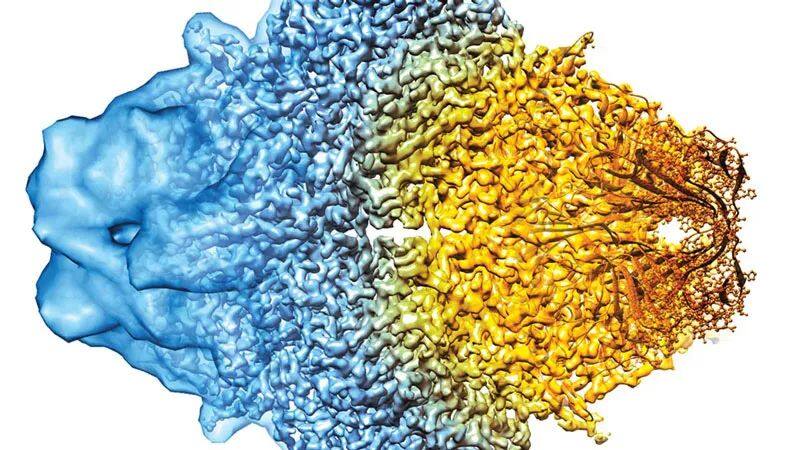
Structural Analysis of Molecules Using Cryo-Electron Microscopy
Dr. Guo Chunlong stated that drug development leveraging cryo-electron microscopy (cryo-EM) structural analysis combined with computational chemistry effectively addresses the limitations of traditional approaches—such as unknown target structures, high randomness, prolonged development cycles, and elevated costs. This advancement has elevated structure-based drug discovery (SBDD) to new heights, transforming the “black box” nature of drug development into a “white box” paradigm. He noted that its significance is comparable to, or even exceeds, that of electric vehicles replacing traditional gasoline-powered cars.
Wang Hongwei, Dean of the School of Life Sciences at Tsinghua University, stated that“Cryo-electron microscopy is currently the most advanced technique for protein structure determination. Advances in cryo-EM technology will bring revolutionary breakthroughs to structure-based drug development.”
In recognition of its importance in the life sciences, the principal founders of cryo-electron microscopy were awarded the 2017 Nobel Prize in Chemistry.Previously, this technology remained confined to the laboratory and was not applied to drug development; it has only gained widespread recognition and achieved industrial implementation in recent years. Currently, many universities in China have introduced complete cryo-electron microscopy (cryo-EM) systems, with Tsinghua University leading the world in the field of cryo-EM. As of August 23, 2019, Tsinghua University had published a total of 16 articles in Cell, Nature, and Science using cryo-EM technology.
In fact, based onStructure-based drug discovery has a 40-year history and has achieved significant breakthroughs; for instance, several HIV therapies developed in the 1990s were designed based on structural elucidation.In addition to cryo-electron microscopy (Cryo-EM), structural biology relies on two other major techniques: X-ray crystallography and nuclear magnetic resonance (NMR). Among these, X-ray crystallography has long been dominant—crystal structures account for approximately 90% of the entries in the Protein Data Bank (PDB), NMR structures constitute 9%, and EM structures make up less than 1%.
In other words, cryo-EM-based drug discovery is still in its early stages of development; however, as its technological advantages (high efficiency and high resolution) become increasingly evident,An increasing number of pharmaceutical companies are beginning to focus on and invest in this field. Dr. Guo Chunlong pointed out that, by leveraging computational molecular capabilities and building upon its research accumulation in areas including antibodies, PROTACs, and molecular machine targets, Shuimu Biosciences has identified several directions for commercial application, as detailed below:
In the realm of Me-too/Me-better drug discovery, the target complex structures of patented drugs can be elucidated, enabling medicinal chemists to design molecules using strategies such as molecular hybridization, while computational chemists can generate high-quality computational models. By restructuring patented drug compounds based on known popular targets, more precise and effective lead compounds can be identified and screened, thereby facilitating highly efficient Me-too/Me-better drug discovery.
In the field of first-in-class drug design, novel structures can be discovered and designed by analyzing the structures of early probe molecules in combination with CADD, DNA-encoded libraries, computational chemistry, and other approaches;
In the field of antiviral vaccine and drug development, elucidating the three-dimensional structures of key proteins involved in viral infection and their interactions can provide a scientific basis for drug discovery. Furthermore, structural analysis enables comparative studies between the antigenic proteins of recombinant protein vaccines and those of the virus, thereby providing a foundation for vaccine development.
It is reported that, leveraging cryo-electron microscopy-related technologies, Shuimu Biosciences has served multiple top-tier research institutions as well as large domestic and multinational pharmaceutical companies.
From an industry perspective, cryo-electron microscopy (cryo-EM) for structure determination has witnessed rapid growth in recent years, driven by its technological advantages and commercial prospects. Expanding at an annual rate of 1.5 times, it has become one of the most critical techniques for structural elucidation. Dean Wang Hongwei pointed out that with continuous innovations in electron microscopy technology, cryo-EM is playing an increasingly vital role in discovering protein-protein complex structures, resolving high-resolution structures (at near-atomic level), elucidating the details of substrate-protein complexes, designing more effective small-molecule drugs, and understanding the principles of drug delivery within cells.
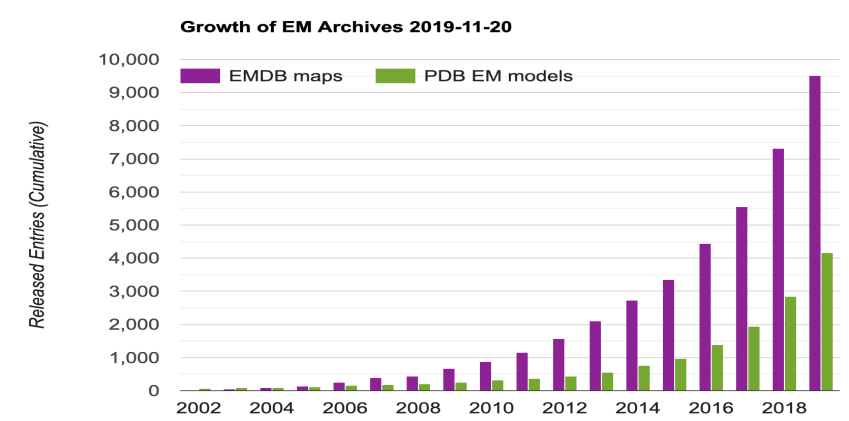
Recent Applications of Cryo-Electron Microscopy Technology
Finally, an introduction to the core team.The management and technical team members of Shuimu Biosciences primarily come from top domestic research institutions such as Tsinghua University and the National Institute of Biological Sciences, Beijing. Among them,Co-Founder & CEO Guo ChunlongCo-founder of Baihe.com/HeyYou.com, Founder of 2048 Capital; B.S. in Engineering Physics from Tsinghua University; Ph.D. dropout in Electrical Engineering and Computer Science from the University of California, Berkeley; Haas School of Business Mayfield Fellow and Hitachi Fellow; current Ph.D. candidate at the School of Life Sciences, Tsinghua University.Wang Hongwei, Co-founder & Chairman of the Scientific CommitteeDean, Professor, and Doctoral Supervisor, School of Life Sciences, Tsinghua University; Recipient of the National Science Fund for Distinguished Young Scholars and the Tan Jiazhen Life Science Innovation Award; engaged in cryo-electron microscopy research for many years, with a primary focus on the development of cryo-EM-related methodologies.
It is reported that the company will launch its Series A financing round in June this year to build a complete structure-driven new drug discovery platform matrix.