

FDA Approves Genentech’s Tecentriq as First-Line Monotherapy for PD-L1-High Metastatic NSCLC – Fifth Lung Cancer Indication
May 19, 2020 10:31
CST Updated
17:47

Roche
Oncology Drug Research, Development, and Manufacturing

Genentech
Pharmaceutical R&D Manufacturer

FDA
U.S. Food and Drug Administration
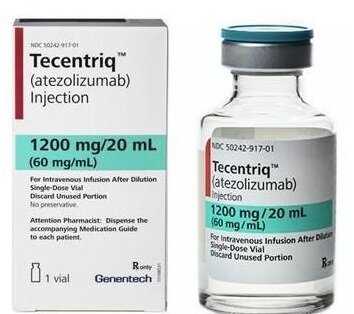
May 19, 2020 News /BioValleyBIOON/ -- Genentech, a member of the Roche Group, recently announced that the U.S. Food and Drug Administration (FDA) has approved the anti-PD-L1 therapy Tecentriq (atezolizumab) as a first-line (initial) monotherapy for the treatment of adult patients with metastatic non-small cell lung cancer (NSCLC), specifically:FDAan approved assay to determine that the tumor has high PD-L1 expression (PD-L1 staining in ≥50% of tumor cells [TC ≥50%] or PD-L1 staining covering ≥10% of tumor-infiltrating immune cells [IC])Tumorarea [IC ≥ 10%]), adult patients with advanced non-squamous and squamous non-small cell lung cancer (NSCLC) without EGFR or ALK mutations.
Notably, this marks the fourth U.S. regulatory approval for Tecentriq in metastatic non-small cell lung cancer (NSCLC) and the fifth indication for lung cancer overall. This approval provides a chemotherapy-free first-line treatment option for specific patients. Data from the Phase III IMpower110 study demonstrated that, compared with chemotherapy, Tecentriq conferred a significant survival benefit, substantially prolonging overall survival (OS) in patients with high PD-L1 expression receiving first-line therapy.
Tecentriq is the first and only single-agent cancer immunotherapy with three dosing regimens, allowing for administration every 2, 3, or 4 weeks. The supplemental Biologics License Application (sBLA) for Tecentriq as a first-line monotherapy has receivedFDApriority review status. Drugs granted this designation have the potential to treat, prevent, orDiagnosisOffers significant improvements in disease management.
Levi Garraway, M.D., Ph.D., Chief Medical Officer and Global Head of Product Development at Roche, stated, “We are pleased to provide patients with certain types of lung cancer a new chemotherapy-free option that helps extend their lives and can be administered on a flexible dosing schedule, including once-monthly Tecentriq infusions. Today’s approval marks the fifth approval of Tecentriq in lung cancer. We remain committed to delivering effective, tailored treatment options for every patient diagnosed with this disease.”

This approval is based on the results of the Phase III IMpower110 study. This was a randomized, open-label Phase III study in programmed death-ligand 1 (PD-L1)BiomarkersThe study was conducted in selected patients with advanced non-squamous or squamous non-small cell lung cancer (NSCLC) who were chemotherapy-naïve (previously untreated with chemotherapy) and lacked ALK or EGFR mutations (wild-type, WT), aiming to evaluate the efficacy and safety of Tecentriq as monotherapy for first-line (initial) treatment, with a comparison to chemotherapy.
A total of 572 patients (555 with wild-type [WT] status) were enrolled in the study and randomized in a 1:1 ratio to receive either: (1) Tecentriq monotherapy until loss of clinical benefit (as assessed by the study investigator); or (2) cisplatin or carboplatin (at the investigator’s discretion) in combination with pemetrexed (for non-squamous histology) or gemcitabine (for squamous histology), followed by pemetrexed monotherapy (for non-squamous histology) or best supportive care (for squamous histology) until disease progression, unacceptable toxicity, or death. The primary efficacy endpoint was overall survival (OS) in PD-L1 subgroups (TC3/IC3-WT; TC2/3/IC2/3-WT; TC1,2,3/IC1,2,3-WT), as determined by the SP142 assay. Key secondary endpoints included progression-free survival (PFS), objective response rate (ORR), and duration of response (DOR), all assessed by the study investigator.
The results showed that the study had met its primary endpoint at the interim analysis: in patients with high PD-L1 expression (TC3/IC3-WT), first-line monotherapy with Tecentriq significantly improved overall survival (OS) by 7.1 months compared with chemotherapy (median OS: 20.2 months vs. 13.1 months; HR=0.595, 95% CI: 0.398–0.890; p=0.0106). The safety profile of Tecentriq in the study was consistent with its known safety profile, and no new safety signals were identified. Treatment-related adverse events (AEs) of grade 3–4 occurred in 12.9% of patients in the Tecentriq group versus 44.1% in the chemotherapy group.
The above data indicate that, compared with chemotherapy, Tecentriq monotherapy as first-line (initial) treatment confers a significant survival benefit in patients with PD-L1–high squamous or non-squamous NSCLC, thereby providing an additional therapeutic option for patients.
Lung cancer is the leading cause of cancer-related deaths worldwide. Each year, 1.76 million people die from this disease, meaning that more than 4,800 people die every day across the globe. Lung cancer can be broadly classified into two major categories: non-small cell lung cancer (NSCLC) and small cell lung cancer (SCLC). NSCLC is the most common type, accounting for approximately 85% of all cases. NSCLC includes non-squamous cell lung cancer and squamous cell lung cancer; squamous cell carcinoma is characterized by flat cells covering the airway surfaces when viewed under a microscope.
Tecentriq is a PD-(L)1 tumor immunotherapy that targets and binds to tumor cells andTumorPD-L1 is a protein expressed on infiltrating immune cells. Tecentriq blocks its interaction with the PD-1 and B7.1 receptors. By inhibiting PD-L1, Tecentriq can activate T cells and has the potential to serve as a foundational combination therapy for cancer immunotherapy, targeted drugs, and various chemotherapy regimens for cancer.
To date, Tecentriq has been approved in the United States, the European Union, and other countries worldwide as a monotherapy, as well as in combination with targeted therapy and/or chemotherapy, for the treatment of various types of non-small cell lung cancer (NSCLC) and small cell lung cancer (SCLC), certain types of metastatic urothelial carcinoma (mUC), PD-L1-positive triple-negativeBreast Cancer(TNBC)。
In China, Tecentriq was approved in February 2020 for use in combination with chemotherapy (carboplatin + etoposide) as a first-line treatment for patients with extensive-stage small cell lung cancer (ES-SCLC). Notably, Tecentriq followed the approval by the National Medical Products Administration on December 10, 2019AstraZenecaFollowing the approval of the anti-PD-L1 therapy Imfinzi (brand name: Yingfeifan; generic name: durvalumab), this is the second PD-L1 inhibitor approved in China. Together with six PD-1 inhibitors, there are currently eight PD-1/PD-L1 drugs available on the Chinese market.
Currently, the supplemental application for Tecentriq in combination with Avastin (bevacizumab) as first-line treatment for unresectable hepatocellular carcinoma (HCC) is under review by multiple regulatory authorities, including those in the United States, China, and Japan. HCC is the most commonLiver CancerType. This application is based on the results of the Phase III IMbrave150 study, which demonstrated that the Tecentriq plus Avastin regimen resulted in statistically significant and clinically meaningful improvements in overall survival (OS) and progression-free survival (PFS) compared with the current standard-of-care drug sorafenib.
Roche has established an extensive development program for Tecentriq, encompassing multiple ongoing and planned Phase III studies across various types of lung cancer, genitourinary cancers, skin cancer, breast cancer, gastrointestinal cancers, gynecologic cancers, and head and neck cancers. This includes studies evaluating Tecentriq as monotherapy or in combination with other agents. (Bioon.com)