

Roche's Tumor-Agnostic Therapy Rozlytrek Approved in Canada for ROS1 Fusion-Positive NSCLC
May 22, 2020 13:54
CST Updated
13:54
Roche
Oncology Drug Research, Development, and Manufacturing
May 22, 2020 News /BioValleyBIOON/ -- Roche recently announced that Health Canada has approved a new indication for the targeted anticancer drug Rozlytrek (entrectinib) for the treatment of patients with ROS1 fusion-positive, locally advanced or metastatic non-small cell lung cancer (NSCLC) who have not previously received crizotinib. Previously, Rozlytrek had been approved in Canada for the treatment of adult patients with neurotrophic tyrosine receptor kinase (NTRK) gene fusion-positive, unresectable locally advanced or metastatic extracranial solid tumors, including those with brain metastases, who have no known acquired resistance mutations and lack satisfactory therapeutic options.
Lung cancer is the leading cause of cancer-related deaths in Canada, with non-small cell lung cancer (NSCLC) being the most common type, accounting for approximately 80–85% of all lung cancer cases. Unfortunately, up to 36% of NSCLC patients present with brain metastases at the time of diagnosis. The estimated 5-year survival rate for patients with advanced metastatic NSCLC is 2–13%.
ROS1 gene fusions are identified in approximately 2% of non-small cell lung cancer (NSCLC) cases, with the highest prevalence observed in younger patients and never-smokers. ROS1 fusion genes are abnormal genes formed by chromosomal translocations that fuse the ROS1 gene with other partner genes (such as CD74). The ROS1 fusion kinases expressed from these fusion genes are believed to promote the proliferation of cancer cells.
This new indication approval is based on three single-arm, open-labelClinical Trialpooled analysis. These trials evaluated the efficacy and safety of Rozlytrek in adult patients with ROS1-positive advanced non-small cell lung cancer (NSCLC). The data showed that the overall response rate (ORR) was 73.4% (69/94) in patients treated with Rozlytrek. In patients with central nervous system (CNS) metastases, the intracranial ORR was 50% (17/34).
Medical Oncologist, MolecularGenomicsChairman Allen Brown, Dr. Geoffrey Liu, stated: “Compared with patients with common lung cancer, ROS1-positive lung cancer typically occurs in younger, non-smoking patients, and in such cases, the incidence of brain metastasesExhibitionThese patients suffer devastating impacts on their ability to work and function normally. The approval of Rozlytrek in Canada is exciting, as data indicate that Rozlytrek is not only well-tolerated but also effective against ROS1 alterations both systemically and within the central nervous system.Tumorare effective.”
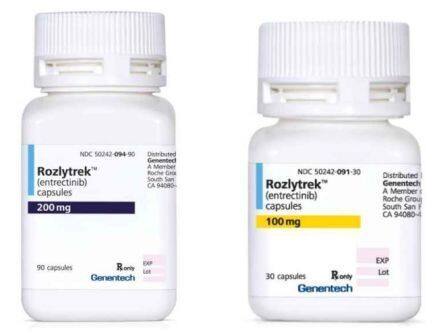
The active pharmaceutical ingredient of Rozlytrek is entrectinib, a selective tyrosine kinase inhibitor (TKI) that targets locally advanced or metastatic solid tumors harboring NTRK1/2/3 (encoding TRKA/TRKB/TRKC) or ROS1 gene fusions. Entrectinib can cross the blood-brain barrier, blocking the kinase activity of TRKA/B/C and ROS1 proteins, leading to the death of cancer cells with ROS1 or NTRK gene fusions. Entrectinib demonstrates efficacy against both primary and metastatic central nervous system (CNS) diseases without adverse off-target effects. Currently, Roche is investigating the potential of entrectinib in treating various solid tumors, including non-small cell lung cancer (NSCLC), pancreatic cancer, sarcoma, thyroid cancer, salivary gland cancer, gastrointestinal stromal tumors, and cancers of unknown primary origin (CUP).
Rozlytrek is Roche's first tumor-agnostic (i.e., unrelated toTumortumor-agnostic (“basket”) therapy. In the United States, Rozlytrek was approved in August 2019FDAApproved for two therapeutic indications: (1) for the treatment of pediatric and adult patients aged 12 years and older with advanced solid tumors harboring neurotrophic tyrosine receptor kinase (NTRK) gene fusions who have no effective treatment options available (ORR=57%, intracranial ORR=50%); (2) for the treatment of adult patients with ROS1-positive metastatic non-small cell lung cancer (NSCLC) (ORR=78%).
It is worth mentioning that Rozlytrek is the United StatesFDAThe third approved drug based on commonalities across different tumor typesBiomarkersRather than anticancer drugs based on the tissue of tumor origin, the agency’s previously approved “tumor-agnostic” indications include: the 2017 approval of Merck & Co.’s Keytruda (pembrolizumab) for the treatment of microsatellite instability-high (MSI-H) or mismatch repair-deficient (dMMR)Tumor, approved in 2018BayerVitrakvi (larotrectinib) for the Treatment of NTRK Gene FusionsTumor。
Among them, Vitrakvi for the treatment of NTRK gene fusionsTumorIts mechanism of action is identical to that of Rozlytrek. The specific indications for this drug are pediatric and adult patients with advanced solid tumors harboring NTRK gene fusions. In clinical studies, Vitrakvi demonstrated an overall response rate (ORR) of 75% and an intracranial ORR of 67% in the treatment of NTRK fusion-positive solid tumors. (Bioon.com)
Original Source: Roche's entrectinib OK'd in Canada for certain lung cancer patients