

FibroGen/Astellas’ Evrenzo (Roxadustat), a First-in-Class HIF-PH Inhibitor for Renal Anemia, Under Regulatory Review in the EU Following Global Launch in China
May 22, 2020 13:54
CST Updated
13:54

Astellas
Pharmaceutical R&D Manufacturer
May 22, 2020 /BioonBIOON/ -- Astellas recently announced that the European Medicines Agency (EMA) has accepted the Marketing Authorization Application (MAA) for Evrenzo (Chinese brand name: Airuizhuo; generic name: roxadustat), a drug indicated for the treatment of chronic kidney disease (CKD)-related conditions in adult patients.Anemia, including non-dialysis-dependent (NDD) patients and dialysis-dependent (DD) patients.
In February this year, the New Drug Application (NDA) for roxadustat was accepted by the U.S. FDA and is currently under review, with a target action date of December 20, 2020. In the United States, roxadustat isFDAThe first oral small-molecule hypoxia-inducible factor prolyl hydroxylase (HIF-PH) inhibitor approved for the treatment of anemia in chronic kidney disease (CKD).
Roxadustat was discovered by FibroGen, andAstraZenecaCollaborate on development in the United States, China, and other markets; collaborate with Astellas on development in Japan and the European Union.The acceptance of this MAA triggered a $130 million milestone payment from Astellas to FibroGen. United StatesThe acceptance of the NDA triggered a $50 million milestone payment from AstraZeneca to FibroGen.
The Marketing Authorization Application (MAA) for roxadustat is based on data from a pivotal Phase III program involving more than 9,000 patients worldwide. The MAA dossier includes the DOLOMITES study, the results of which will be announced later this year. These study results support the efficacy of roxadustat in increasing and maintaining target hemoglobin levels and reducing the use of intravenous iron in adult patients with anemia associated with chronic kidney disease (CKD), including both dialysis-dependent (DD) and non-dialysis-dependent (NDD) patients. The data also support the favorable cardiovascular (CV) risk-benefit profile and good safety profile of roxadustat.
Bernhardt G. Zeiher, M.D., Chief Medical Officer of Astellas, stated: “The acceptance of this Marketing Authorization Application (MAA) marks a significant regulatory milestone for roxadustat. We believe that roxadustat has the potential to provide an important new oral treatment option for anemia in adults with chronic kidney disease (CKD) in the European Union. In Europe, one in eight people suffers from CKD, and one in five of these patients has anemia, which is often untreated or inadequately managed. We look forward to the review and assessment by the European Medicines Agency (EMA), with the hope of bringing this innovative therapy to patients across the EU.”
K. Peony Yu, M.D., Chief Medical Officer of FibroGen, stated, “Anemia in chronic kidney disease (CKD) is a serious and often life-threatening condition with significant unmet medical needs. This Marketing Authorization Application (MAA), along with the New Drug Application (NDA) recently submitted by FibroGen in the United States, is supported by positive results from the largest Phase 3 clinical program in CKD anemia patients worldwide. We look forward to collaborating with Astellas during the EMA’s review of the MAA and to realizing the potential of roxadustat as a novel therapeutic option for treating anemia in both dialysis-dependent and non-dialysis-dependent CKD patients across Europe.”
Chronic kidney disease (CKD) is a progressive condition characterized by the gradual loss of kidney function, which may ultimately lead to kidney failure or end-stage renal disease (ESRD), necessitating dialysis or kidney transplantation for survival. The global prevalence of CKD among adults is estimated at 10–12%. Anemia is particularly common in patients with CKD, and severe anemia can be life-threatening. CKD-associated anemia increases the risk of hospitalization, cardiovascular complications, and mortality, and often causes severe fatigue.Cognitive Impairmentand a decline in quality of life. There is a significant unmet medical need among patients with anemia associated with chronic kidney disease (CKD), with limited progress made over the past 30 years.
Renal anemia is one of the major complications during the decompensated stage of renal function in chronic kidney disease (CKD). As CKD progresses, the prevalence and severity of CKD-associated anemia gradually increase. Renal anemia is more difficult to correct than conventional anemia, leading to severe fatigue and reduced quality of life in patients. Currently, the standard treatment for renal anemia involves erythropoietin (EPO) replacement therapy using erythropoiesis-stimulating agents (ESAs), such as epoetin alfa, combined with intravenous iron supplementation. These medications are administered via subcutaneous injection to increase hemoglobin (Hb) levels in CKD patients and alleviate clinical symptoms.
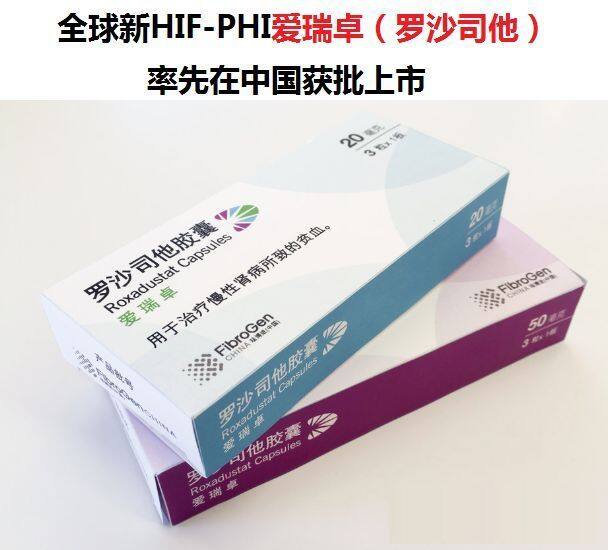
In December 2018, roxadustat (brand name: Evrenzo) was first approved in China for the treatment of anemia in patients with chronic kidney disease (CKD) on dialysis. In August 2019, the drug received approval in China for a new indication: the treatment of anemia in patients with non-dialysis-dependent chronic kidney disease (NDD-CKD). As a global first-in-class innovative drug, roxadustat was first fully implemented in China for both dialysis-dependent and non-dialysis-dependent CKD patients with anemia, bringing a novel therapeutic breakthrough to the broad population of Chinese patients with chronic kidney disease.
In Japan, roxadustat has been approved for the treatment of dialysis-dependent patients, and a supplemental application for the treatment of non-dialysis-dependent patients has been submitted. In Europe, the Marketing Authorization Application (MAA) for roxadustat in both dialysis-dependent and non-dialysis-dependent patients has been accepted by the EMA and is currently under review.
Roxadustat is the first small-molecule hypoxia-inducible factor prolyl hydroxylase inhibitor (HIF-PHI) approved globally for the treatment of renal anemia. The physiological role of hypoxia-inducible factor (HIF) not only increases erythropoietin expression but also upregulates the expression of erythropoietin receptors and proteins that promote iron absorption and circulation. Roxadustat inhibits prolyl hydroxylase (PH) by mimicking one of its substrates, alpha-ketoglutarate, thereby modulating the role of PH in maintaining the balance between HIF synthesis and degradation rates, ultimately correcting anemia.
As the world’s first HIF-PHI, roxadustat promotes the production of endogenous erythropoietin, improves iron absorption and utilization, reduces hepcidin levels, and effectively stimulates erythropoiesis without being negatively affected by inflammation on hemoglobin and red blood cell production. Roxadustat has been proven to induce erythropoiesis. In multiple subgroups of patients with chronic kidney disease, roxadustat maintains erythropoietin levels at or near the normal physiological range, thereby increasing red blood cell counts. It remains effective regardless of inflammatory status and can also avoid the need for intravenous iron supplementation. (Bioon.com)
Original Source: European Medicines Agency Accepts Astellas' Marketing Authorizationapplication for Roxadustat