

New Longer-Term Data Reinforce Safety of Roche’s Satralizumab in Adults and Adolescents with Neuromyelitis Optica Spectrum Disorder
May 24, 2020 15:38
CST Updated
15:38
Roche
Oncology Drug Research, Development, and Manufacturing
May 24, 2020 /Bio ValleyBIOON/ -- Roche recently announced new pooled key safety results for the antibody drug satralizumab (development code: SA237) in the treatment of neuromyelitis optica spectrum disorder (NMOSD) at the 6th Annual Meeting of the European Academy of Neurology (EAN). The results demonstrated that satralizumab has a favorable safety profile in a broad patient population, including adolescents, an age group for which no approved therapies are currently available.
Pooled data from the open-label long-term extension (OLE) phases of two pivotal Phase III studies demonstrated that satralizumab, either as monotherapy or in combination with baseline immunosuppressive therapy, was well tolerated in patients with neuromyelitis optica spectrum disorder (NMOSD). Adolescents receiving the same dose and dosing frequency exhibited a benefit–risk profile generally consistent with that observed in the adult population. The current dosing regimen achieved sustained inhibition of IL-6 signaling within four weeks. These new data further support the potential of satralizumab as a therapeutic option for NMOSD.
Satralizumab is a humanized monoclonal antibody that targets the IL-6 receptor to inhibit IL-6 signaling. IL-6 is a cytokine believed to play a key role in the inflammation associated with NMOSD, triggering inflammatory cascades that lead to tissue damage and disability. NMOSD is a rare disease with few approved treatment options, characterized by unpredictable, severe relapses that directly result in cumulative, permanent neurological damage.
Satralizumab was designed using a novel antibody recycling technology, enabling a longer circulation time and allowing for subcutaneous administration once every four weeks. Currently, the drug is under review by regulatory authorities in the United States, the European Union, and Japan. In the United States,FDAIn December 2018, satralizumab was granted Breakthrough Therapy designation for the treatment of NMOSD. Satralizumab has also been granted Orphan Drug designation in the United States, the European Union, and Japan.
Professor Jerome de Seze, Director of the Center for Neurology and Clinical Research at the University of Strasbourg in France, stated: “Data from the Phase III OLE study reinforce the safety, observed tolerability, and potential of satralizumab as a future treatment option for this chronic disease. Despite recent significant advances in understanding NMOSD, there is a need for more widely recognized treatment regimens for these underserved populations, offering well-tolerated safety profiles while reducing the frequency of subcutaneous injections.”

NMOSD (Image source: empr.com)
Previously announced results from two global Phase III clinical trials (the SakuraStar study and the SAkuraSky study) confirmed that satralizumab, both as monotherapy and in combination with baseline immunosuppressants, significantly reduces the risk of relapse in patients with neuromyelitis optica spectrum disorder (NMOSD), while demonstrating favorable tolerability and safety profiles.
The pooled safety data from the double-blind periods of two studies revealed that the incidence rates of adverse events (AEs) and serious adverse events (SAEs) were comparable between the satralizumab group and the placebo group, whether administered as monotherapy or in combination with baseline therapy (SAEs: 15.0 vs. 18.0 events per 100 patient-years [PY]). The most common AEs in both groups were urinary tract infections and upper respiratory tract infections. No deaths or anaphylactic reactions were reported.
The safety profile, nature, and incidence of adverse events (AEs) with satralizumab during the open-label extension (OLE) period were consistent with those observed during the double-blind period. No meaningful changes were observed in the incidence or types of infections.
In another analysis of the SAkuraSky study, adolescents (n=8) treated with satralizumab at the same dose and frequency demonstrated a benefit-risk profile generally consistent with that observed in the adult population. Data from the adolescent cohort revealed that model-predicted exposure ranges were similar to those in adults when receiving either placebo or satralizumab 120 mg, both in combination with baseline therapy, administered at Weeks 0, 2, and 4, and every 4 weeks thereafter.
Finally, in the third report, pharmacokinetic and pharmacodynamic analyses based on Phase I and two pivotal Phase III studies demonstrated that the satralizumab dosing regimen (120 mg every 4 weeks) achieved significant and sustained inhibition of IL-6 signaling. In the NMOSD population, pharmacokinetic (PK) data for satralizumab indicated that the 120 mg dose allowed for binding to more than 95% of IL-6 receptors throughout the 4-week dosing interval.
Dr. Cheryl Hemingway of Great Ormond Street Hospital for Children in London, UK, stated, “It is highly encouraging to see positive results from the satralizumab trial in young patients with NMOSD. Currently, there are no approved treatments for young people with NMOSD, who live daily with the risk of unpredictable, severe relapses that can lead to lifelong disability. The satralizumab study included a broad population, including adolescents, and we hope this medication will bring about substantial change for young people living with this rare disease.”
Soliris: The First Therapeutic Drug for NMOSD
NMOSD is a rare, lifelong, debilitatingAutoimmunityneuromyelitis optica spectrum disorder (NMOSD) is characterized by inflammatory lesions of the optic nerve and spinal cord. Patients with NMOSD often experience a relapsing disease course, with recurrent attacks leading to progressive accumulation of neurological damage and disability. Symptoms include visual impairment, motor dysfunction, and reduced quality of life. In some cases, NMOSD attacks can be fatal. NMOSD is typically associated with pathogenic antibodies (aquaporin-4 [AQP4]-IgG). AQP4-IgG targets and damages a specific cell type known as astrocytes, resulting in inflammatory injury to the optic nerve, spinal cord, and brain. ThroughDiagnosisSex-specific biomarker testing identifies most NMOSD patients as AQP4-IgG seropositive; however, up to one-third of NMOSD patients are AQP4-IgG seronegative. This condition is often misdiagnosed as multiple sclerosis.
Satralizumab is a humanized monoclonal antibody that targets the IL-6 receptor to inhibit IL-6 signaling. IL-6 is a cytokine believed to play a key role in the inflammation associated with NMOSD, triggering inflammatory cascades that lead to tissue damage and disability. Patients with NMOSD experience unpredictable, severe relapses that directly result in cumulative, permanent neurological damage.
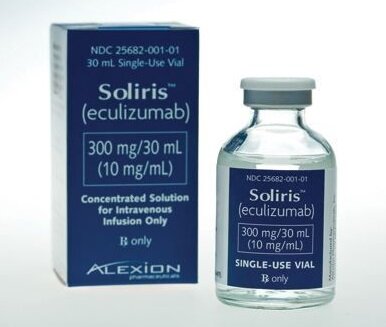
It is worth mentioning that in late June 2019, the first-in-class complement inhibitor Soliris (eculizumab) from rare disease giant Alexion Pharmaceuticals received U.S.FDAApproved for adult patients with neuromyelitis optica spectrum disorder (NMOSD) who are positive for anti-aquaporin-4 (AQP4) antibodies. In late August 2019, Soliris received additional approval from the European Union for adult patients with AQP4 antibody-positive NMOSD and a relapsing disease course. In both the United States and the European Union, Soliris is the first and only medication approved for the treatment of NMOSD. (Bioon.com)
Original Source: New longer-term data reinforce safety of Roche’s satralizumab in adults and adolescents with neuromyelitis optica spectrum disorder