

AstraZeneca Partners with ArcherDX to Develop Personalized Cancer Assay for Detecting Minimal Residual Disease in Lung Cancer
May 26, 2020 12:32
CST Updated
19:32

AstraZeneca
Biopharmaceutical Manufacturer

ArcherDX
Precision Oncology Testing Service Provider

May 26, 2020 /BioonBIOON/ --AstraZeneca(AstraZeneca) recently with a focus on precisionTumorAstraZeneca has partnered with genomic analysis company ArcherDX to utilize personalized cancer monitoring for the detection of minimal residual disease (MRD) in patients with early-stage non-small cell lung cancer (NSCLC).
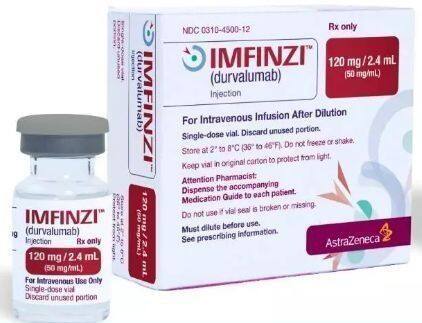
ArcherDX’s personalized analysis will be used in AstraZeneca’s recently launched Phase III MERMAID-1 trial. The trial is being conducted inTumorConducted in patients with stage II and III NSCLC who have undergone complete resection but have evidence of MRD indicating a high risk of recurrence, this study will evaluate the impact of adjuvant therapy with the anti-PD-L1 agent Imfinzi (Chinese brand name: Yingfeifan; generic name: durvalumab) combined with chemotherapy versus chemotherapy alone on disease-free survival (DFS).
MRD describes the release of circulating [tumor DNA] into the blood.Tumorcirculating tumor DNA (ctDNA) from a small number of undetectable cancer cells. Monitoring the presence of minimal residual disease (MRD) using ctDNA can provide highly valuable information for determining treatment efficacy, informing prognosis, and detecting cancer recurrence. Ultimately, MRD testing enables early intervention by physicians, allowing for the customization of optimal treatment plans for individual cancer patients.

Under the terms of the agreement, ArcherDX will perform whole-exome sequencing on samples from patients with non-small cell lung cancer (NSCLC) and generate highly sensitive, personalized ctDNA analyses to detect minimal residual disease (MRD) remaining after successful surgery. The TRACERx study, funded by Cancer Research UK and led by University College London (UCL) and the Francis Crick Institute, has informed the ongoing development of these analytical methods.
Currently, AstraZeneca is evaluating Imfinzi for the treatment of lung cancer within a broad clinical development program, which includes several ongoing Phase III trials assessing the potential of Imfinzi to achieve curative outcomes in early-stage non-small cell lung cancer (NSCLC).
Dr. Charles Swanton, International Coordinating Investigator of the MERMAID-1 trial, leader of the TRACERx study, and Director of the Francis Crick Institute, stated: “MERMAID-1 is a novel randomized trial that uses ctDNA to identify patients at high risk of recurrence after surgery, who may benefit from immunotherapy intervention. We hope to achieve better outcomes for patients by intensifying treatment for those most likely to experience recurrence, while avoiding additional postoperative chemotherapy.”
José Baselga, Executive Vice President of Oncology R&D at AstraZeneca, stated: “Although the detection and monitoring of MRD in solidTumor“This area has proven challenging, but the MERMAID-1 trial and this partnership are poised to break new ground in lung cancer. This innovative effort reflects our strategy to improve cancer outcomes by treating patients earlier. It is in this early setting, where the chance of cure is higher, that identifying personalized, effective treatments can enhance survival rates and improve quality of life.”
Jason Myers, CEO and Co-Founder of ArcherDX, stated, “Although progress has been made in improving the adoption of precision oncology among patients with advanced cancer, there is an urgent need to accelerate access to precisionTumorlearning speed, regardless of the stage or location of treatment. AstraZeneca also shares this important mission, and we are delighted to collaborate with them to develop biomarker-driven therapies and expand personalized cancer monitoring for all patients.”
Lung cancer is the leading cause of cancer-related deaths in both men and women, accounting for approximately one-fifth of all cancer deaths. Lung cancer is broadly classified into non-small cell lung cancer (NSCLC) and small cell lung cancer (SCLC), with NSCLC comprising 80–85% of cases. Approximately 39% of patients with NSCLC present with localized or regional disease, for which surgical resection (complete removal) may be an option. Among patients with stage II–III disease who undergo surgery, up to 60% eventually experience recurrence.
Imfinzi (durvalumab) is a humanized PD-L1 monoclonal antibody that blocks the binding of PD-L1 to PD-1 and CD80, thereby inhibitingTumorovercome immune escape and release suppressed immune responses. To date, Imfinzi has been approved in more than 60 countries (including the United States, Japan, China, and the entire European Union) for the curative treatment of patients with unresectable stage III non-small cell lung cancer (NSCLC) whose disease has not progressed following concurrent platinum-based chemotherapy and radiation therapy. In the United States and Singapore, Imfinzi is also approved in combination with standard-of-care (SoC) chemotherapy as first-line treatment for extensive-stage small cell lung cancer (ES-SCLC). Furthermore, Imfinzi has been approved in more than 10 countries, including the United States, for the treatment of patients with advanced bladder cancer who have previously received platinum-containing chemotherapy.
ArcherDX’s Personalized Cancer Monitoring (PCM) technology is designed to detect minimal residual disease (MRD) in early-stage cancer patients after surgery, and this technology has received approval from the U.S. Food and Drug Administration (FDA) granted Breakthrough Device Designation. ArcherDX plans to leverage PCM analysis to develop companion diagnostics for selected AstraZeneca drugs.Diagnosis, ifClinical TrialsSuccessfully completed; the two companies plan to jointly seek regulatory approval. These analyses are currently for research use only.(Bio Valley Bioon.com)
Original Source: AstraZeneca collaborates with ArcherDX to use personalised cancer assays to detect minimal residual disease in lung cancer trials