




On May 26, Sanofi and Regeneron Pharmaceuticals announced that the U.S. Food and Drug Administration (FDA) had approved Dupixent (dupilumab) for the treatment of patients aged 6 to 11 years with moderate-to-severe atopic dermatitis who are inadequately controlled with topical therapies or for whom topical therapies are not advisable. Dupixent had previously been granted Breakthrough Therapy designation by the FDA for the treatment of atopic dermatitis in patients aged 6 months to 11 years who are not candidates for topical therapy. It is currently the only biologic agent approved for use in patients aged 6 to 11 years with moderate-to-severe atopic dermatitis.
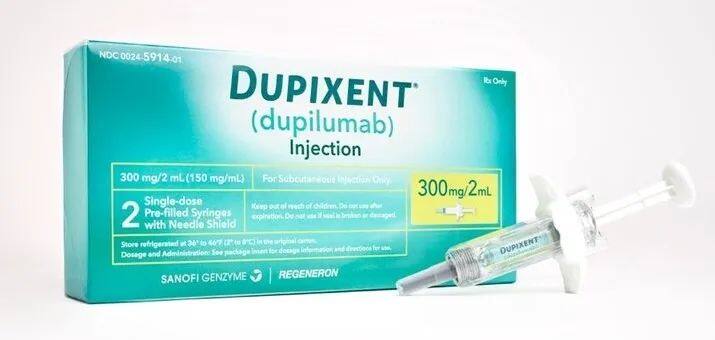
This FDA approval was primarily based on the differences in efficacy and safety between Dupixent combined with topical corticosteroids (TCS) and TCS alone in pediatric patients with severe atopic dermatitis. In this trial, children receiving Dupixent plus TCS demonstrated significant improvements in overall disease severity, skin clearance, and pruritus compared to the TCS group. For pediatric patients with severe atopic dermatitis, Dupixent pre-filled syringes are available in two dosing regimens: 300 mg every 4 weeks for those weighing 15 kg to 30 kg, and 200 mg every 2 weeks for those weighing 30 kg to 60 kg. The treatment results at Week 16 showed:
Regarding safety, the safety profile of Dupixent in combination with topical corticosteroids (TCS) in pediatric patients was similar to that observed in adults and adolescents and remained stable over 52 weeks. At Week 16, the incidence of adverse reactions was 65% in the group receiving Dupixent every 4 weeks plus TCS, compared with 72% in the TCS group; in the group receiving Dupixent every 2 weeks plus TCS, the incidence was 61%, compared with 75% in the TCS group. The most common adverse reactions in the Dupixent plus TCS groups included upper respiratory tract infections (15% and 9% for the every-4-weeks and every-2-weeks regimens, respectively, vs. 8% and 12% in the TCS groups), injection-site reactions (10% and 14% vs. 7% and 15%), nasopharyngitis (10% and 3% vs. 3% and 10%), conjunctivitis (7% and 9% vs. 3% and 5%), vomiting (5% and 7% vs. 7% and 7%), and fever (5% and 2% vs. 7% and 0%).
Dr. John Reed, Global Head of Development at Sanofi, stated: “This FDA approval marks another milestone in the development of Dupixent as an innovative biologic therapy for atopic dermatitis and other type 2 inflammatory diseases. Pediatric patients with moderate-to-severe atopic dermatitis and their healthcare providers now have access to a first-in-class biologic agent with a reliable safety profile. These pediatric patients can observe improvements in itching and disease severity as early as two weeks after the initial dose, with sustained benefits throughout the course of treatment, which is highly significant for these children and their families.”
Dr. George D. Yancopoulos, President and Chief Scientific Officer of Regeneron, stated: “Children with severe atopic dermatitis often have inflammatory rash symptoms affecting more than half of their body surface area, placing a significant burden on family members who assist in managing the disease. This FDA approval brings a safe and reliably effective, transformative innovative therapy to pediatric patients with atopic dermatitis and their families. We will continue to explore the efficacy of Dupixent in children aged 6 months to 5 years with moderate-to-severe atopic dermatitis, as well as its efficacy in pediatric patients with difficult-to-control, refractory asthma and other type 2 inflammatory diseases, including eosinophilic esophagitis, food and environmental allergies, and COPD.”
Atopic dermatitis is the most common form of eczema, a chronic inflammatory condition that typically presents as a rash. Patients with moderate-to-severe atopic dermatitis are characterized by rashes that may cover large areas of the body, often accompanied by intense, persistent pruritus, skin lesions, and dryness, cracking, erythema or hyperpigmentation, crusting, and exudation. Pruritus is one of the most burdensome symptoms for patients and can be debilitating.
Dupixent was first approved by the FDA in March 2017 for the treatment of atopic dermatitis in adults, and in March 2019, it was approved for adolescents aged 11–17 years with atopic dermatitis. With this recent approval for pediatric patients aged 6–11 years, the population of patients with atopic dermatitis covered by Dupixent has been further expanded. For patients aged 6 months to 5 years with atopic dermatitis, clinical trials of Dupixent have progressed to Phase II/III.
Dupixent is the product Sanofi currently relies on most within its pipeline, with sales surpassing €2 billion just three years after launch. Sanofi projects peak annual sales of €10 billion for Dupixent, and new CEO Paul Hudson has designated its development as one of the company’s four strategic priorities for the next six years.
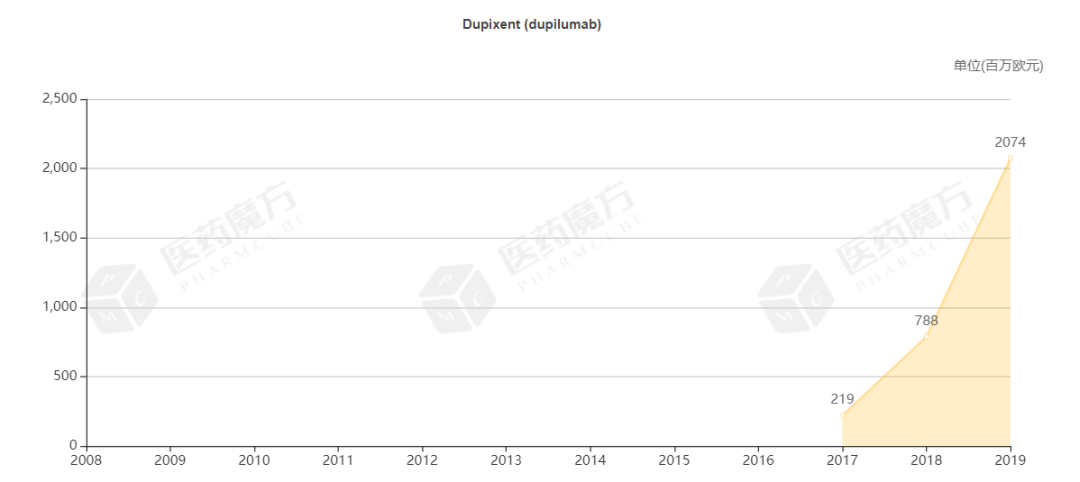
Source: NextPharma
Dupixent is a fully human monoclonal antibody that targets the interleukin-4 receptor alpha (IL-4Rα) and inhibits IL-4 and IL-13 protein signaling. Clinical trial data indicate that IL-4 and IL-13 are key drivers of type 2 inflammatory diseases, playing a major role in atopic dermatitis, asthma, and chronic rhinosinusitis with nasal polyps (CRSwNP).
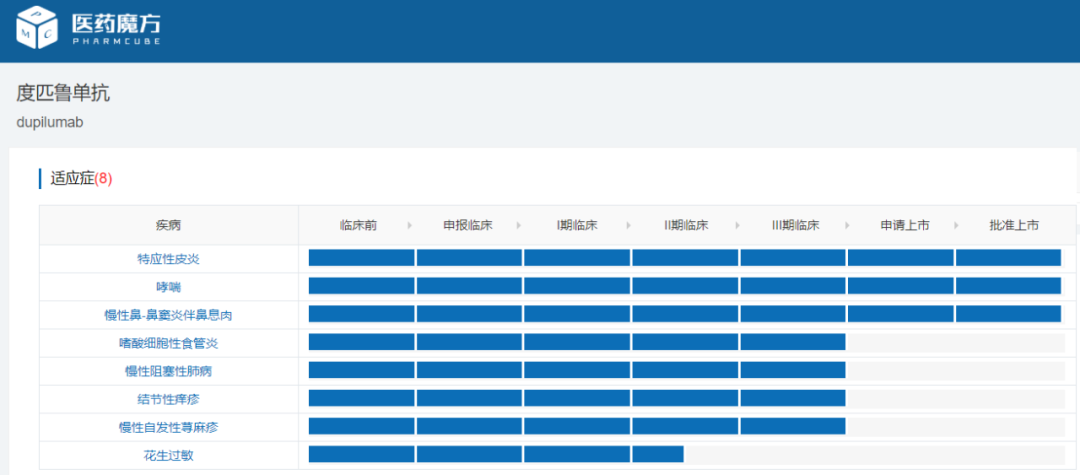
Source: NextPharma
The expanding range of indications for Dupixent, along with its growing coverage across different age groups for each indication, underpins Sanofi’s confidence in projecting over €10 billion in sales revenue for the drug.