

Novartis’ CDK4/6 Inhibitor Kisqali Demonstrates Significant Overall Survival Benefit in HR+/HER2- Advanced Breast Cancer Patients with Visceral Metastases
May 28, 2020 17:10
CST Updated
17:10

Novartis
Drug Development and Manufacturing
May 28, 2020 News /BioValleyBIOON/ --Novartis(Novartis) recently announcedBreast CancerResults from a New Exploratory Subgroup Analysis of the Phase III MONALEESA-3 (M3) and MONALEESA-7 (M7) Trials Reinforce the Overall Survival (OS) Benefit of Kisqali (ribociclib). This subgroup analysis demonstrated that, in women with hormone receptor-positive, human epidermal growth factor receptor 2-negative (HR+/HER2-) advanced or metastatic breast cancer and visceral metastases, Kisqali combined with endocrine therapy prolonged OS compared with endocrine therapy alone, consistent with the OS benefit observed in the overall study populations.
Visceral metastases, particularly liver or brain metastases, generally indicate a poorer prognosis and more severe disease in patients. Subgroup analyses demonstrated that among patients with liver metastases in the M7 and M3 trials, Kisqali combined with endocrine therapy significantly prolonged overall survival compared to endocrine therapy alone, reducing the risk of death by 47% and 37%, respectively. These subgroup analysis results add to the substantial body of evidence reinforcing the consistent overall survival benefit of Kisqali, regardless of metastasis type, class of endocrine agent, or menopausal status.
Denise Yardley, MD, Principal Investigator at the Sarah Cannon Research Institute (SCRI), stated: “This subgroup analysis, focusing on two Phase III trials, supports the use of Kisqali in first-line treatment, regardless of menopausal status or site of metastasis. Patients with visceral metastases typically face a poorer prognosis and a higher risk of drug resistance; therefore, the consistent overall survival results demonstrated by Kisqali combination therapy in these patients are highly compelling.”
Two MONALEESA trials investigated Kisqali in combination with a nonsteroidal aromatase inhibitor (NSAI) and goserelin in premenopausal women (MONALEESA-7 trial) and Kisqali in combination with fulvestrant in postmenopausal women (MONALEESA-3 trial). Approximately 60% of patients had visceral metastases (excluding visceral crisis), reflecting real-world clinical practice.
In patients with visceral metastases, Kisqali combined with endocrine therapy demonstrated a 30% reduction in the risk of death in the MONALEESA-7 trial (median OS: not evaluable [NE] vs. 39.9 months [NSAI + goserelin group]; HR=0.698; 95% CI: 0.462–1.054) and a 20% reduction in the risk of death in the MONALEESA-3 trial (median OS: 41.0 vs. 39.4 months [fulvestrant group]; HR=0.804; 95% CI: 0.596–1.083).
In patients with liver metastases, Kiskali combination therapy demonstrated a 47% reduction in the risk of death in the MONALEESA-7 trial (median OS: not evaluable [NE] vs. 33.6 months [NSAI + goserelin group]; HR=0.531; 95% CI: 0.321–0.877) and a 37% reduction in the risk of death in the MONALEESA-3 trial (median OS: 36.1 months vs. 24.1 months [fulvestrant group]; HR=0.629; 95% CI: 0.421–0.942). Adverse events were consistent with those observed in the overall population.
NovartisTumorDr. Susanne Schaffert, President of Novartis, stated: “In two Phase III trials, Kisqali demonstrated superior overall survival benefits. This subgroup analysis shows that even in patients with the most aggressive forms of advanced breast cancer, Kisqali provides an overall survival benefit. Patients are the inspiration behind everything we do, and we will continue to pursue bold therapeutic advances to help cancer patients reimagine their future, with the hope that they can live longer and better.”
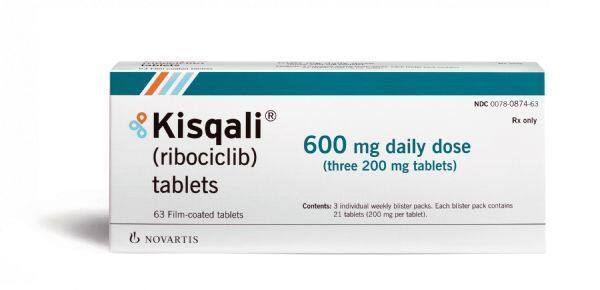
Kisqali is an oral targeted CDK4/6 inhibitor that selectively inhibits cyclin-dependent kinases 4 and 6 (CDK4/6), restoring cell cycle control and blockingTumorCell Proliferation. Dysregulation of the cell cycle is a hallmark of cancer, and CDK4/6 are overactive in many cancers, leading to uncontrolled cell proliferation. CDK4/6 are key regulators of the cell cycle, capable of triggering the transition from the growth phase (G1 phase) to the DNA synthesis phase (S phase). In estrogen receptor-positive (ER+) breast cancer, CDK4/6 overactivity is highly prevalent, as CDK4/6 serve as key downstream targets of ER signaling. Preclinical data indicate that dual inhibition of CDK4/6 and ER signaling has a synergistic effect and can inhibit the growth of G1-phase ER+ breast cancer cells.
To date, Kisqali has been approved in more than 70 countries worldwide. The drug was initially approved in the United States and the European Union in March and August 2017, respectively (based on the results of the MONALEESA-2 study), in combination with an aromatase inhibitor as initial endocrine therapy for the treatment of postmenopausal women with HR+/HER2− locally advanced or metastatic breast cancer. In July and December 2018, Kisqali received expanded indications in the United States and the European Union. It was approved for use in combination with an aromatase inhibitor as initial endocrine therapy for premenopausal, perimenopausal, and postmenopausal women, and also for use in combination with fulvestrant as first- or second-line therapy in postmenopausal women.
Kisqali has the largest scale of first-lineClinical TrialsEvidence for CDK4/6 inhibitors has confirmed consistent and sustained efficacy compared to endocrine therapy alone. Kisqali has demonstrated statistically significant improvements in overall survival in Phase III trials involving two distinct patient populations, including: premenopausal women and postmenopausal patients with HR+/HER2- advanced breast cancer.
Currently,NovartisThe therapeutic potential of Kisqali in early-stage breast cancer is under investigation to continue reshaping the clinical management of breast cancer. The company is collaborating with clinical cancer research organizations—TumorThe TRIO (Translational Research in Oncology) collaboration conducted the Phase III NATALEE clinical trial, investigating adjuvant therapy with Kisqali combined with endocrine therapy for patients with HR+/HER2- early breast cancer. (Bioon.com)
Original Source: Novartis Kisqali® shows overall survival benefit in HR+/HER2- advanced breast cancer with consistent findings in patients with more aggressive disease