

Roche’s Alecensa Demonstrates Superior 5-Year Survival Rate vs. Pfizer’s Xalkori in First-Line ALK+ NSCLC Treatment
May 30, 2020 15:45
CST Updated
15:45
Roche
Oncology Drug Research, Development, and Manufacturing
May 30, 2020 /Bio ValleyBIOON/ -- Roche recently announced updated data from the pivotal Phase III ALEX study. Conducted in treatment-naive patients with anaplastic lymphoma kinase (ALK)-positive non-small cell lung cancer (NSCLC), the updated data showed that Alecensa (Chinese brand name: Anshengsha®; generic name: alectinib) demonstrated an improved 5-year survival rate compared with Xalkori (Chinese brand name: Saikerui®; generic name: crizotinib) (62.5% vs. 45.5%). These data confirm Alecensa’s efficacy across three Phase IIIClinical Trialslong-term efficacy that has been confirmed in China.
Levi Garraway, M.D., Chief Medical Officer and Global Head of Product Development at Roche, stated, “These data further support Alecensa as the standard of care for patients with metastatic ALK-positive non-small cell lung cancer (NSCLC). Importantly, the data demonstrate clinically meaningful benefits in patients with or without central nervous system (CNS) metastases. These findings, along with our broader work in lung cancer, reflect our ongoing commitment to improving clinical outcomes for patients with this disease.”
ALEX (NCT02075840/BO28984) is a randomized, multicenter, open-label Phase III study conducted in 303 treatment-naïve adult patients with ALK-positive non-small cell lung cancer (NSCLC) across 161 clinical centers in 31 countries worldwide. The study is evaluating the efficacy and safety of Alecensa® versus Xalkori® as first-line therapy. Patients were randomized in a 1:1 ratio to receive either Alecensa or Xalkori. The primary endpoint was progression-free survival (PFS) assessed by investigators, and secondary endpoints included PFS assessed by an Independent Review Committee (IRC), time to central nervous system (CNS) progression, objective response rate (ORR), duration of response (DOR), and overall survival (OS).
The latest results announced show that the 5-year survival rate for the Alecensa group was 62.5% (95% CI: 54.3–70.8), compared to 45.5% (95% CI: 33.6–57.4) for the Xalkori group. Despite a longer median duration of treatment, Alecensa demonstrated a favorable safety profile, consistent with previous data, and no new safety signals were identified.
Immature overall survival (OS) data demonstrate that Alecensa is superior to Xalkori: it reduces the risk of death by 42% (95% CI: 0.34–1.00) in patients with baseline CNS metastases and by 24% (95% CI: 0.45–1.26) in patients without baseline CNS metastases.
The final, mature progression-free survival (PFS) data from the previously published ALEX study showed that in first-line treatment of ALK+ NSCLC patients, Alecensa reduced the risk of disease progression or death by 57% compared with Xalkori (HR=0.43; 95% CI: 0.32–0.58). Updated data confirmed that Alecensa demonstrated superior efficacy and tolerability compared with Xalkori.
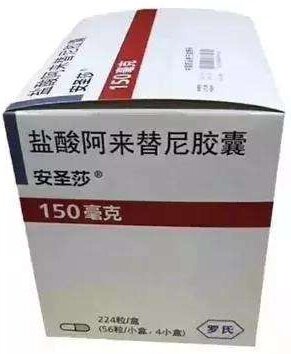
Alecensa is a novel small-molecule tyrosine kinase inhibitor (TKI) targeting ALK. It can cross the blood-brain barrier and demonstrates robust efficacy against brain metastases. The drug has been approved for: (1) second-line monotherapy for patients with ALK-positive non-small cell lung cancer (NSCLC) who have experienced disease progression after prior treatment with Xalkori; (2) first-line monotherapy for patients with ALK-positive NSCLC; and (3) monotherapy for patients with relapsed or refractory ALK-positive anaplastic large cell lymphoma (ALCL).
Lung cancer is the most common type of cancer and the leading cause of cancer-related deaths. Approximately 85% of lung cancer cases are non-small cell lung cancer (NSCLC), of which about 5% are ALK-positive. ALK-positive NSCLC is caused by gene fusions or rearrangements that lead to overactivation of the ALK protein, promoting the growth and survival of cancer cells. ALK-positive NSCLC represents a distinct subtype, predominantly affecting younger patients (median age 52 years) with no history of smoking; 50% of patients are under 50 years of age, and approximately 70% have never smoked.
To date, Alecensa has been approved in 88 countries worldwide for the initial (first-line) treatment of ALK-positive metastatic NSCLC, including the United States, Europe, Japan, and China. In China, Alecensa (Alecensa®, alectinib) was approved in August 2018 for the indication of monotherapy in patients with ALK-positive locally advanced or metastatic NSCLC. (Bioon.com)
Original Source: Updated data demonstrate Roche’s Alecensa increases overall survival rate for people with ALK-positive non-small cell lung cancer