

Lilly's CYRAMZA® (Ramucirumab) Combined with Erlotinib Receives FDA Approval as First-Line Therapy for EGFR-Mutated Metastatic NSCLC
Jun 01, 2020 11:42
CST Updated
May 31, 20:55

Eli Lilly
Global Pharmaceutical R&D and Production Company

FDA
U.S. Food and Drug Administration

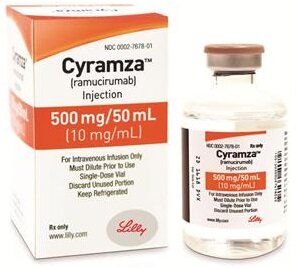
May 31, 2020 /Bio ValleyBIOON/ --Eli Lilly(Eli Lilly) recently announced that the U.S. Food and Drug Administration (FDA) has approved Cyramza (ramucirumab) in combination with erlotinib for the first-line treatment of patients with metastatic non-small cell lung cancer (NSCLC) harboring epidermal growth factor receptor (EGFR) exon 19 deletions or exon 21 L858R mutations. To date, Cyramza has been approved for four types of cancer (lung cancer,Liver Cancer, gastric cancer, colorectal cancer) for 6 therapeutic indications.
It is estimated that 50% of NSCLC patientsDiagnosisPatients sometimes present with advanced or metastatic disease. The 5-year survival rate for patients with metastatic NSCLC is 6%. In the United States, approximately 15% of NSCLC patients have EGFR mutations.In Phase III clinical trials, the Cyramza + erlotinib regimen significantly reduced the risk of disease progression or death by 41% compared with erlotinib alone.
Cyramza is a monoclonal antibody against vascular endothelial growth factor receptor 2 (VEGFR2), and erlotinib is a tyrosine kinase inhibitor (TKI) that targets and inhibits EGFR kinase activity. The combination of these two drugs, which integrates the VEGFR and EGFR pathways, will provide a new first-line treatment option for patients with metastatic NSCLC harboring EGFR mutations.
Notably, in the United States,Cyramza + erlotinib is the first and onlyFDAApproved for the treatment of metastatic EGFR-mutated NSCLC with VEGFR/EGFR TKI combination therapy.In the European Union, the Cyramza + erlotinib combination was approved in January of this year for the first-line treatment of adult patients with metastatic NSCLC harboring activating EGFR mutations.

This approval is based on data from the RELAY study, a global, randomized, double-blind, placebo-controlled Phase III study evaluating Cyramza in combination with erlotinib versus placebo plus erlotinib as first-line treatment for patients with metastatic NSCLC whoseTumorwith EGFR exon 19 deletions or exon 21 (L858R) substitution mutations. The study commenced in 2015, randomly assigning 449 patients from North America, Europe, and Asia. The primary endpoint was progression-free survival (PFS), and secondary endpoints included safety, response rate, overall survival (OS), and patient-reported outcomes.
The results showed that the study met its primary endpoint: compared with the placebo + erlotinib treatment group (n=225), the Cyramza + erlotinib treatment group (n=224) demonstrated a statistically significant and clinically meaningful improvement in progression-free survival (PFS), with a 7-month prolongation (median PFS: 19.4 months vs. 12.4 months; HR=0.59, 95% CI: 0.46–0.76, p<0.0001). In all prespecified subgroups, including those with exon 19 and exon 21 mutationsTumorConsistent PFS benefit was observed in patients. In this study, the overall safety profile observed was consistent with the known safety profile of each drug.
Notably, the RELAY study is the second positive Phase III study of Cyramza in metastatic NSCLC. The first was the REVEL study, whose data supported the approval of the Cyramza plus docetaxel regimen for the treatment of patients with metastatic NSCLC who had experienced disease progression after prior platinum-based chemotherapy.
Edward Garon, MD, Principal Investigator for the RELAY study in North America and Professor at the David Geffen School of Medicine at UCLA, stated, “Cyramza plus erlotinib represents a novel first-line treatment regimen for metastatic EGFR-mutated NSCLC, combining VEGFR and EGFR pathway inhibition, and marks a significant milestone in the management of this type of lung cancer. It is encouraging that patients now have multiple initial treatment options capable of delivering longer progression-free survival compared with the traditional standard therapy, erlotinib. The Cyramza and erlotinib combination regimen will be a welcome first-line option for patients with metastatic EGFR-mutated NSCLC.”
Eli LillyTumorAnne White, President of the Company, stated, “For patients with metastatic EGFR-mutated NSCLC, this Cyramza-based combination regimen represents a new and meaningful treatment option, and we are proud that it has beenFDAApproved for the treatment of patients with this disease. Today’s approval underscoresEli LillyOur ongoing commitment to patients with lung cancer, and to providing meaningful medicines for those with advanced or metastatic cancer. It further enhances the value of Cyramza in the treatment of certain advanced or metastatic cancers.”
Globally, lung cancer is the leading cause of cancer-related deaths, and non-small cell lung cancer (NSCLC) is the most common type, accounting for approximately 80%–85% of all lung cancer cases. There is no cure for patients with metastatic NSCLC; survival rates are low, and disease progression following acquired resistance remains a formidable challenge. Most patients receive multiple lines of therapy, and first-line treatment options may influence their subsequent therapeutic choices. Currently, tyrosine kinase inhibitors (TKIs) are the standard of care for treating EGFR-mutated NSCLC.
Both erlotinib and Cyramza target signaling pathways that are key drivers of tumor growth and progression. Erlotinib is a tyrosine kinase inhibitor (TKI) that selectively inhibits EGFR kinase activity, whereas Cyramza is an anti-angiogenic therapy targeting VEGF, capable of blockingTumorblood supply.
In the United States, Cyramza has been approvedFDAApproval of six therapeutic indications for four different types of cancer: (1) Gastric Cancer: Cyramza as monotherapy or in combination with paclitaxel for the treatment of patients with advanced or metastatic gastric or gastroesophageal junction adenocarcinoma (GEJA) who have experienced disease progression during or after fluoropyrimidine- or platinum-containing chemotherapy; (2) Non-Small Cell Lung Cancer (NSCLC): a) Cyramza in combination with erlotinib for the treatment of patients with metastatic NSCLC harboring EGFR exon 19 deletions or exon 21 L858R mutations; b) Cyramza in combination with docetaxel for the treatment of patients with metastatic NSCLC who have experienced disease progression during or after platinum-based chemotherapy; (3) Colorectal Cancer: Cyramza in combination with the FOLFIRI regimen for the treatment of patients with metastatic colorectal cancer (mCRC) who have experienced disease progression during or after prior therapy with bevacizumab, oxaliplatin, and fluoropyrimidine; (4) Hepatocellular Carcinoma (HCC): Cyramza as monotherapy for the treatment of patients with HCC who have alpha-fetoprotein (AFP) levels ≥400 ng/mL and have been previously treated with sorafenib. (Bioon.com)