

AbbVie’s Oriahnn Receives FDA Approval as First Non-Surgical Oral Treatment for Heavy Menstrual Bleeding Associated with Uterine Fibroids in Pre-Menopausal Women
May 31, 2020 20:54
CST Updated
20:54

AbbVie
Innovative Drug Developer

Neurocrine Biosciences
Developer of Drugs for Neurological and Endocrine Related Diseases

FDA
U.S. Food and Drug Administration

May 31, 2020 /BioValleyBIOON/ -- AbbVie and its partner Neurocrine Biosciences recently announced that the U.S. Food and Drug Administration (FDA) has approved Oriahnn (elagolix, estradiol, and norethindrone acetate capsules; elagolix capsules) for treatment for a duration of up to 24 months.
Notably,Oriahnn isFDAThe first non-surgical, oral medication approved for the treatment of heavy menstrual bleeding (HMB) associated with uterine fibroids in premenopausal women.Traditionally, uterine fibroids have been primarily managed surgically, representing the leading indication for hysterectomy in the United States. The approval of Oriahnn marks a significant advancement in the care of women with uterine fibroids. AbbVie expects Oriahnn to be available in the U.S. market by late June 2020.
Oriahnn is an oral combination of elagolix and E2/NETA (estradiol/norethindrone acetate) that helps achieve a balance between reducing heavy menstrual bleeding and associated hypoestrogenic side effects. For administration, Oriahnn is taken twice daily (morning and evening) at approximately the same times each day, with or without food. Due to the risk of ongoing bone loss (which may be irreversible), use of Oriahnn should be limited to 24 months.
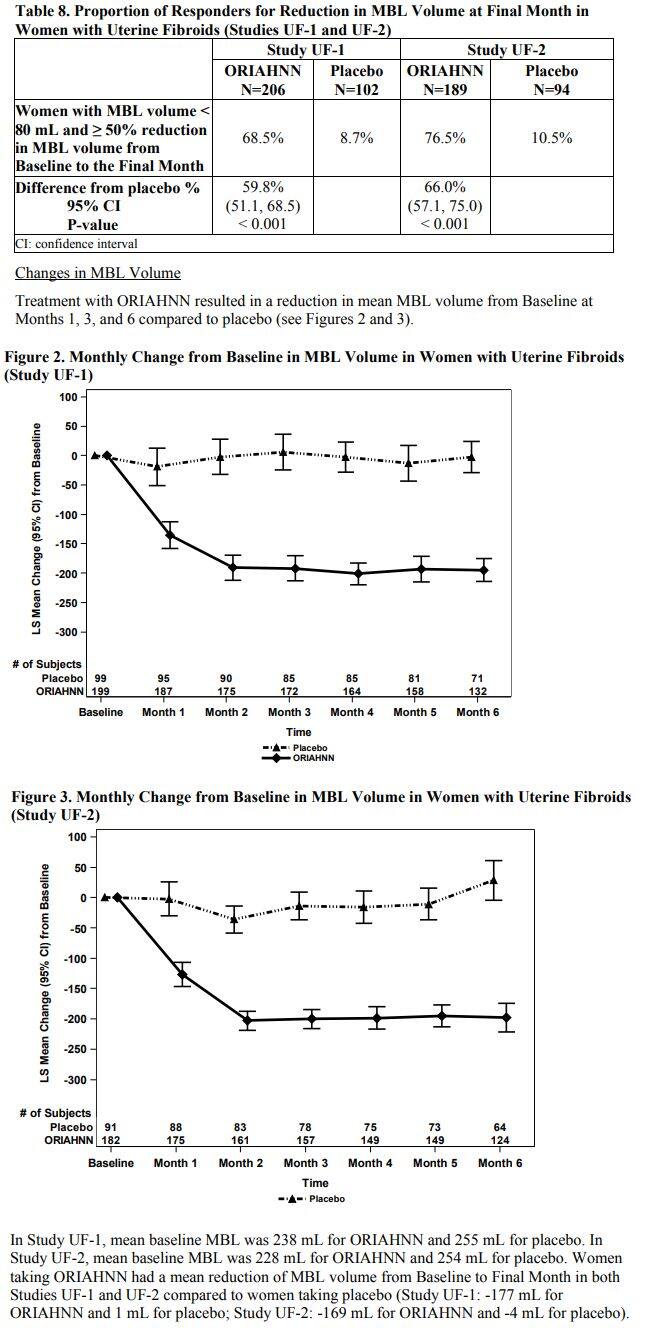
This approval is based on data from the Phase III clinical program of elagolix for uterine fibroids. The program included two replicate pivotal Phase III studies (ELARIS UF-1 and ELARIS UF-2) conducted at approximately 100 clinical sites in the United States and Canada. Nearly 800 premenopausal women experiencing heavy menstrual bleeding associated with uterine fibroids were enrolled to evaluate the safety, tolerability, and efficacy of elagolix monotherapy (300 mg twice daily) and elagolix (300 mg twice daily) combined with low-dose hormone add-back therapy (estradiol 1.0 mg/norethindrone acetate 0.5 mg), compared with placebo. Patients received treatment for six months. The primary endpoint was the reduction in heavy menstrual bleeding with elagolix monotherapy or elagolix plus low-dose hormone add-back therapy versus placebo, as measured by the alkaline hematin method.
During the final month of the 6-month treatment period, results demonstrated that elagolix combined with low-dose hormone therapy significantly reduced heavy menstrual bleeding associated with uterine fibroids compared with placebo (ELARIS UF-1 study: 68.5% vs. 8.7%, p < 0.001; ELARIS UF-2 study: 76.2% vs. 10.1%, p < 0.001). In both studies, clinical response was defined as menstrual blood loss ≤ 80 mL during the final month and a ≥ 50% reduction from baseline.
Other efficacy endpoints included: as determined by the alkaline hematin method, during the final month of the 6-month treatment period, 48.1% (ELARIS UF-1) and 52.9% (ELARIS UF-2) of patients in the elagolix plus low-dose hormone combination therapy groups achieved amenorrhea (defined as the absence of bleeding or spotting). In both studies, patient-reported symptom severity and quality of life improved based on results from the Uterine Fibroid Symptom and Quality of Life (UFS-QoL) questionnaire.
Regarding safety, at the end of the treatment period, the overall safety profile of elagolix was consistent with that observed in Phase II clinical trials for uterine fibroids, with no new safety signals identified. The most commonly reported adverse events (≥5%) were hot flashes, night sweats, nausea, headache, and fatigue.
ELARIS UF-2Clinical TrialDr. Ayman Al-Hendy, Professor of Gynecology at the University of Illinois Chicago and an investigator in the study, stated, “Women experiencing heavy menstrual bleeding (HMB) must contend not only with the physical burden of uterine fibroids but also with the management challenges they impose on daily life. This approval provides women with a non-surgical option that meaningfully addresses the unmet need in the treatment of HMB.”
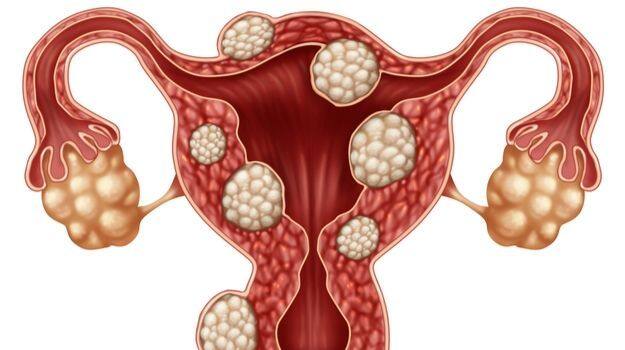
Uterine fibroids are the most common benign tumors in women of reproductive age. These are non-cancerous, hormone-responsive muscular tissues of the uterus.Tumor. Uterine fibroids may be asymptomatic; however, in some women, they can cause symptoms such as heavy menstrual bleeding (HMB) and vaginal bleeding outside of the menstrual period,Anemiaand other symptoms related to women's health. Treatment options for uterine fibroids include surgery (hysterectomy, myomectomy), endometrial ablation, uterine artery embolization, as well as magnetic resonance imaging (MRI)-guided ultrasound and medical management with medications, including oral contraceptives, progestins, selective progesterone receptor modulators, and gonadotropin-releasing hormone (GnRH) agonists.
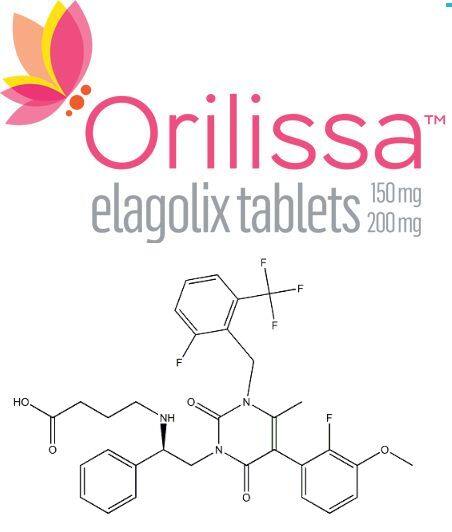
Orilissa - Chemical Structural Formula (Image source: chemicalbook.com)
Elagolix is an oral, small-molecule gonadotropin-releasing hormone (GnRH) receptor antagonist that reduces circulating sex hormone levels by inhibiting GnRH receptors in the pituitary gland.
In July 2018, elagolix (brand name: Orilissa) received approval from the U.S. FDA for the treatment of moderate to severe pain associated with endometriosis (EMs). This approval made Orilissa the first oral GnRH receptor antagonist specifically approved for the treatment of moderate to severe pain associated with EMs, and also marked the first such approval in over a decade.FDAThe first oral medication approved for the treatment of moderate to severe pain associated with endometriosis.
Currently, elagolix is being developed for the treatment of certain ovarian hormone-mediated diseases, such as endometriosis, uterine fibroids, and polycystic ovary syndrome. (Bioon.com)