

Xtandi (Enzalutamide) Significantly Extends Overall Survival in Non-Metastatic Castration-Resistant Prostate Cancer, Now Available in China
Jun 01, 2020 11:43
CST Updated
May 31, 20:53

Pfizer
Pharmaceutical R&D Developer

Astellas
Pharmaceutical R&D Manufacturer
May 31, 2020 /BioValleyBIOON/ --PfizerPfizer and its partner Astellas recently jointly announced the final results of the overall survival (OS) analysis from the pivotal Phase III PROSPER study evaluating the targeted anticancer drug Xtandi (Chinese brand name: Anketan; generic name: enzalutamide) for the treatment of non-metastatic castration-resistant prostate cancer (nmCRPC). The data were simultaneously published in the prestigious international medical journal The New England Journal of Medicine (NEJM) and presented at the 2020 American ClinicalTumorpresented at the American Society of Clinical Oncology (ASCO) Annual Meeting.
PROSPER was a large-scale, randomized, double-blind, placebo-controlled, multinational study that enrolled approximately 1,400 patients with non-metastatic castration-resistant prostate cancer (nmCRPC) across the United States, Canada, Europe, South America, and the Asia-Pacific region. The study evaluated the efficacy and safety of Xtandi (160 mg, orally once daily) versus placebo, each in combination with androgen deprivation therapy (ADT). The primary endpoint was metastasis-free survival (MFS), and the key secondary endpoint was overall survival (OS).
Previously reported results demonstrated that Xtandi plus ADT significantly reduced the risk of metastasis or death by 71% compared with placebo plus ADT: 23% of patients in the Xtandi plus ADT group experienced metastasis or death, versus 49% in the placebo plus ADT group. For the primary endpoint of metastasis-free survival (MFS), the median MFS was 14.7 months in the placebo plus ADT group and 36.6 months in the Xtandi plus ADT group, representing a prolongation of 22 months (HR=0.29 [95% CI: 0.24–0.35], p<0.001).
The final results of the OS analysis announced this time showed that, compared with the placebo + ADT treatment group, the risk of death in patients in the Xtandi + ADT treatment group was reduced by 27% (HR = 0.73; 95% CI: 0.61–0.89; p = 0.001), and overall survival was significantly prolonged (median OS: 67.0 months [95% CI: 64.0–not reached] vs. 56.3 months [95% CI: 54.5–63.0]), with statistically significant differences observed. In this analysis, adverse events were consistent with those previously reported.

Globally, prostate cancer is the second leading cause of cancer-related death in men, following lung cancer. Prostate cancer typically occurs in older men and is often driven by excess male hormones, including testosterone (an androgen). The standard clinical approach to treatment involves reducing androgen levels in the body (castration), which can be achieved through surgical castration and/or androgen deprivation therapy (ADT).
Metastatic prostate cancer refers to the spread of cancer cells from the prostate to other parts of the body, such as the bones, lymph nodes, bladder, and rectum. If patients still respond to surgical or medical therapies that lower testosterone levels at this stage, the disease is considered hormone-sensitive (or castration-sensitive); if they do not respond, it is considered hormone-resistant (or castration-resistant).
Xtandi (Ankotan, enzalutamide), co-developed and marketed by Astellas and Pfizer, is an androgen receptor signaling inhibitor administered orally once daily. Xtandi directly targets the androgen receptor (AR) and acts at three steps in the AR signaling pathway: (1) inhibition of androgen binding—where androgen binding induces conformational changes that trigger receptor activation; (2) prevention of nuclear translocation—since AR translocation to the nucleus is an essential step in AR-mediated gene regulation; and (3) impairment of DNA binding—as AR binding to DNA is critical for regulating gene expression.
Xtandi was launched in 2012 and, to date, has been approved for three therapeutic indications: metastatic castration-resistant prostate cancer (mCRPC, August 2012), non-metastatic castration-resistant prostate cancer (nmCRPC, July 2018), and metastatic castration-sensitive prostate cancer (mCSPC, December 2019). Notably,Xtandi is now the first and only product approved for the treatment of three distinct types of advanced prostate cancer (nmCRPC, mCRPC, mCSPC).
Xtandi: A Blockbuster Product in the Prostate Cancer Field, with Sales of $4.2 Billion in 2019, Already Launched in China
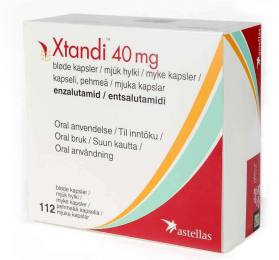
In China, Xtandi (enzalutamide) was approved in late November 2019 for the treatment of adult patients with metastatic castration-resistant prostate cancer (mCRPC) who are asymptomatic or mildly symptomatic and have not received chemotherapy after failure of androgen deprivation therapy (ADT). Prostate cancer is the second most common malignant tumor in men worldwide, and has become the most common male urological malignancy in China.Tumor。
Xtandi is the world’s best-selling prostate cancer drug. According to Pfizer’s 2019 annual performance report, Xtandi’s full-year sales amounted to $838 million. Astellas’ performance report indicated that Xtandi’s sales were $655 million for the period from January 31, 2019, to April 30, 2019 (the fourth quarter of fiscal year 2018) and $2.711 billion for the period from May 1, 2019, to January 31, 2020 (the first three quarters of fiscal year 2019). Based on these figures, Xtandi’s global sales in 2019 reached $4.202 billion.
As part of clinical development programs in the field of prostate cancer, Pfizer and Astellas are currently conducting another Phase III clinical study, EMBARK (ClinicalTrials.gov Identifier: NCT02319837), to evaluate the therapeutic potential of Xtandi plus leuprolide combination therapy and Xtandi monotherapy versus leuprolide monotherapy in 1,068 male patients with high-risk non-metastatic castration-sensitive prostate cancer (nmCSPC). (Bioon.com)
Original Source: Final PROSPER Results Show XTANDI® (enzalutamide) Significantly Extends Overall Survival in Men with Non-Metastatic Castration-Resistant Prostate Cancer