

On June 13, Novo Nordisk first presented data from its Phase III clinical trial of semaglutide (code name: SUSTAIN CHINA MRCT) for the treatment of type 2 diabetes in China at the ADA 2020 conference. Currently, the subcutaneous injection formulation of semaglutide has been submitted for marketing approval in China, while the oral tablet formulation is undergoing Phase III clinical trials in China.
The SUSTAIN CHINA MRCT study was a 30-week, randomized, double-blind, Phase IIIa clinical trial designed to evaluate the efficacy and safety of once-weekly subcutaneous semaglutide versus once-daily oral sitagliptin, both added to metformin, in patients with type 2 diabetes. The study enrolled a total of 868 participants, of whom 70% were Chinese and 13% were Korean. Participants were randomly assigned to receive semaglutide 0.5 mg (n=288), semaglutide 1.0 mg (n=290), or sitagliptin 100 mg (n=290).
The study results showed that after 30 weeks of treatment, both doses of semaglutide were superior to sitagliptin in reducing HbA1c levels and body weight. In terms of the proportion of patients achieving HbA1c targets, losing ≥5% or ≥10% of body weight, and meeting composite endpoints, both doses of semaglutide were significantly higher than those observed with sitagliptin. The safety data were consistent with previous study findings.
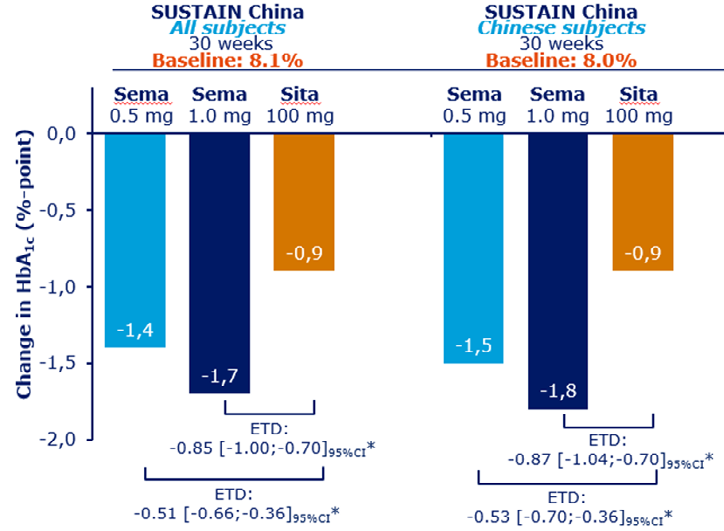
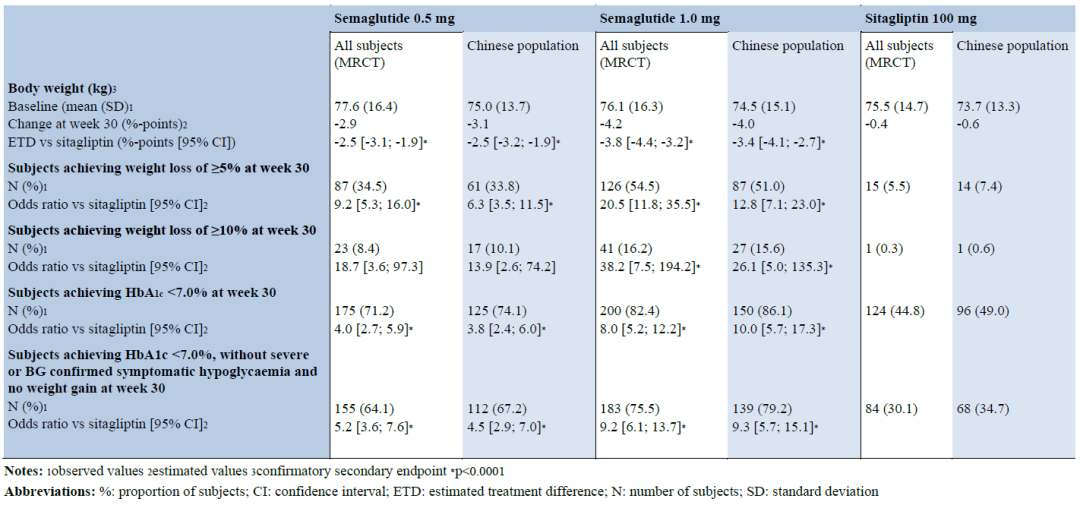
Glycemic and Weight-Related Endpoint Results in All Subjects and the Chinese Population (Source: Novo Nordisk Medical Information)
The SUSTAIN (Semaglutide Unabated Sustainability in Treatment of Type 2 Diabetes) series of studies are Phase III trials of semaglutide conducted in patients with type 2 diabetes, providing a comprehensive evaluation of the efficacy and safety of semaglutide, as well as cardiovascular and renal outcomes.
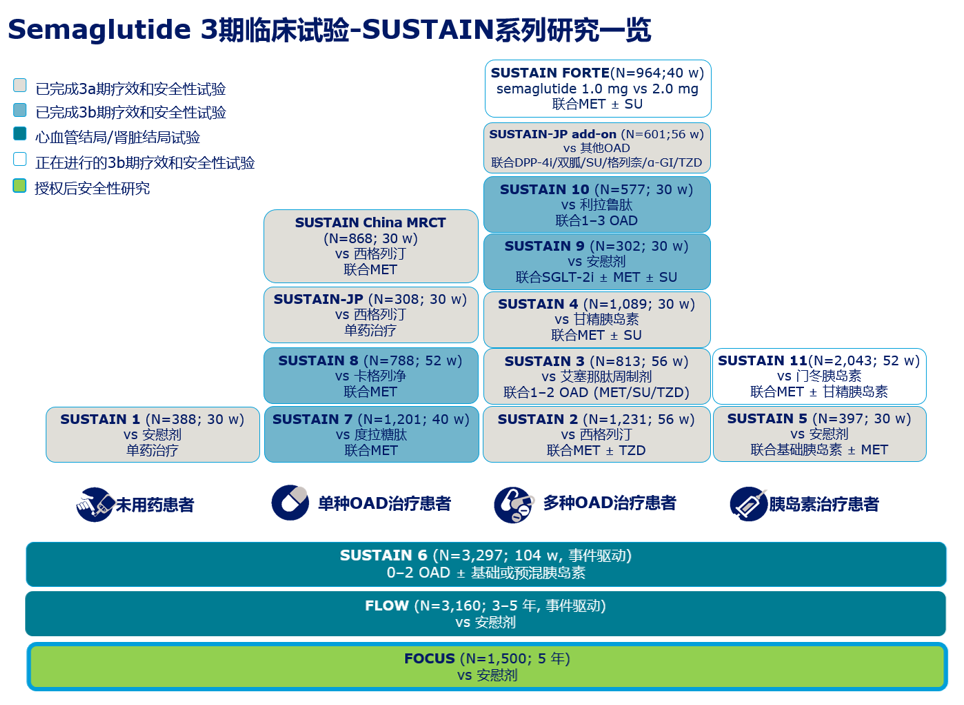
Source: Novo Nordisk Medical News
This series of studies demonstrates that semaglutide is significantly superior to other control groups—including placebo, sitagliptin, insulin glargine, canagliflozin, dulaglutide, liraglutide, and exenatide once-weekly—in reducing HbA1c levels, with semaglutide 1.0 mg achieving a maximum HbA1c reduction of 1.8%. The proportion of patients achieving HbA1c <7% or ≤6.5% was significantly higher in the semaglutide group than in the control groups, with the target attainment rate (HbA1c <7%) reaching 80% for semaglutide 1.0 mg.
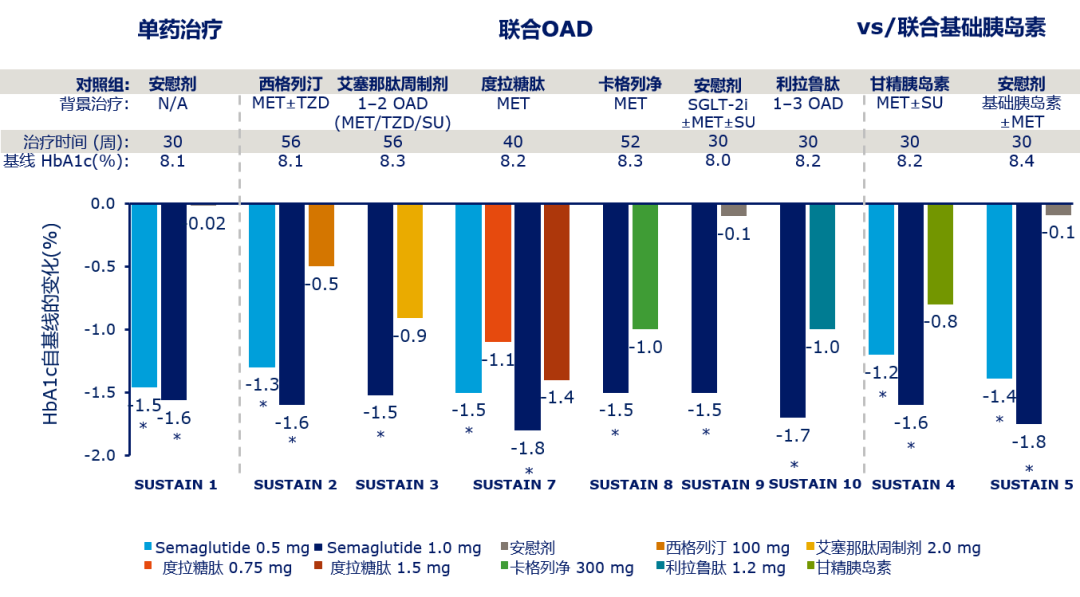
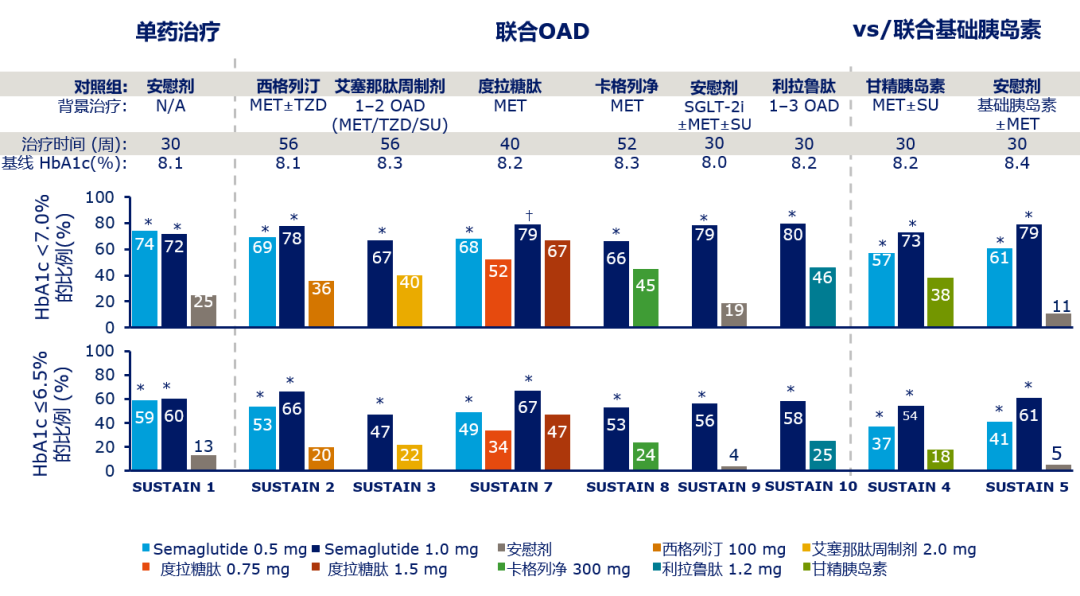
*P<0.0001 vs. control group; in the SUSTAIN 7 trial, comparisons were made between high-dose groups and between low-dose groups; OAD, oral antidiabetic drugs; N/A, not applicable; MET, metformin; TZD, thiazolidinediones; SU, sulfonylureas; SGLT-2i, sodium-glucose cotransporter-2 inhibitors
Furthermore, the weight-loss efficacy of semaglutide was also significantly superior to that of any other control group, with semaglutide 1.0 mg achieving a maximum weight loss of 6.5 kg.
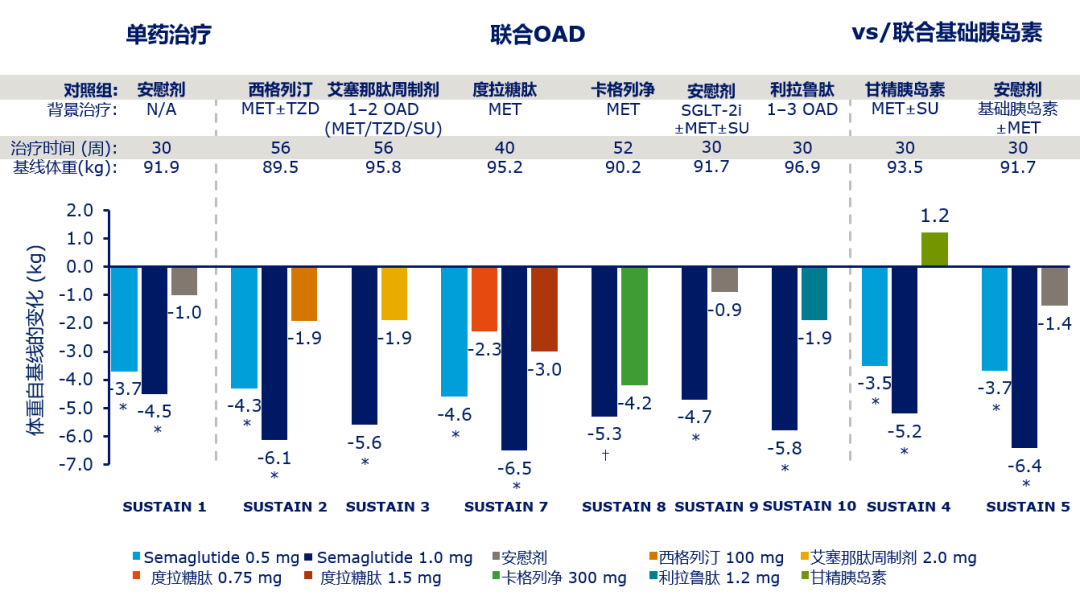
Source: Novo Nordisk Medical Information
Regarding safety, the overall incidence of adverse events and serious adverse events with semaglutide was similar to that in the control groups. The most common adverse events associated with semaglutide were gastrointestinal events, primarily mild-to-moderate, transient nausea.