

Ophthalmic device company Avisi Technologies closes $10.7M Series A to advance pivotal trial SAPPHIRE and pipeline development
Avisi Technologies
Ocular Implant Developer
Recently, Avisi Technologies, an ophthalmic medical device company founded by Chinese entrepreneurs, officially announced the closing of its Series A financing round, totaling USD 10.7 million. The round was led by MedVenture Partners, with participation from new investors including Sherpa Healthcare Partners, SNBL-Gemseki, SBI US Gateway Fund, Golden Seeds, and OneOneFive. Existing investors, including Good Growth Capital, Accanto Partners, Life Sciences Greenhouse Investment, and Quaker Capital Investments, also participated strongly in this round.
The proceeds from this financing round will be used to advance Avisi's pivotal clinical trial, SAPPHIRE, and to further develop Avisi's product pipeline, which includes novel treatment approaches addressing the full spectrum of glaucomatous disease.
As of this financing round, Avisi has completed a total of 10 funding rounds, with aggregate financing reaching USD 21.7 million. Notably, this includes three non-dilutive grants from the U.S. National Science Foundation (NSF). Although the total amount raised is less than what some other companies secure in a single round, securing 10 rounds of investment trust and three instances of "non-dilutive" capital injection by the time of this Series A round represents a tangible manifestation of patient capital embracing long-termism. However, what Avisi relies on to achieve this level of support is a thought-provoking question.
1Incubated by the University of Pennsylvania, Interdisciplinary Efforts Foster Core Technologies
Tracing back to 2017, the founding team, driven by the vision of applying novel nanotechnology to combat vision loss and prevent blindness, established Avisi Technologies through the University of Pennsylvania's Y-Prize Program. This represents a classic "playbook" for launching U.S. health technology companies. It also signifies that Avisi possesses a strong and formidable team of scientists.
Founder Rui Jing Jiang reflected on her entrepreneurial motivations in a past interview. Before founding Avisi Technologies, she was uncertain about her future career path. Coming from a family with a strong medical background, for a long time Rui Jing Jiang thought she might pursue a career in medical research. She also completed internships at a pharmaceutical company and a large bank, leaving her with many options at the time.
The turning point came during a competition at the University of Pennsylvania called the "Y-Prize." This is a competition established by the university to encourage students from all disciplines to apply their knowledge to help commercialize existing technologies. At that time, Professor Lgor Bargatin from the School of Mechanical Engineering had invented a very novel material—an extremely thin, nanotechnology-enabled material that possessed both rigidity and toughness. After seeing this technology, Rui Jing Jiang and her co-founders marveled: "This is a really fascinating material. Wouldn't it be incredibly cool if we could use such materials to impact human health?" Questions like "Do micro-implants exist within the human body?" and "If these implants could be made smaller, could human health benefit?" led Rui Jing Jiang and her partners down the path of ophthalmic research.
In its early stages, Avisi received funding and accelerator support from multiple organizations, including the National Science Foundation (NSF), the Glaucoma Research Foundation, and the UCSF Rosenman Institute. This support laid the foundation for its technology translation and clinical pathway, while also accelerating its pace of development.
Subsequently, Avisi joined renowned healthcare innovation platforms such as Johnson & Johnson JLABS and Medtech Innovator, continuously refining its clinical, regulatory, and commercialization capabilities.
Throughout this process, through interdisciplinary collaboration between the materials science engineering team and ophthalmology experts, Avisi's core technology—VisiPlate—was born.
2Focusing on the High-Demand Track of Glaucoma, Concentrating on a Single High-Value Indication
Glaucoma is the leading cause of irreversible blindness worldwide. According to Market Scope's 2025 Glaucoma Device Market Report, the disease affects over 133 million people globally, and there is currently no cure. In glaucoma patients, excess fluid accumulates within the eye, leading to optic nerve compression and ultimately causing permanent vision loss. Among the various types, open-angle glaucoma (OAG) and angle-closure glaucoma are the most common forms of the disease.
Current treatment options for glaucoma include medications, lasers, surgeries, and medical device solutions. However, these interventions often depend heavily on patient compliance, may require repeat treatments, or are prone to failure over time due to blockage and scarring. Consequently, there remains a significant unmet need for safer and more effective long-term treatment options.
Based on a deep understanding of the clinical challenges in glaucoma care, Avisi has currently established three product pipelines. Its core product, VisiPlate, is an "ultra-thin, multi-channel aqueous shunt" designed for patients with open-angle glaucoma, functioning as a minimally invasive filtering implant device. Addressing different types and severities of glaucoma, Avisi has also developed VisiPlate-S, a version targeting mild to moderate glaucoma. The remaining pipeline includes an early-stage project focused on the anterior chamber of the eye.
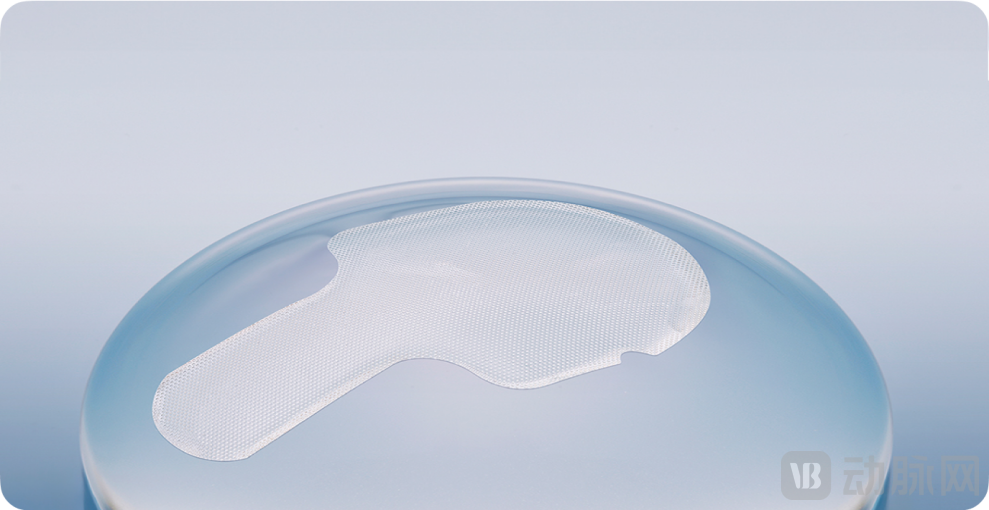
VisiPlate Renderings (Source: Avisi Official Website)
A thin product pipeline and a single indication might be interpreted as a lack of core competitiveness for other companies, but this argument does not hold for Avisi. Avisi operates within the minimally invasive glaucoma surgery (MIGS) segment of the ophthalmic medical device sector. This niche market is driven by the global aging population and the high rate of blindness associated with glaucoma, resulting in sustained strong clinical demand. According to the 2025 Glaucoma Treatment Market Analysis Report released by Market Monitor, the global and Chinese glaucoma treatment markets reached RMB 46.453 billion and RMB 13.648 billion, respectively, in 2025. The global glaucoma treatment market is projected to reach RMB 59.926 billion by 2032, indicating a promising industry outlook.
3Directly Targets Core of Lowering Intraocular Pressure, Innovative Design Enhances Patient Experience
Safe reduction of intraocular pressure (IOP) is the cornerstone of glaucoma treatment and remains the only clinically validated intervention for managing the disease.
Minimally invasive glaucoma surgery (MIGS) focuses on designing interventional approaches targeting different points along the aqueous humor outflow pathway. Based on the site of action, these techniques fall into three mainstream categories: trabecular meshwork-related procedures, Schlemm's canal dilation procedures, and suprachoroidal space drainage procedures.
VisiPlate targets the suprachoroidal space. Located between the sclera and the choroid, this space does not normally participate in aqueous humor drainage. This type of procedure involves implanting a shunt to create an artificial pathway from the anterior chamber to the suprachoroidal space, diverting aqueous humor into this space where it can be absorbed by the choroidal vasculature, thereby increasing aqueous outflow.
Based on these principles and leveraging ocular anatomy, VisiPlate employs a design utilizing an internal network of interconnected microchannels. This design directs blocked aqueous humor from the anterior chamber to the eye's secondary drainage zone, achieving sustained aqueous drainage with a compact structure, thereby lowering IOP. Additionally, compared to common sites of action such as the subretinal space or the vitreous cavity, VisiPlate offers a higher degree of minimally invasive intervention, bypassing the retinal barrier and reducing the risk of direct retinal damage.
Regarding material composition, VisiPlate utilizes innovative materials such as alumina and polyimide C as its constituent materials. This selection aims to minimize foreign body reaction and reduce the risk of scar formation while achieving effective IOP reduction.
From the perspective of patient experience, VisiPlate embodies a more human-centered design. The eye is a vital organ entrusted with meeting the basic daily needs of an individual, playing a dual role in maintaining personal appearance and supporting fundamental physical activities. For glaucoma patients, implant-based treatment holds profound significance, addressing both aesthetic and psychological needs as well as functional requirements.
Based on this understanding, VisiPlate is constructed from ultra-thin materials, with an overall thickness several times thinner than a human hair, making it nearly invisible and transparent at a social distance. This ultra-thin characteristic enhances both the comfort and the cosmetic appearance for patients following implantation.
4Clinical Data-Driven, Multi-Channel Design Validated
The pivotal clinical trial SAPPHIRE, mentioned in the financing announcement, achieved a regulatory milestone in October 2025 by receiving Investigational Device Exemption (IDE) approval from the U.S. Food and Drug Administration (FDA). This trial will evaluate the safety and efficacy of VisiPlate in patients with open-angle glaucoma in the United States.
In terms of clinical validation, Avisi has conducted multiple earlier-stage and pivotal trials on VisiPlate. Prior to SAPPHIRE, VisiPlate was evaluated in the VITA trial, with six-month results presented at the 2025 American Glaucoma Society Annual Meeting. Data showed that the mean baseline intraocular pressure (IOP) in study eyes was approximately 24.1 mmHg. With VisiPlate implantation as a standalone procedure, mean IOP was reduced by 40.4% to 14.0 mmHg at six months, while the mean number of medications decreased from 2.0 to 0.8. Approximately 78.6% of study eyes achieved an IOP reduction of greater than 20% on the same or fewer medications, surpassing the predefined primary efficacy endpoint. Approximately 57.1% of study eyes required no IOP-lowering medications at six months, demonstrating the product's potential in controlling IOP and reducing medication burden through clinical data.
Dr. Eydie Miller-Ellis, Vice President of the American Glaucoma Society and Director of the Glaucoma Service at the University of Pennsylvania's Scheie Eye Institute, who also serves as Principal Investigator of the SAPPHIRE trial, shared her firsthand perspective on the differentiation between VisiPlate and trabecular meshwork-related procedures. "After trabeculectomy or other filtering surgeries, the bleb can become elevated, causing discomfort for patients," she noted. "This tendency toward bleb elevation is partly attributable to the single-channel outflow design of existing stents. If all aqueous humor exits through a single outflow pathway, it becomes more concentrated in the center of the bleb, causing that area to become more elevated." VisiPlate's multi-channel design precisely addresses this challenge.
She also added that surgeons involved in the VITA trial found the VisiPlate procedure to be easier and faster than standard trabeculectomy, requiring less postoperative management.
Currently, Avisi is conducting multiple clinical validation studies on VisiPlate at six major research centers across Arizona, California, Colorado, Texas, Wisconsin, and New York. As more clinical data are read out, Avisi will present a new investment narrative at the intersection of ophthalmic devices and metamaterials.