

Innoloop Medical Founder, Former Johnson & Johnson Chief Engineer, Files IPO Amid Breakthroughs in Peripheral Vascular Implants

Innomed
Developer and Manufacturer of Implantable Medical Devices and High-End Interventional Consumables
“The rapid development of interventional therapy has opened up significant high-growth potential in the medical device sector, but the various sub-segments of the domestic vascular interventional device market are developing unevenly,” said Gong Xiaoyan, founder of Suzhou Innomed Medical Device Co., Ltd. (hereinafter referred to as “Innomed”).
He pointed out that in recent years, the process of "domestic substitution" for interventional devices in the fields of coronary arteries and large arteries in China has accelerated and gradually matured. Taking coronary stents as an example, by 2017, the market share of domestic brands had already exceeded 70%. However, in the field of peripheral vascular interventional devices, China is still in its early stages, with foreign manufacturers dominating the market, and full domestic substitution has not yet been achieved.
Not only peripheral vascular interventional devices, but also high-value consumables commonly used in interventional surgeries, such as catheters and guidewires, are largely monopolized by foreign manufacturers.
Formerly the Chief Engineer at healthcare giant Johnson & Johnson, Gong Xiaoyan possesses keen insights into industry development trends and technological R&D. In 2013, he returned to China from across the Pacific, determined to establish a national high-tech enterprise focused on the development and manufacturing of endovascular interventional medical devices. Thus, Innomed was founded.
Innomed is located in the BioBAY (Suzhou Industrial Park Biopharmaceutical Industrial Park) in Suzhou, Jiangsu Province. The company’s core team comprises overseas-returnee PhDs, foreign experts, and seasoned industry professionals. Over the past seven years since its establishment, Innomed has obtained market approval for three interventional products, had two stent-based products included in the NMPA’s Special Approval Procedure for Innovative Medical Devices, and continues to develop multiple additional products.
“Constant innovation and creating globally leading products is the mission of Innomed,” Gong Xiaoyan told VCBeat.
Gong Xiaoyan carries many “labels”: he is a Senior Research Fellow at Harvard University, an entrepreneurship expert under China’s National Major Talent Introduction Program, an adjunct professor at Xi’an Jiaotong University and Tongji University, holds a Ph.D. from the University of California, Santa Barbara, and has been recognized as a Jiangsu Province “Shuangchuang” (Innovation and Entrepreneurship) Talent and a Gusu Leading Talent. He founded the consulting firm Medical Implant Mechanics LLC and spearheaded product development and technological improvements for numerous U.S. startups, contributing to products with market valuations exceeding tens of billions of dollars. During his tenure as Chief Engineer at Johnson & Johnson, he led and participated in the entire process—from research and development to commercialization—of all nickel–titanium alloy-based medical implants under the Johnson & Johnson portfolio.
Behind these “labels” lies his relentless exploration and research into professionalism and technology. This characteristic was also prominently reflected in the founding of Innomed.
Peripheral vessels refer to all blood vessels excluding the coronary and cerebrovascular systems. The incidence of peripheral vascular disease is rising rapidly year by year, with an increasing number of cases requiring intervention and growing clinical complexity. In China, approximately 30 million people suffer from peripheral vascular disease. Nearly all patients with a five-year history of diabetes exhibit varying degrees of peripheral vascular complications. Annually, 500,000 limbs are amputated due to vascular diseases in China, and 2 million feet (or legs) develop gangrene and ulceration, with 25% of these cases requiring amputation within one year.
Peripheral vascular disease requires systematic treatment, with the current main therapeutic modalities being surgical operation, endovascular therapy, and interventional therapy.
Stent implantation is the most common interventional therapy. While stent placement can significantly improve patient symptoms, peripheral vascular stents currently available on the market are frequently prone to fatigue fracture after use.
To address this challenge, the first project launched by Gong Xiaoyan after establishing Innomed was the development of a fatigue-resistant stent. Through the relentless efforts of Gong and his team, they successfully created the Inno-Spring fatigue-resistant stent system using seamless braiding technology. This product overcomes the critical shortcomings of existing peripheral vascular stents, namely weak radial force at both ends and poor fatigue strength within the human body. It holds more than ten technical patents and was awarded the German Red Dot Design Award in 2016. Currently, the product has entered the special approval pathway for innovative medical devices and is undergoing clinical trials.
Gong Xiaoyan stated that the core advantage of this independently developed anti-fatigue stent system lies in its compliance, which allows it to adapt to the pathological structures of different patients while providing robust support.
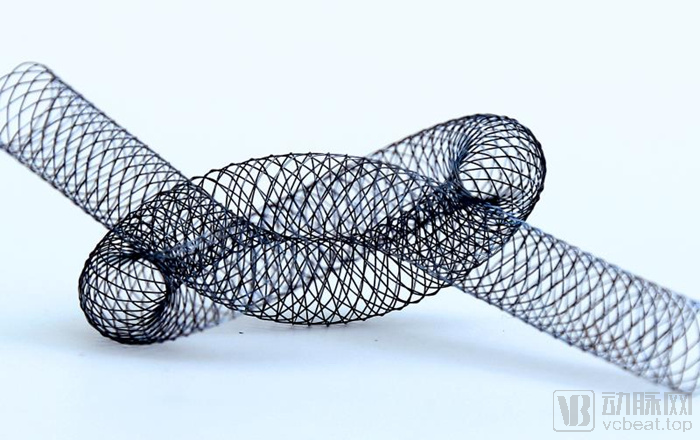
Inno-Spring Peripheral Vascular Stent System
According to research by Grand View Research, Inc., the global peripheral vascular market exceeded $9 billion in 2020. The United States remains the largest market globally, while the Asia-Pacific peripheral vascular market is experiencing rapid growth with a compound annual growth rate (CAGR) of over 10.0%, driven by the rise of emerging markets such as China and India.
Gong Xiaoyan introduced that in the peripheral vascular market, peripheral vascular stents dominate. Peripheral artery stents are mainly supplied by foreign manufacturers, and no domestic brands have been approved in China yet. “This is precisely our opportunity,” he said.
In addition to the anti-fatigue stent system Inno-Spring, Innomed has also entered the venous market by developing the Inno-Xmart venous stent system for patients with iliofemoral and central venous stenosis or occlusion. This product features excellent flexibility, fatigue resistance, and crush resistance, and offers three stent designs to accommodate different anatomical structures. Currently, this product has received special approval as an innovative medical device and has entered clinical trials.
Leveraging its internationally leading expertise and development capabilities in multidisciplinary medical device design, spanning materials science, solid mechanics, and fluid dynamics, Innomed has innovatively launched the world’s first dedicated device—the Quick Fenestrater. This product is designed for in-situ retrograde “fenestration” of branch arteries originating from the aortic arch, addressing the lack of specialized surgical instruments for this procedure. Currently undergoing clinical trials, it is expected to receive market approval in 2022.
Globally, the market share for guidewire products reached $1.1 billion in 2016 and is projected to reach $2 billion by 2023, with an annual growth rate of 8.2%. While focusing on the research and development of innovative medical devices, Gong Xiaoyan and his team have also established a presence in the field of high-value consumables, such as guidewires and catheters.
“Guidewires and catheters are an indispensable part of interventional therapy, yet these products are currently dominated by imports, with a low rate of domestic production,” stated Gong Xiaoyan.
Where there is a market gap, there is a market opportunity. Innomed has launched a range of independently developed guidewire and catheter products, including the Inno-Hydrowire angiographic guidewire, the Inno-Pathwire guide wire, and the Veno-Bright vein stripping catheter. Compared with similar products on the market, each of these offerings features innovative breakthroughs. For instance, the Inno-Hydrowire angiographic guidewire is constructed with a nitinol core, providing excellent torque control and support force. Its surface is coated with a highly stable hydrophilic coating that enhances lubricity. The wire offers superior radiopacity for precise positioning under X-ray imaging, and guidewires with diameters of 0.018 inches or smaller can access minute blood vessels.
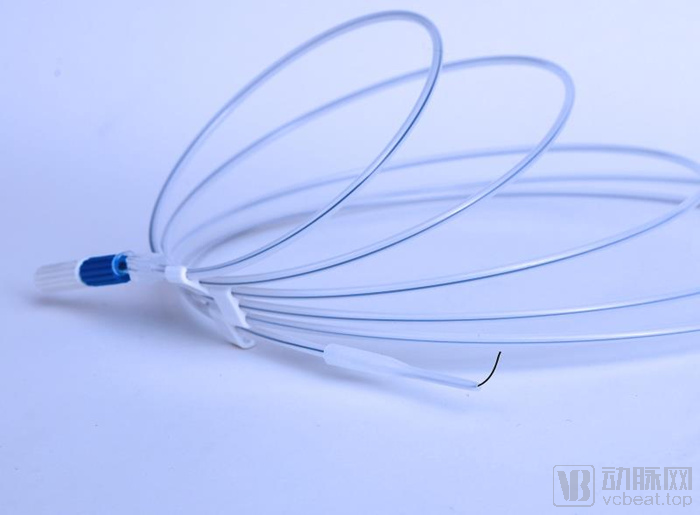
Inno-Hydrowire Super-Slippery Angiographic Guidewire
Currently, all three products have obtained NMPA registration for market launch. Additionally, the contrast guidewire Inno-Hydrowire and the guide wire Inno-Pathwire have also received FDA certification in the United States.
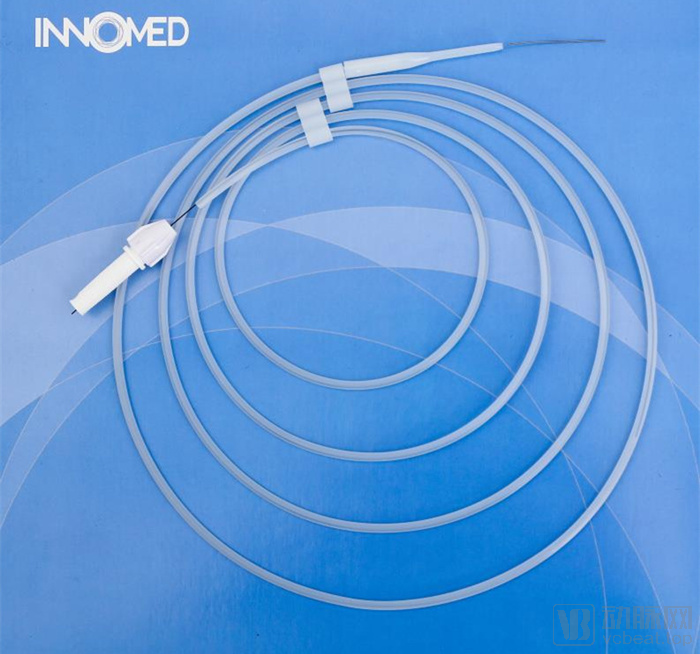
Guide Wire Inno-Pathwire
“The launch of these products also represents a concerted effort to achieve the ‘domestic production’ of high-value consumables such as catheters and guidewires. The market promotion of these products is currently proceeding smoothly. We hope that after our facility in Wuxi is completed this year, we will be able to reduce costs, thereby enabling large-scale market entry for our products,” stated Gong Xiaoyan.
In the first half of this year, Innomed completed the first phase of its Series C financing, with Founder & Life Sciences as the investor. Gong Xiaoyan stated that, as an R&D-driven enterprise, Innomed plans to complete its Series C+ financing round this year, raising RMB 100 million. The funds will be used to accelerate the regulatory approval and market launch of products under development, as well as to introduce new products.
“We hope that in the near future, our independently developed products will also be able to rapidly enter the U.S. market, and within three to five years, we will become a globally recognized innovative enterprise in the industry.” Speaking of the company’s vision, Gong Xiaoyan said this.