

ZhenTai Intelligence Targets Critical Rehabilitation Needs with Launch of 'BCI+VR+Robotics' Integrated Neurorehabilitation Solution

ZhenTec
Brain-Computer Interface Medical Industrialization Developer
In 2019, the brain-computer interface (BCI) industry achieved multiple breakthroughs, with growing momentum: Elon Musk’s BCI company Neuralink unveiled its implantable BCI robot; Facebook acquired BCI startup CTRL-labs for $1 billion; and Nissan demonstrated its Brain-to-Vehicle (B2V) technology, which interprets brain signals to control vehicles...
As a cutting-edge technology in the field of brain science, brain-computer interfaces (BCIs) hold application potential across various sectors, including education, military, entertainment, and healthcare.
Regarding the application of brain-computer interface (BCI) technology in non-medical fields such as education, military, and entertainment, Wang Haochong, founder of ZhenTec, stated, “The application of BCI in these areas is still in the exploratory stage, predominantly relying on basic EEG devices. To achieve widespread adoption in these sectors, further optimization and enhancement in technological maturity and user experience are required. We believe there is still a long road ahead.”
The field of medical rehabilitation is different, Wang Haochong believes,Brain-computer interface technology will first be implemented in the field of medical rehabilitation.“This technology addresses the rehabilitation needs of patients with neurological disorders, transforming traditional passive device-based rehabilitation into active mind-controlled rehabilitation, thereby effectively improving rehabilitation outcomes.” This is also why the ZhenTec team chose medical rehabilitation as their focal area.
ZhenTec is deeply rooted in the brain-computer interface rehabilitation medical industry, withBrain-Computer Interfaces, Virtual Reality, Robot ControlCentered on three core technologies, it focuses on the research and development of brain-controlled medical rehabilitation systems, and has launchedComprehensive Brain-Computer Interface (BCI) Intelligent Rehabilitation Solution.In the practical application of brain-controlled rehabilitation robots, the company has taken a leading position in the industry and enjoys first-mover advantages.
Brain-Computer Interface Technology Is a Critical Need in the Field of Rehabilitation Medicine
China’s rehabilitation medical market holds immense potential and offers promising prospects. The “Report on the Prevention and Treatment of Stroke in China (2018)” indicates that the estimated number of prevalent stroke cases among individuals aged 40 and above in China reaches 12.42 million. The postoperative self-care rate for stroke patients in China is less than 30%, with the majority experiencing varying degrees of disability and requiring long-term rehabilitation therapy. Additionally, there are approximately 5 million newly added elderly individuals and people with disabilities requiring rehabilitation training each year.The rehabilitation medical market is expected to reach a scale of hundreds of billions in the future.
However, traditional rehabilitation methods, such as device-assisted therapy, have limited efficacy, creating an urgent demand for new technologies in the medical rehabilitation sector. "Traditional rehabilitation approaches are predominantly passive, often leading to patient fatigue and boredom, which significantly compromise rehabilitation outcomes."
Brain-Computer Interface (BCI) technology is a critical necessity in the field of rehabilitative medicine, attracting the attention of countless researchers and enterprises. In the 1990s, scientists began conducting related research; in 2000, electroencephalogram (EEG)-based biofeedback products started to be implemented in medical applications; in 2014, Juliano Pinto, a young man with paraplegia, kicked off the World Cup wearing an exoskeleton suit; today, this industry has entered the stage of product commercialization.
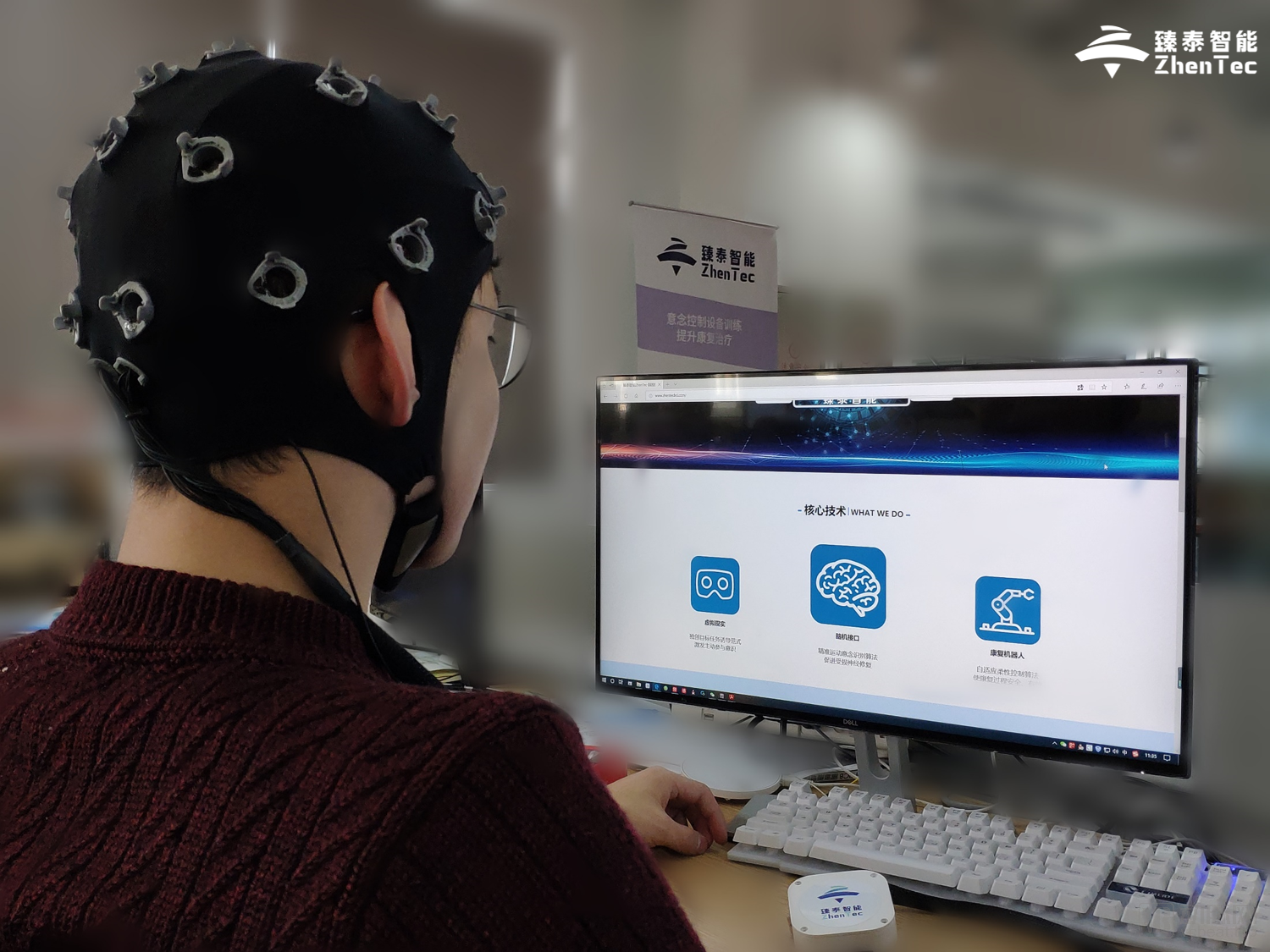
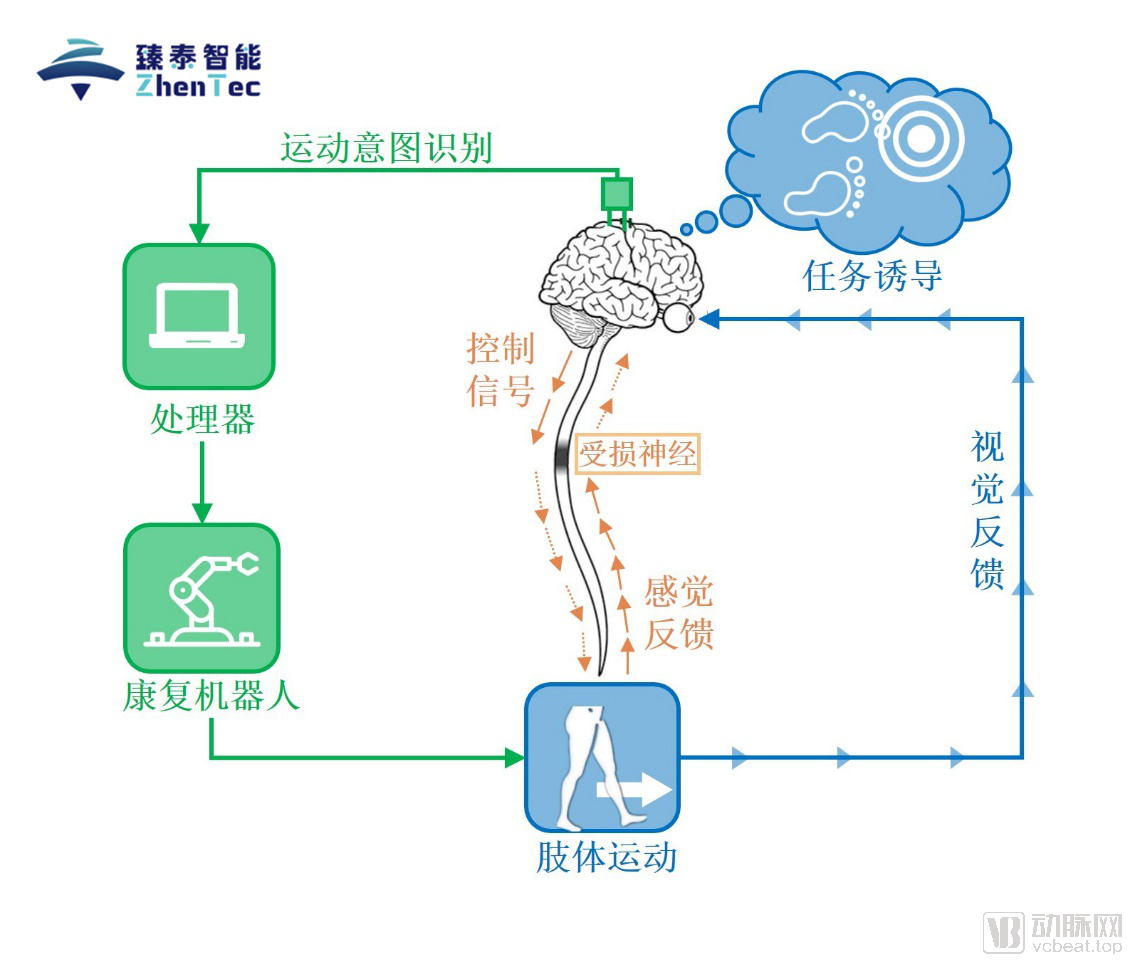
However, Wang Haochong believes that the development of brain-controlled medical rehabilitation in China is still at a relatively early stage. "Currently, the treatment methods commonly used in the rehabilitation medical industry are mainly device-assisted training. These products areStimulation from the extremities toward the central nervous system is classified as unidirectional passive neural stimulation., without forming a bidirectional closed-loop neural feedback of "perception-control".Active training also involves simple motor imagery therapy or mirror therapy, allowing patients to observe moving objects during training, with real-time monitoring and feedback of EEG features indicating no intention of voluntary movement.However, brain injury conditions such as stroke involve damage to the central nervous system, necessitating direct bidirectional neural stimulation feedback targeting the central nervous system. For this reason, the majority of products currently available on the market yield suboptimal outcomes in central nervous system rehabilitation for patients with brain injuries.
Brain-Computer Interface Rehabilitation Training System Based on Motor Intention Recognition from EEG SignalsPassive training can be converted into active exercises performed by the patient, thereby further enhancing the patient’s initiative.Improve rehabilitation outcomes, overcoming the limitations of traditional rehabilitation methods that are passive and singularly mediated. On the other hand, brain-computer interfaces allow patients to control external devices for training through their own thoughts, which not only enablesEnhancing patient initiative can also establish real-time monitoring and feedback within the patient's impaired central nervous system,thereby enhancing the efficacy of rehabilitation.
Particularly with the widespread adoption of VR technology, patients can generate higher-quality motor imagery signals in environments that more closely resemble reality, thereby enhancing the performance of BCI systems.Furthermore, numerous scholars are leveraging BCI technology to develop visual and auditory neuroprostheses aimed at restoring patients’ sensory functions, helping individuals with disorders of consciousness regain their prior states of awareness, and treating conditions such as autism, attention-deficit/hyperactivity disorder (ADHD), and depression.
ZhenTec, founded by Wang Haochong, is dedicated to advancing the development of brain-controlled intelligent rehabilitation technology. Incubated by the Institute of Medical-Engineering Interdisciplinary Research at the School of Mechanical Engineering, Xi’an Jiaotong University, the project originated from the commercialization of scientific and technological achievements under the National High-Tech R&D Program (863 Program).The company’s team is a rare brain-computer interface (BCI) R&D group with an engineering background in the industry. The company’s Chief Scientist is Professor Xu Guanghua, a recipient of the State Council’s special government allowance, Chief Expert of the National 863 Program, and expert member of the AI Medical Device Standards Group at Xi’an Jiaotong University, who possesses profound technical research expertise in biosignal processing.
As early as 2003, the R&D team was already conducting research on foundational brain-computer interface (BCI) technologies and had achieved significant accomplishments in the field of rehabilitation robotics. Since the company’s establishment in 2018, it has attracted structural engineers, marketing and sales professionals, bioengineering experts, and clinical medical R&D personnel from companies such as Mindray and Johnson & Johnson to join the team. To date, the company has built an experienced professional team dedicated to the industrialization of BCI-based rehabilitation robots.
“BCI + VR + Robotics” for an Integrated Brain-Computer Intelligent Rehabilitation Solution
ZhenTec has made forward-looking strategic layouts across three key areas: paradigms, algorithms, and applications. The company has launched a comprehensive brain-controlled intelligent rehabilitation solution, built upon three core technologies: brain-computer interfaces, virtual reality, and rehabilitation robotics.
On the paradigm side, the company throughVirtual Reality TechnologyA visual-motor synergistic closed-loop system was constructed to activate the patients' visual and motor neural centers, thereby enhancing their spontaneous motor intention signals and addressing the issue of weak EEG signals.
At the algorithmic level, the company has developed a system capable of precisely identifying patients' movement intentionsBrain-Computer Interface Recognition Algorithms, with an accuracy rate of up to 90%, effectively addressing the significant individual variability in patients' EEG features;
At the application level, ZhenTec has developedBrain-Controlled Intelligent Rehabilitation RobotComprehensive Solution for EEG Signal Processing and Collaborative Robot Control: Dynamically Adjusts Control Intensity Based on the Strength of Motor Intentions to Achieve Flexible Robotic Control via a Closed-Loop Feedback System
In addition, ZhenTec has also independently developedHigh-Gain EEG Signal Amplifier, strategically deploying core components of brain-computer interface (BCI) systems, collaborating with numerous downstream enterprises, and applying BCI technology to empower traditional industries.
Wang Haochong stated, “In 2017, our team initiated clinical research on brain-computer interface (BCI)-based neurological rehabilitation for patients with brain injuries. By accumulating extensive data and samples through these clinical studies, we have developed a more universally applicable clinical algorithmic model that can accurately identify patients’ motor intentions and facilitate rapid practical application. ZhenTec has now become the only company simultaneously selected forMedtronic Medical Innovation AcceleratorandMerck China Innovation Acceleratoran innovative technology enterprise in neurorehabilitation.”
Currently, the company’s brain-controlled intelligent rehabilitation solution is primarily used for neurological disease rehabilitation. In the preclinical research phase, it has been trialed on over 1,000 patients.Studies have shown that rehabilitation treatment using brain-computer interface (BCI) systems significantly improves patients' cognitive status, motor function, balance, and muscle tone.Subsequently, this solution will gradually expand to cover the full spectrum of rehabilitation training scenarios, including physical therapy and occupational therapy, and leverage comprehensive EEG data acquisition and assessment throughout the care cycle to precisely customize rehabilitation treatment plans for patients.
ZhenTec: A Developer of Medical Brain-Computer Interface (BCI) Localization and IndustrializationWithin the next two to three years, the company will fully advance the R&D of foundational technologies for general-purpose medical BCIs, as well as conduct clinical trials and pursue regulatory approval for its products. Over the next five years, ZhenTec aims to empower the entire smart healthcare ecosystem with BCI technology, establishing itself as a leader in the field of brain-controlled rehabilitation medicine.