

XinQing Medical: Pioneering a Critical Care Life Support Platform from Extracorporeal Magnetically Levitated Artificial Heart

magAssist
Developer of Extracorporeal Artificial Heart Devices
Artificial hearts are among the most complex and sophisticated medical devices, often referred to as the “crown jewel” of the cardiovascular industry. Since Soviet scientist Vladimir Demikhov successfully implanted an artificial heart in a dog for the first time in 1937, this field has consistently drawn attention from governments and the medical research community worldwide.
Artificial heart technology is highly complex, with significant barriers to research and development. In the eyes of many, developing an artificial heart is as challenging as successfully landing humans on Mars. To date, humanity has yet to achieve a manned Mars landing; however, there have been numerous positive developments in the field of artificial hearts: the world’s first artificial heart implantation surgery was performed in France, and the number of artificial heart implants has been rising year by year; the domestically developed implantable left ventricular assist system by Yongrenxin Medical received approval for market launch from the National Medical Products Administration in 2019; and artificial hearts have entered industrialization in the United States...
Meanwhile, numerous outstanding enterprises with internationally leading technologies have emerged in China’s artificial heart sector, such as magAssist, Yongrenxin Medical, Tongxin Medical, Hexin Medical, Aerospace Taixin Technology, and Jiuanxin. VCBeat has noted thatThe majority of enterprises in China's artificial heart sector are dedicated to the research and development of implantable artificial hearts, with fewer focusing on extracorporeal artificial hearts.
Implantable and Extracorporeal Artificial Hearts Have Different Application Scenarios.Implantable artificial hearts are used in patients with end-stage chronic heart failure to provide long-term replacement of cardiac function.Chronic heart failure is irreversible and progresses in a stepwise manner; in the early stages, it can be managed with medication, while in the late stages, heart transplantation or implantation of an artificial heart is required.Extracorporeal Artificial Heart (a mid- to short-term extracorporeal circulatory support device) is used as a bridge therapy for patients with acute heart failure, serving to temporarily replace cardiac function over the mid- to short term.Help patients survive the critical period and aid in their recovery.
As one of the few companies in China researching extracorporeal artificial hearts, magAssist has developed an extracorporeal magnetically levitated artificial heart based on core platform technologies such as mechatronics, magnetic levitation, and computational fluid dynamics. It is reported that this artificial heart has completed its design and development phase and is about to enter clinical trials.
magAssist is led by Dr. Xu Boling and comprises domestic and international teams with extensive experience in artificial heart research and development. Dr. Xu holds two PhDs, one in Electrical Engineering from the University of Cambridge, UK, and another in Medical Engineering from RWTH Aachen University, Germany. With over a decade of dedication to the field of artificial hearts, he has long been engaged in system design for artificial hearts and physiological research on electromechanical systems under mechanical circulatory support.
At the University of Cambridge, under the joint supervision of Dr. R. McMahon, an authority in electrical machine design; Dr. Saumarez, a specialist in cardiovascular medicine; and Professor W. Dose and L. Xu, internationally renowned experts in fluid dynamics, Bo-Ling Xu conducted cutting-edge research and development on minimally invasive artificial hearts. The lumped-parameter numerical model and experimental platform of the human cardiovascular system developed by him can accurately simulate blood pressure and flow conditions in local arteries and major systemic organs, as well as ventricular output. This work holds significant scientific importance and application value for hemodynamic research on artificial hearts and their future clinical applications.At the 2007 Annual Meeting of the Japanese Society for Artificial Organs (JSAO), this model received the Young Investigator Award.
After accumulating years of overseas research experience, Xu Boling returned to China in September 2013 to accept a full-time professorship at Soochow University. At Soochow University, she further expanded the research methodologies in biomechatronic systems physiology, conducting in-depth studies on the physiological responses and functional recovery indicators of the heart and circulatory system under mechanical circulatory support. This research has been highly acclaimed by peer experts.In 2014, he received the Nose International Scholar Award from the American Society for Artificial Internal Organs (ASAIO), becoming the only Chinese recipient of this award in a decade. In 2019, Xu Boling became the first Chinese committee member of the International Society for Mechanical Circulatory Support (ISMCS) in its nearly 30-year history.
Xu Boling founded magAssist in 2017, focusing on the research and development of extracorporeal artificial hearts. Xu Boling stated that the idea behind founding magAssist was purely simple:“Through our efforts, we aim to achieve import substitution and save those who should not have been lost.”
The World Health Organization (WHO) estimates that cardiovascular disease has become the leading cause of death globally. The "China Cardiovascular Disease Report 2018" indicates that there are 290 million patients with cardiovascular diseases in China, including 4.5 million patients with heart failure. Acute heart failure is a critical condition caused by various etiologies. Causes of acute heart failure include acute extensive myocardial infarction, acute severe myocarditis, drug-induced myocardial strain and necrosis, and decreased systolic function due to infective endocarditis. Data shows that,Acute heart failure has become the leading cause of hospitalization among patients aged 65 and older in China, with 15%–20% representing new-onset heart failure and the majority being acute decompensation of pre-existing chronic heart failure.
Extracorporeal artificial hearts hold immense potential as a bridging therapy for acute heart failure. However, for a long time, the selection of critical care equipment in China, particularly extracorporeal artificial hearts, has been extremely limited, with the vast majority relying on imports. Imported devices are prohibitively expensive; for instance, ECMO, often regarded as the “ultimate weapon” in the ICU, has given rise to the saying, “When the ECMO runs, it costs ten million taels of gold.” It is precisely for this reason that Xu Boling hopes to leverage entrepreneurial innovation to achieve import substitution, thereby alleviating the financial burden on patients and extending their lives. Furthermore, domesticating these medical devices can better accommodate the usage preferences of Chinese physicians, optimize product design, and ensure that patients have immediate access to cutting-edge international technologies.
Dr. Xu Boling’s vision garnered support from his mentor and colleagues in Germany, with Dr. Ulrich Steinseifer and Dr. Tim Kaufmann joining magAssist as co-founders.
Dr. Ulrich Steinseifer is a Chair Professor at RWTH Aachen University in Germany, Director of the Institute for Cardiovascular Engineering at the Helmholtz Research Center, and Director of the Centre for Medical Engineering Research at Monash University in Australia,One of the members of the EU ISO Standards Committee for Heart Valves,With nearly 30 years of experience in the research and development of cardiovascular artificial organs, possessing extensive expertise in the R&D, regulatory certification, and commercialization of artificial hearts and mechanical heart valves.
As a member of magAssist’s core team, Dr. Steinseifer assisted in establishing a comprehensive R&D and production quality management system for medical devices, providing robust support for the future certification and industrialization of the company’s products.
Dr. Tim Kaufmann, another co-founder of magAssist, possesses the world’s most advanced computational fluid dynamics (CFD) technology for cardiovascular applications. He founded enmodes, a CFD company, and participated in multiple NIH projects evaluating the hemodynamics of artificial hearts. Dr. Kaufmann was deeply involved in the design and optimization of flow pathways for magAssist’s products. enmodes provided comprehensive computational resources to magAssist, completing the first round of hemodynamic design. Additionally, enmodes established parallel computational resources for magAssist, trained specialized engineers, and assisted in building a hemodynamic experimental platform.
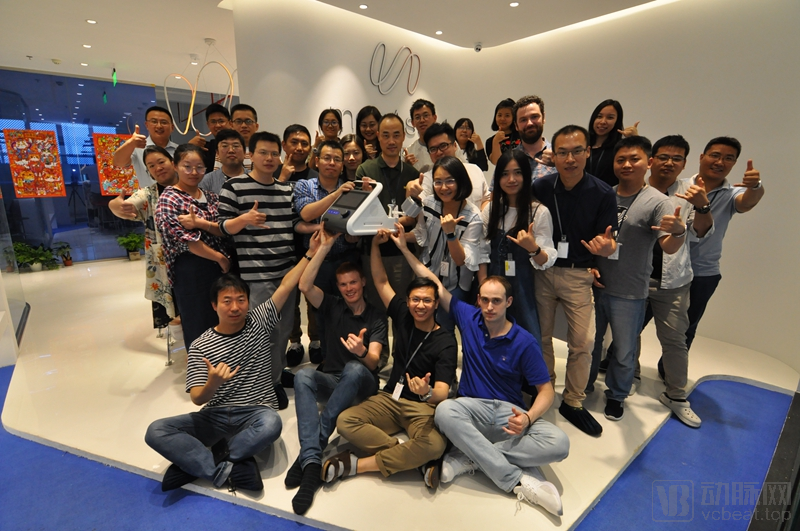
magAssist Medical Team
The extracorporeal artificial heart serves as the power source for the human body and represents the most complex artificial organ to develop. Its research and development involve multiple fields and disciplines, including fluid dynamics, medicine, mechatronics, electronic circuit technology, and control biomechanics, posing exceptionally high R&D challenges.
Xu Boling stated,The primary technical challenge lies in system-level optimization. When all disciplines and elements are integrated, they mutually constrain and interact with one another, making system-level optimization extremely difficult.“For instance, a smaller air gap enhances the efficiency of both the electrical and battery systems, but it can cause hemolysis. Conversely, a larger air gap avoids blood damage but reduces system efficiency, leading to heat generation in the electrical system that damages blood cells.”
Fortunately, the core team at magAssist possesses extensive experience in the design and development of vascular artificial organs, along with a strong holistic perspective. Through close collaboration between its domestic and international teams, the company has achieved balance in system-level optimization and successfully developed an extracorporeal magnetically levitated artificial heart. According to Xu Boling,The company's extracorporeal artificial heart has completed design and development, and is expected to enter the clinical stage by the end of this year.
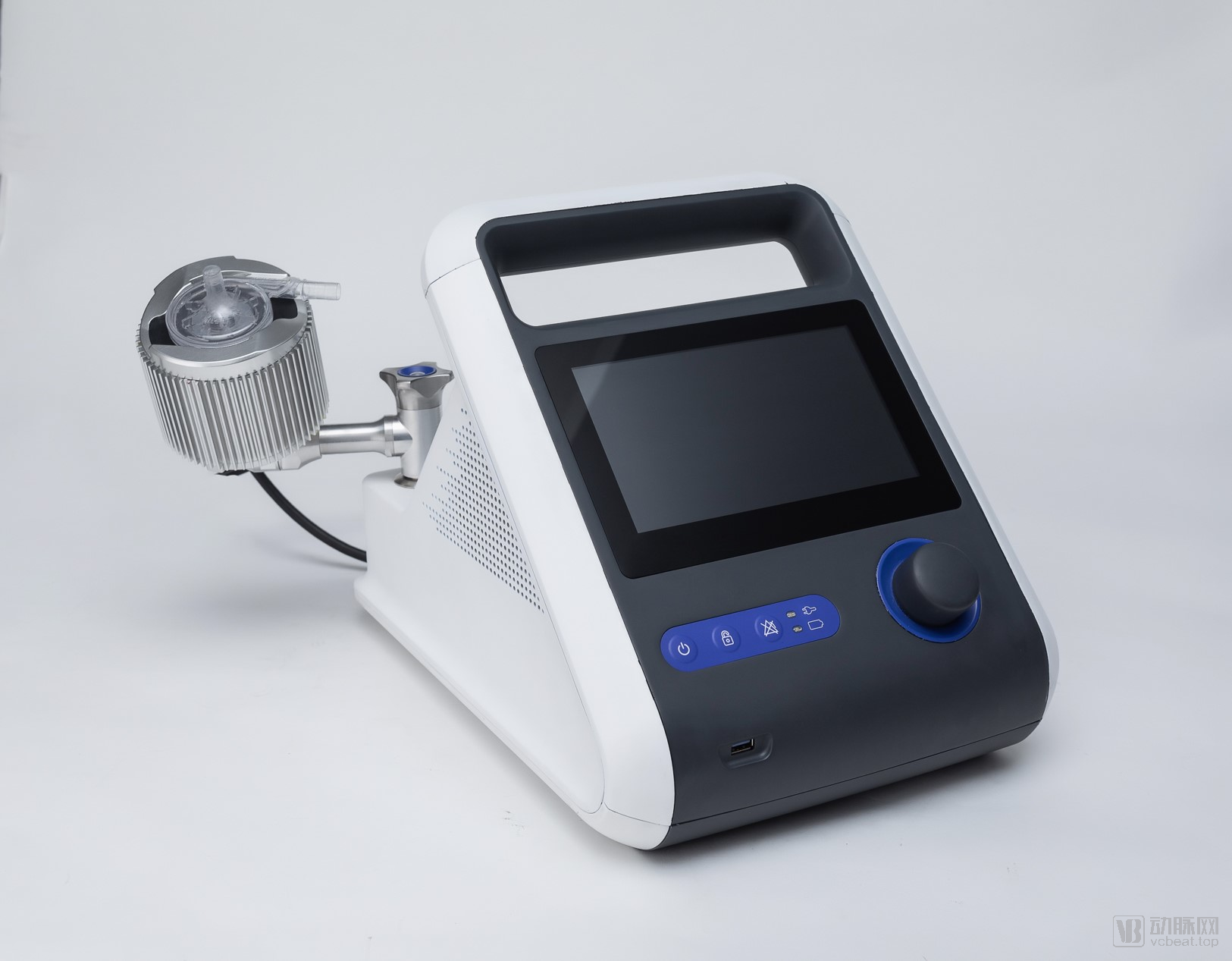
Magnetic levitation is currently the cutting-edge trend in the field of artificial hearts. "An artificial heart is essentially a rotary pump; traditional mechanical bearings involve friction, which can easily cause blood damage.Extracorporeal Magnetically Levitated Artificial Heart Support: The impeller rotor in the blood pump is suspended within the pump housing via electromagnetic forces, ensuring no mechanical wear, contact, or friction. This design reduces heat generation from friction, enhances hemocompatibility, addresses issues of impaired blood flow, minimizes hemolysis, and extends the product's service life.”
According to Xu Boling, magAssist’s extracorporeal magnetically levitated artificial heart is benchmarked against Abbott’s CentriMag. Trial data indicate that the blood compatibility of the company’s extracorporeal artificial heart is comparable to that of Abbott’s product. In animal experiments, no visible hemolysis was observed with the company’s device, and all physiological parameters of the test animals remained favorable.
Additionally, magAssist believes thatCritical care devices are inevitably poised to expand beyond the ICU and operating rooms to frontline settings; therefore, the company has implemented numerous upgrades and optimizations to enhance product portability and stability.
According to data from Grand View Research, a U.S. market research firm, the global market for ventricular assist devices was valued at $1.7 billion in 2019 and is projected to grow at a compound annual growth rate (CAGR) of 11.7%. Xu Boling believes that the importance of artificial hearts is self-evident; with heightened public awareness, improvements in healthcare systems, declining prices, and technological advancements, this field will experience steady growth.
Looking to the future, Xu Boling stated that magAssist will rapidly advance the clinical trials and subsequent market launch of its extracorporeal magnetically levitated artificial heart, enabling the company to establish a firm foothold in the short- to medium-term cardiac support sector. Meanwhile, building on this technology, magAssist will expand into combined cardiopulmonary and multi-organ support, creating a new generation of extracorporeal life support platforms for critical care scenarios. The company aims to enhance its product portfolio, including minimally invasive artificial hearts and artificial lungs (ECMO), to serve patients in China and worldwide.