

Insitro Files for IPO: Pioneering AI-Driven Drug Discovery with Predictive Disease Models
insitro
Data-Driven Drug Development Company
Andreessen Horowitz
Venture Capital Firm

GV
Google's Investment Fund
In recent years, artificial intelligence has been a focal point of societal attention. In the field of new drug development, R&D costs have continued to rise while productivity has steadily declined. At the WuXi AppTec Global Forum, industry authorities proposed a hypothesis: Could machine learning algorithms be leveraged to build predictive models that address this critical pain point? Many of these hypotheses converge on one key term—Prediction。
Can we leverage data to predict the outcomes of clinical trials? Can we predict the molecular mechanisms underlying human diseases? Can we identify which trials are unnecessary? If we can answer these “predictive” questions, we may be able to improve the productivity of new drug development.
Established by insitroPrediction ModelIt precisely addresses the primary challenge in drug development. Many drugs fail to be developed because theyTargeted the wrong object. A better disease model is needed to identify targets.。
Insitro, founded by Daphne Koller in 2018, is a data-driven drug discovery company that leveragesMachine LearningandHigh-Throughput Biologyto transform the drug discovery process. The company is applying the latest technologies in bioengineering to build massive datasets and leveraging machine learning to overcome key bottlenecks in pharmaceutical R&D. The resulting predictive models are used to accelerate disease target selection, design and develop effective therapies, and inform clinical strategies. These models are primarily applied in the therapeutic areas of liver and central nervous system (CNS) diseases.
Identifying Drug Targets Through Predictive Models.
If new drug developers could predict early on which drugs might be effective for which patients, many issues in drug discovery and development could be improved. Insitro provides better predictions across the entire pharmaceutical value chain. Insitro’s predictive models are built upon the following five approaches:
1. Data on Population Size
Insitro’s predictive models are grounded in human data. By extracting insights from genetic, phenotypic, and clinical data, machine learning algorithms are employed to enhance the precision of traditional genetic analyses, aligning them more closely with the fundamental architecture and biology of diseases. This information constitutes the first and most critical step in building disease prediction models.
2. Cellular Disease Models
Leveraging its understanding of disease architecture, insitro combines patient-derived induced pluripotent stem cells (iPSCs), genome editing, high-content cellular phenotyping, and machine learning to construct in vitro disease models. By optimizing genetics, cell types, environmental conditions, and multidimensional data collection, it maximizes the prediction of human clinical outcomes.
3.Large-Scale Biological Data
Machine learning requires robust data support. Insitro’s data pipelines and automated infrastructure transcend traditional chemistry and biology, enabling the rapid generation of large volumes of high-quality data.
4. Advanced Machine Learning
Leveraging vast amounts of high-quality data, Insitro has developed and deployed various advanced machine learning methods. As observed by Insitro in other industries, machine learning can process large volumes of high-dimensional data that are beyond human comprehension. Insitro’s machine learning models can distinguish cellular states with finer granularity and predict clinical features associated with diseases.
5.Predictability of New Drugs
Insitro’s disease prediction model integrates in vitro cell systems with computational machine learning simulations to identify previously unrecognized disease subtypes and discover therapeutic interventions. Leveraging the team’s extensive experience and expertise in novel drug development, the predictive models enable the identification of breakthrough disease targets, facilitate feasible drug design, and advance the development of biomarker and clinical development strategies.
A Leader in the AI Field: Daphne Koller in the Spotlight
Few scientists frequently find themselves in the spotlight, but Daphne Koller has long been accustomed to such a life.
Daphne Koller was born into a family of scholars; both of her parents held doctoral degrees, and she became the third generation in her family to earn a Ph.D. Unlike other children, she grew up in her father’s laboratory. It was under the subtle influence of this familial educational environment that she attended one of the world’s premier universities—the Hebrew University of Jerusalem.
Born in 1968, Daphne Koller is an Israeli-American professor whose career is nothing short of legendary. She graduated from university at the age of 17, earned her master’s degree from the Hebrew University of Jerusalem at 18, and became a professor of machine learning at Stanford University at 26. During her nearly two decades as a Professor of Computer Science at Stanford, Daphne Koller published more than 200 papers in top-tier academic journals and received numerous awards for her academic breakthroughs and excellence in education. In 2004, at the age of 36, she was awarded the MacArthur “Genius” Grant. In 2012, she was named one of Time magazine’s 100 Most Influential People.
She proposed the probabilistic relational model, combining the advantages of probabilistic models in handling uncertainty with the powerful representational capacity of relational models, which has established her as a leading scholar in the current AI field. Focused on artificial intelligence research, she founded Insitro Inc. in 2018.
We all know that Daphne Koller is an outstanding scientist, but her contributions to the field of education are equally significant. She has always hoped to make luck a norm in education. Because she knows that not everyone in the world is fortunate enough to receive an education. In many impoverished and remote areas, some people do not even have the opportunity to access high-quality education. Even in regions with advanced educational systems, the high cost of education has become a burden for many low-income families. To enable more people to obtain quality and free educational resources, she and her colleagues founded an online education platform called Coursera, sharing the best educational resources with learners on the platform through open online courses.
For investors, she is the perfect choice with her background in artificial intelligence and biology.
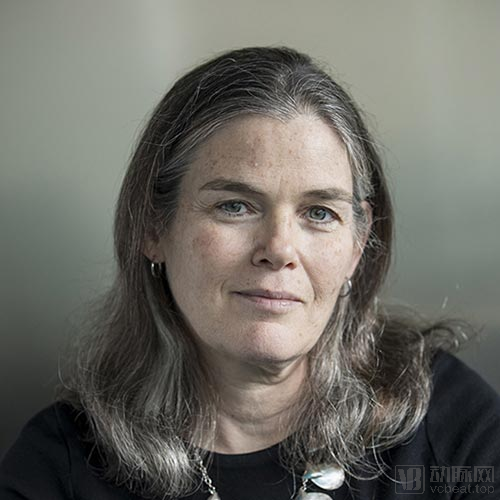
Daphne Koller, Founder and CEO of insitro
Insitro’s Breakthrough Progress
In April 2019, Insitro successfully raised $100 million in its Series A financing round, with participation from prominent investment firms such as GV and Andreessen Horowitz. A portion of the newly raised capital was primarily allocated to bolstering the company’s drug development capabilities, including the recruitment of regulatory experts and other professionals with experience in drug development. Given that the company has yet to identify its first drug candidate, these development teams still have a long road ahead.
This Series A financing round exceeded $100 million (the amount raised in the initial round was not disclosed), marking a significant milestone in the history of startup fundraising. Meanwhile, Insitro and Gilead entered into a three-year agreement, under which Gilead provided Insitro with $15 million to discover and develop treatments for non-alcoholic steatohepatitis (NASH).
Gilead was founded on June 22, 1987. It is a research-driven biopharmaceutical company that researches, develops, and manufactures drugs for areas of unmet medical needs. The company’s product portfolio and investigational drug pipeline include treatments for HIV/AIDS, liver diseases, cancer, inflammatory and respiratory diseases, and cardiovascular diseases.
NASH appears to be a fiercely contested battleground for all biopharmaceutical companies, yet no drug for this disease has been approved to date. Gilead and insitro will leverage insitro’s predictive modeling platform to create NASH disease models, aiming to identify targets that influence disease progression or regression.
Gilead’s team possesses extensive scientific expertise in NASH and the biology of the disease, and has collected a large volume of clinical trial samples over the past few years. They will provide chemical resources throughout the R&D process to develop target-specific compounds. Among the NASH drug targets identified by insitro’s platform, Gilead has the option to advance up to five targets. Insitro can receive up to $200 million per target, plus an upfront payment of $15 million and an additional $35 million in operational funding, bringing the total potential value of the deal to over $1 billion.
The project has already achieved significant breakthroughs, enabling Insitro Inc. to secure a spot on Forbes’ inaugural list of the 50 Most Promising AI Companies. It is precisely this remarkable achievement that has attracted acquisition interest from many large corporations. However, Daphne Koller has stated that she does not wish for Insitro to be acquired or merged, believing that maintaining the company’s independent development is the best course of action.
In May 2020, Insitro completed a $143 million Series B financing round, led by Andreessen Horowitz. Additionally, Insitro announced that Dr. Vijay Pande, a partner at Andreessen Horowitz, had joined its Board of Directors.
Insitro plans to leverage this funding to further build its machine learning technology and automation infrastructure, thereby enabling data generation at a larger scale and further expanding its capacity to develop predictive models of human disease. Additionally, the financing will be used to advance recently identified, genetically validated targets, identify patient biomarkers, and drive therapies for genetically defined patient populations. Insitro also intends to expand new industry partnerships and establish additional machine learning–based capabilities across the R&D value chain to accelerate drug discovery and development.
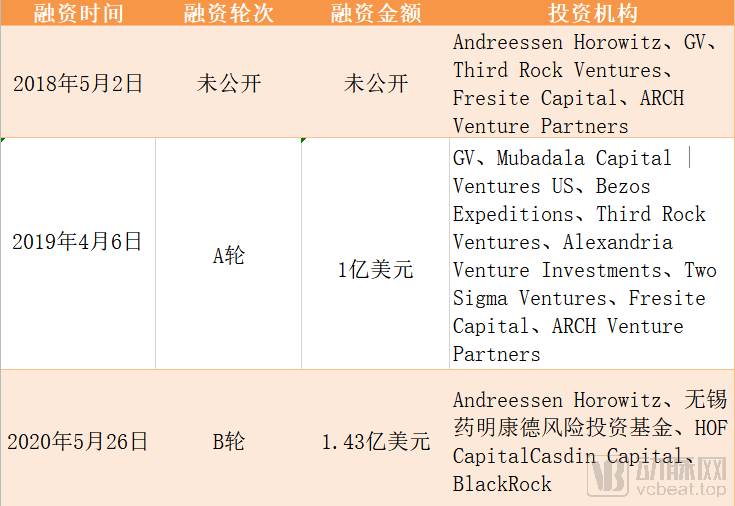
Insitro's Financing History
Insitro and Large Pharmaceutical Companies: Divergent Perspectives on Data
Insitro’s work involves the purposeful generation of data (as input for machine learning models), standing in stark contrast to large companies that generally view data as a “byproduct” (generated from clinical trials).
Many large pharmaceutical companies claim, “We have a vast amount of data.” Yet when asked, “What type of data do you possess?” they often fall silent. In reality, the data they hold is fragmented. Their approach involves cobbling together massive datasets and hoping to apply machine learning to them. However, the strength of machine learning lies in its ability to capture subtle nuances—including both genuine signals and spurious noise. Consequently, this approach merely amplifies the “garbage in, garbage out” problem.
Insitro’s focus is not on “what data can be obtained,” but rather on proactively identifying the obstacles and challenges in the new drug R&D process, and then determining which aspects can be transformed through machine learning approaches given appropriate large-scale datasets. Insitro collects and leverages extensive high-quality datasets to train machine learning models, thereby helping to address key issues in the drug discovery and development process.
Future Outlook of AI+Drug Discovery
New drug development faces three major challenges: long development cycles, low success rates, and high costs. The integration of AI with new drug development can achieve complementary advantages.
On the one hand, AI assistance will effectively address the challenges in new drug development, reducing R&D costs, improving success rates, and significantly shortening development cycles. On the other hand, while AI companies possess technological advantages, they lack relevant drug development data, mature R&D pipelines, and seasoned pharmaceutical experts—advantages that traditional pharmaceutical giants inherently hold.
In recent years, the integration of artificial intelligence (AI) with the healthcare sector has continued to deepen. AI is widely applied in drug development. Through research on nearly 80 AI companies both domestically and internationally, VCBeat has found that AI is primarily applied in seven major scenarios in new drug development: target discovery, compound synthesis, compound screening, crystal form prediction, patient recruitment, optimization of clinical trial design, and drug repurposing.
AI in Drug Discovery: Opportunities and Challenges Coexist, but the Integration of AI and Drug Discovery Is Undeniably the Future Trend of the Pharmaceutical Industry. Industry Insiders Predict That by 2025, the Market Size of AI in Drug Discovery Will Exceed $3.7 Billion, Sparking a Disruptive Revolution in the Pharmaceutical Field.