

GE Healthcare Files IPO Prospectus Highlighting China Strategy and Digital Transformation

GE Healthcare
Digital Solution Provider
In 1981, GE had been in existence for 89 years. At that time, the colossal vessel, having weathered numerous ups and downs, was showing signs of fatigue. GE found itself trapped in a predicament characterized by institutional rigidity, lackluster innovation, and brain drain, with multiple departments failing to generate profits for decades.
At that time, Jack Welch took over GE, which was mired in stagnation, launching sweeping reforms. Built on the four pillars of “talent, processes, goals, and profits,” he encouraged employees to take risks and speak their minds freely; introduced a “rank-and-yank” system to overhaul GE’s long-entrenched bureaucratic structure; and vigorously promoted the Six Sigma management system to implement comprehensive quality control across manufacturing processes. During Jack Welch’s 20-year tenure at GE, the company’s revenue quadrupled, and total shareholder returns, including dividends, increased seventyfold.
As Jack Welch’s philosophy of professional management gradually came to be revered as the business world’s bible, Zhang Yihao was studying mathematics and economics at Ohio Wesleyan University in the United States. Yet from that time onward, he was drawn to GE’s disruptive business culture.
Throughout his extensive career, Zhang Yihao has never ceased observing GE’s management model and corporate development. During his tenure in management at Danaher, the influence of Jack Welch was clearly evident in his decision-making process. Persistence eventually pays off: in 2019, GE Healthcare approached Zhang Yihao, inviting him to serve as President and CEO of GE Healthcare China.
“Danaher will ring the bell on Nasdaq in September. Over the past 17 years, I had long looked forward to witnessing this glorious moment, but when GE Healthcare approached me, I joined them without hesitation. From light bulbs to CT scanners, joining a company with such a profound impact on human society is likely a once-in-a-lifetime opportunity.”
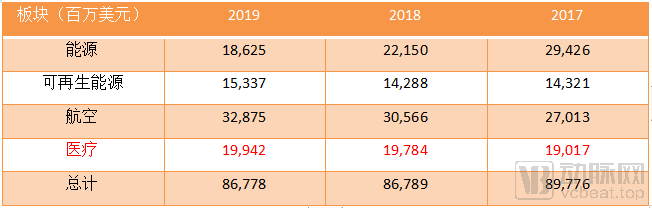
GE's Revenue Performance in Recent Years
However, past glory does not guarantee present prestige. A review of GE’s 2019 annual report reveals that in recent years, this industrial giant has failed to deliver results strong enough to meet external expectations.
To reverse the downward trend, China’s high-potential healthcare market undoubtedly presents an excellent opportunity, as the country’s improving economy expands at a pace surpassing the global average growth rate. Zhang Yihao’s task is to seize this major trend and accelerate the growth of GE Healthcare’s business in China.
This July marks the first anniversary of Zhang Yihao’s appointment. Over the past year, China has weathered the pandemic and navigated geopolitical turbulence... Amid these challenges, GE Healthcare China has undergone significant transformation under his leadership.
Upon arriving at GE Healthcare China, Zhang Yihao faced a high-performing entity with strong market momentum. GE Healthcare boasted an extensive product portfolio, a solid reputation, and a leading market share in medical devices in China. Therefore, Zhang’s task was to identify the right management strategies to accelerate its growth while ensuring it remained competitive amidst the rising tide of “domestic substitution.”
Based on this, he formulated three strategic pillars—full localization, digital empowerment, and win-win collaboration—which together have shaped the current management framework of GE Healthcare in China.
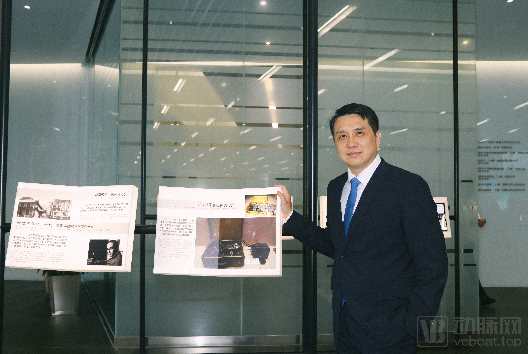
Zhang Yihao, President and CEO of GE Healthcare China
Comprehensive localization entails not only requiring GE Healthcare to establish production lines for its full product portfolio in China, but also necessitates that it adopt a China-centric perspective and formulate solutions tailored to the country’s specific realities. These solutions encompass all aspects, including product research and development, iterative upgrades, supply chain capabilities and collaboration, as well as service capabilities.
For example, China has long faced the challenge of uneven distribution of medical resources. While community health centers in Beijing and Shenzhen are equipped with high-end CT scanners, even having a DR system in the Yunnan-Guizhou region is considered a significant achievement. In this context, GE cannot simply wait for the healthcare market to develop organically; instead, it must proactively streamline its offerings by enhancing cost-effectiveness, thereby providing medical institutions with imaging equipment best suited to their specific needs.
Digital empowerment is a broad topic encompassing various aspects, including the development of GE Healthcare’s medical devices, software applications, and management efficiency improvements. The digitalization of hardware is exemplified by the “Deep Sky Eye” CT scanner, which was developed in 2019 and deployed at Wuhan Leishenshan Hospital. This CT system utilizes AI technology to guide patient positioning, simplifying the pre-scan procedures from the previous 7–8 steps to just 3. In terms of software digitalization, the “Zhiying COVID-19 LK 2.0” intelligent analysis platform for CT imaging was introduced during the pandemic to assist in the precise early diagnosis of suspected COVID-19 cases; it has since been iterated to version 2.2. Both innovations share the common benefit of streamlining physicians’ workflows through intelligent automation, reducing contact between healthcare providers and patients, and, more importantly, lowering the operational threshold for physicians.
Win-win collaboration has been the top priority for GE Healthcare’s development over the past year. First, it aims to build a comprehensive ecosystem for precision medicine and smart healthcare centered on patients, with partners along this pathway including internet companies, pharmaceutical firms, and AI startups. Second, it seeks to support the cultivation of medical talent, thereby enhancing the soft power of China’s healthcare industry by strengthening the capabilities of primary-care physicians.
The former’s advancement focuses on the B2B sector. Leveraging the Edison platform, GE Healthcare has established partnerships with leading AI enterprises such as Yizhun Smart Medical and StrongLink Intelligence. By integrating AI applications into the Edison platform and deploying them on installed imaging equipment, GE Healthcare facilitates the entry of these startups’ AI products into hospitals. This process equips GE Healthcare with top-tier AI imaging capabilities while enabling startups to access hospital markets through hardware integration, thereby transforming the traditional business model—previously dominated by direct hospital procurement—into a collaborative framework with GE Healthcare.
Amid a Win-Win Scenario, the Development Path of AI Is Shifting. The latter focuses on the consumer end, representing a long-term and sustained endeavor. Since 2013, GE has collaborated with the Chinese Medical Doctor Association, training more than 10,000 primary-care physicians to date. Furthermore, GE Healthcare is engaging in collaborative efforts to establish industry standards, working with institutions such as the National Cancer Center and the Stroke Prevention Committee to promote the development of diagnostic criteria for major diseases (including the Integrated Standards for Breast Cancer Diagnosis and Treatment, and the China Action for Imaging Standards in Cerebrovascular Diseases).
Underpinning all three is Zhang Yihao’s management philosophy, honed over many years. It likewise centers on three core tenets that are directly aligned with Jack Welch’s principles.
“Lean philosophy is the first and most important point.”
Whether in factories, sales teams, or hospitals, the core of lean management is to identify waste in every link and then eliminate it. “Waste in the supply chain breeds corruption; waste in hospitals erodes trust in physicians… Extending lean management to every step effectively enables GE Healthcare’s entire process to return to its true value.”
“Go to the front lines and stand with all employees to understand our customers—this is the standard I set for myself.”
Over the past year, Zhang Yihao has been relentlessly visiting more than 150 hospitals and partners, engaging in face-to-face communications with over 300 employees—a process that never ceased even during the pandemic. “People in the right positions tell me the right questions; whether good or bad, this is the greatest blessing I have received.”
"Talent is GE Healthcare's most valuable asset."
Jack Welch’s approach to talent management was perhaps somewhat “harsh.” During company-wide meetings, he granted all attendees the right to speak; yet when implementing the “rank-and-yank” system, he offered no second chances or remedial opportunities to underperforming managers.
In contrast, Zhang Yihao has embraced the former aspect of his predecessors’ philosophy, aiming to attract the industry’s top talent and invest in their development and cultivation. He did not disclose the specific measures GE Healthcare China employs for talent management; however, a total of 90 former employees returned to GE in 2019, and more than 50 employees returned during the four-month period of the pandemic.
Strategy and management ultimately guide a company’s practical operations. For GE Healthcare China today, with established competitors like Siemens and Philips exerting continuous pressure from the outside, and emerging domestic rivals such as United Imaging Healthcare and Neusoft Medical rapidly catching up from within, maintaining market share and gaining an advantage in the competitive landscape ahead still hinge on “technology” as the core determinant of success. Over the past year, the driving force behind GE’s innovation momentum has been the “comprehensive localization” strategy proposed by Zhang Yihao.
Currently, GE has established four major global production bases in China: a factory for CT scanning systems and X-ray imaging systems in Beijing; a contrast agent production base in Shanghai; a magnetic resonance imaging (MRI) system production base in Tianjin; and a factory for clinical care equipment, including ultrasound, anesthesia, electrocardiography (ECG), and patient monitoring devices, in Wuxi. Currently, 60% of the world’s CT scanners are produced in Beijing, 50% of MRI systems come from Tianjin, and 40% of ultrasound devices originate from Wuxi; meanwhile, 90% of the products from the contrast agent factory in Shanghai are exported overseas.
Taking China’s battle against the epidemic as an example, to protect the safety of frontline doctors and reduce the risk of cross-infection, the Revolution Maxima CT with Deep Eye Insight, developed by the GE Healthcare Beijing team in China, assumed the responsibility for diagnostic imaging at Leishenshan Hospital. Its unique automatic positioning feature reduces scanning time by 30%.
Another product launched last year, the Versana Brilliant whole-body ultrasound system, was developed by the Wuxi team. Positioned for primary healthcare settings, the device enables automated diagnosis and treatment in these settings by incorporating examination packages and auxiliary tools that are frequently used at the primary care level.
Furthermore, in March, GE Healthcare launched the “Noah Project,” targeting China’s preventive public health defense system. It introduced the “Noah 1” integrated CT examination room solution, featuring detachable, independent scanning and operation rooms. “It took only four days from arrival to complete installation, after which it was immediately put into use,” Director Chen of the Medical Affairs Department at Foshan Hospital of Traditional Chinese Medicine told VCBeat. “To ensure the safety of healthcare workers during diagnosis and treatment, our hospital’s general fever clinic previously limited CT scans to 50 patients per day. The ‘Noah 1’ has, to some extent, improved the efficiency of our fever clinic, allowing more residents to undergo CT examinations daily.”
In summary, GE Healthcare’s strategy for traditional imaging equipment closely aligns with the evolution of national policies. While ensuring cutting-edge technology, its R&D direction has increasingly focused on empowering high-end, non-public, and primary-care sectors, as well as customizing solutions for specialized scenarios.
Although the decisive Jack Welch did lead GE out of the trap of stagnant development, in his later reflections, he also discussed some mistakes made over the past 20 years, the most significant of which was missing the digital revolution, admitting that he “failed to recognize the impact of the internet in a timely manner.”
Amid the current surge in artificial intelligence development, external observers may mistakenly perceive that GE Healthcare has not devoted significant resources to AI, at least not by establishing a dedicated AI development department. In the field of imaging AI, GE Healthcare relies more heavily on the strength of its partners.
“Every enterprise should have its own AI development model,” explained Zhang Yihao. “GE’s AI R&D falls under its digitalization department. Currently, this technology has been integrated into every stage of GE Healthcare’s product research and development. For instance, the AI in the DeepEye CT utilizes computer vision; the Critical Care Suite for the Optima XR240amx applies AI to the preprocessing of X-ray images; and TrueFidelity, applied in the APEX CT, is the industry’s first groundbreaking deep learning reconstruction algorithm. GE Healthcare’s demand-driven AI technology R&D is also a crucial component of its lean management strategy, requiring clear thinking when confronting new technologies.”
"As for AI imaging applications, specialization is key. GE Healthcare has the capability to develop single-module AI software applications, but our strengths lie more in hardware equipment and image preprocessing. Through collaboration, each party can leverage its comparative advantages, which is one of the reasons why GE Healthcare launched the Edison platform and partnered with so many leading Chinese AI companies."
Back to Square One: How Should GE Excel in Healthcare in China?
First and foremost is the digital ecosystem. GE needs to build a more open-source, open, mutually beneficial, and interconnected digital healthcare ecosystem that links upstream and downstream industries. To meet the complex and diverse demands of today’s healthcare market, relying solely on its own efforts is insufficient. GE requires close collaboration among all parties within the ecosystem, leveraging complementary strengths and pursuing coordinated development to jointly develop applications for hospitals and end users, ultimately benefiting the entire industry and patients.
Secondly, to keep pace with China’s development, the “Healthy China 2030” initiative has laid out a blueprint for the growth of the country’s health industry. Enterprises are expected to explore opportunities in line with this blueprint and participate as extensively as possible, which is also one of GE Healthcare’s strategic principles.
However, excelling in just these two areas is still not enough. “Comprehensive localization enables us to closely align with the demands of the Chinese market, and lean management allows us to reshape the overall quality of GE Healthcare, but this is not sufficient,” said Zhang Yihao. “The healthcare industry requires a sense of mission. Every individual at GE Healthcare should consider how we can help physicians in stroke centers and chest pain centers save patients’ lives. How many lives can our liberation solutions actually save? I hope this becomes the personal mission of every GE Healthcare employee.”
In this light, Zhang Yihao has already found GE Healthcare’s own path to development after integrating Jack Welch’s principles. Can these measures reshape GE Healthcare? One year is too short a time; the future of GE Healthcare is worth watching.