

ScTIL210: A Phase I/II Multicenter, Tumor-Agnostic Clinical Trial of Super Circulating Tumor-Infiltrating Lymphocyte Therapy for Advanced Solid Tumors Initiated by Professor Li Jin
Chineo
Developer of Tumor and Immune Disease Therapeutics
A multi-center, tumor-agnostic clinical study on cellular therapy for solid tumors, led by Professor Li Jin, Director of the Department of Oncology at Shanghai East Hospital and Chairman of the Second Chinese Society of Clinical Oncology (CSCO), was officially launched at Shanghai East Hospital on August 7, 2020.
The anti-tumor immune cell therapy product ScTIL210, used in this investigator-initiated clinical study, is a fourth-generation TIL developed by the sponsor, Beijing Chineo Medical Technology Co., Ltd., based on traditional tumor-infiltrating lymphocyte (TIL) therapy. Unlike conventional methods that require surgical tissue acquisition for TIL isolation, this approach isolates tumor-recognizing T cells from peripheral blood mononuclear cells, significantly enhancing the convenience of treatment administration. Furthermore, genetic modifications are applied to boost its ability to overcome the tumor microenvironment and enhance self-expansion, hence the name Super circulating TIL (ScTIL). This product has demonstrated highly promising efficacy and safety profiles in prior proof-of-concept clinical studies. The current clinical trial will further evaluate its safety and optimal efficacy, and determine the recommended Phase II dose, in accordance with IND registration standards.
The Past and Present of TIL Therapy
Over the past decade, cancer immunotherapy has emerged as a prominent field, experiencing rapid development. Between 2014 and 2016, immune checkpoint inhibitors, specifically PD-1/PD-L1 monoclonal antibodies, were approved for the treatment of solid tumors such as malignant melanoma and lung cancer. In 2017, the FDA approved two CAR-T (chimeric antigen receptor T-cell) therapies for the treatment of hematologic malignancies. Advances in cancer immunotherapy have led to the recognition that it holds promise as a “new weapon” for curing cancer. Notably, CAR-T therapy has achieved encouraging efficacy in the treatment of hematologic tumors; Emily Whitehead, the first leukemia patient to receive CAR-T therapy, has remained tumor-free for eight years. However, CAR-T therapy has demonstrated suboptimal efficacy in the treatment of malignant solid tumors, facing significant challenges. InThe 2nd China Cell Biological Resources and Innovative Pharmaceutical Applications Summit, July 18, 2020In his presentation titled “The Past and Present of TIL Therapy,” Professor Zhao Jie, Chief Scientist of Oncology Mechanisms at Beijing Chineo Medical, shared insights on the application of tumor-infiltrating lymphocyte (TIL) therapy in solid tumors, drawing widespread attention within the industry.
Compared to hematologic malignancies, immune cell therapy for solid tumors faces several major challenges:
First, the challenge of heterogeneity: Solid tumors harbor numerous genetic mutations and often exhibit high heterogeneity. Therapies targeting a single antigen (such as CAR-T/TCR-T therapies) are prone to target escape, leading to drug resistance.
Second, the challenge of microenvironmental suppression: The tumor microenvironment contains numerous factors that suppress T-cell function, such as the PD-L1 protein expressed on the surface of tumor cells.
Third, the challenge of insufficient T-cell numbers: Late-stage cancer often involves hundreds of billions of cancer cells, while the number of T cells in the body capable of specifically recognizing tumors is very low. How can these extremely limited cells be expanded to a scale sufficient to combat advanced tumors?
Fourth, the cost challenge of cell preparation: treating solid tumors generally requires cell doses several orders of magnitude higher than those needed for hematologic malignancies, thereby inevitably leading to high costs for cell manufacturing;
Fifth, the challenge of lengthy cell preparation cycles: Patients with advanced-stage cancer can hardly afford to wait for the protracted cell manufacturing process. However, the treatment of solid tumors inevitably involves two critical steps—isolating and identifying tumor-specific T cells that recognize the personalized and heterogeneous nature of the tumor, followed by large-scale expansion of these T cells—each of which requires a considerable amount of time using conventional technologies.
TIL Therapy Has Become a New Hope for the Treatment of Solid Tumors
TIL (Tumor-Infiltrating Lymphocytes) are lymphocytes isolated from tumor tissues. A subset of these lymphocytes consists of T cells targeting tumor-specific mutant antigens. As the most potent immune cells capable of penetrating deep into the "enemy lines" to attack tumors, they represent a specific immune response by the host against tumor cells. Therefore, TIL therapy offers a shortcut to addressing the first of the five major challenges mentioned above: tumor heterogeneity. However, due to certain factors, such as the tumor microenvironment and PD-1, their function is suppressed, preventing them from effectively killing tumor cells within the tissue. Furthermore, obtaining TILs is challenging, as it requires surgical resection of tumor tissue to isolate these lymphocytes. Even when successfully obtained, the yield is limited, and ex vivo expansion presents a significant technical hurdle. Nevertheless, scientists have achieved substantial ex vivo expansion of TILs through optimized culture methods, shortening the manufacturing cycle to under one month. Although this duration remains relatively long for patients with advanced-stage cancer, it represents a breakthrough advancement. Infusing hundreds of millions of these expanded TILs back into the patient can achieve anti-tumor effects.
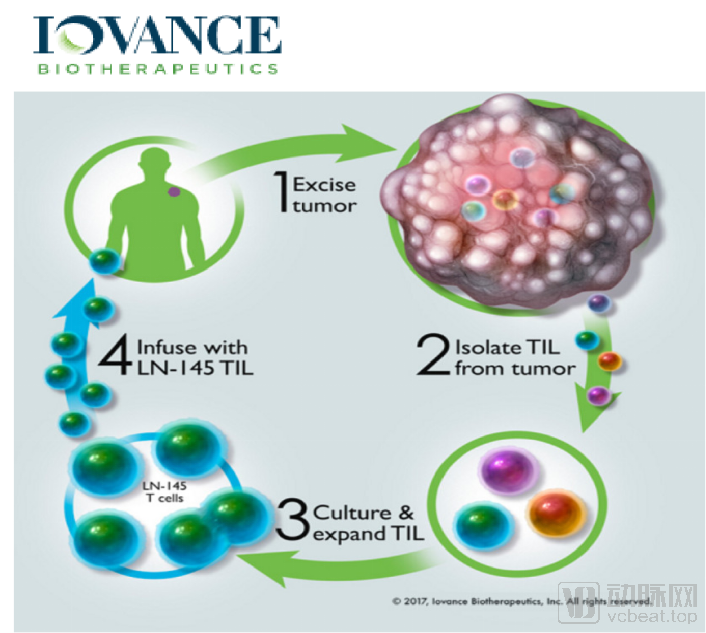
Two TIL products, LN-144 and LN-145, developed by the US-based company Iovance, have achieved notable success in the treatment of melanoma and cervical cancer. LN-145, indicated for patients with recurrent, metastatic, or persistent cervical cancer following chemotherapy, demonstrated a response rate of 44%, whereas previously reported response rates for second-line chemotherapy or immunotherapy in advanced cervical cancer ranged only from 4% to 14%. In May 2019, the FDA granted Breakthrough Therapy Designation (BTD) to this TIL therapy, LN-145. Consequently, TIL therapy has emerged as a new hope for the treatment of solid tumors.
In addition to Iovance in the United States, Israel’s Sheba Medical Center is the only hospital worldwide with FDA approval to conduct clinical trials of tumor-infiltrating lymphocyte (TIL) therapy for patients with refractory ovarian cancer. Its affiliated Ella Lemelbaum Institute for Immuno-Oncology announced in 2019 that it would launch a groundbreaking clinical trial using autologous TIL immunotherapy to treat advanced or metastatic ovarian cancer. The trial will be led by Professor Jacob Schachter, Director of the Immuno-Oncology Research Center at Sheba Medical Center, and his experienced team of oncology experts.
In addition, several companies in China are engaged in the research and development of products in the field of TILs. In October 2018, Chineo signed a patent licensing agreement with the U.S. National Cancer Institute (NCI), becoming the first Chinese company to receive authorization from NCI. Chineo will utilize the non-exclusive, sublicensable global license obtained from NCI for the research, development, manufacturing, and commercialization of next-generation neoantigen-reactive tumor-infiltrating lymphocyte (TIL) therapies for the treatment of various cancers.

Super TIL/cTLT Technology Has Entered Clinical Research
Beijing Chineo Medical possesses patented technologies for Enhanced TIL therapy and Super TIL therapy, along with its fourth-generation product, “Systemic Circulation-derived Super TIL (ScTIL).” The fourth-generation product, ScTIL, breaks through the reliance on surgical resection for TIL acquisition by directly enriching tumor-recognizing T cells from peripheral blood. These cells are further genetically modified to better overcome immunosuppression within the tumor microenvironment and achieve in vivo expansion. This technology not only overcomes the inherent limitations of conventional TIL therapy but also theoretically addresses the five major challenges mentioned above. Preliminary exploratory clinical trials of the fourth-generation product have demonstrated that an ultra-low dose, merely one ten-thousandth of the standard TIL therapy dose, can achieve excellent disease control rates (DCR) and objective response rates (ORR) surpassing those of conventional therapies. Currently, Beijing Chineo Medical is collaborating with Peking Union Medical College Hospital and other medical institutions to conduct investigator-initiated clinical studies of ScTIL for solid tumors.
Effectively increasing the quantity and quality of tumor-infiltrating lymphocytes (TILs) can provide a novel therapeutic strategy for improving patient prognosis. However, throughout the development of TIL therapy, skepticism and controversy have persisted. In addition to prohibitively high costs, researchers continue to face obstacles related to technology, safety, and regulatory frameworks, necessitating further laboratory and clinical studies to substantively optimize this immunotherapeutic approach.
In addition to the companies mentioned above, many others are developing TIL therapies with diverse strategic approaches. We look forward to the continuous advancement of this novel technology within the industry and its broader clinical application. It is our hope that this therapy, with its boundless potential, will continue to evolve and benefit a greater number of patients.
About Chineo
Chineo Medical is a representative enterprise in China for innovative immune cell therapies, including TIL and neoantigen-based treatments. The company’s “Super TIL” tumor immune cell therapy technology theoretically overcomes many limitations of traditional CAR-T, TCR-T, and TIL therapies, offering advantages in safety, efficacy, target patient population, manufacturing turnaround time, and cost. It has achieved positive results in proof-of-concept clinical trials. This technology has been included in key national R&D projects supported by the Ministry of Science and Technology, as well as Beijing’s “Disruptive Innovation” initiatives.