

Affluent Medical: Formed Through Merger of Four Companies, Endovascular Graft for Abdominal Aortic Aneurysm Nears Commercialization

Affluent Medical
Minimally Invasive Implant Developer
Recently, VCBeat learned that Affluent Medical, a French medical device R&D company, announced the completion of a €15.8 million private financing round. The round was led by Truffle Capital, with participation from Head Leader Limited (China), Ginko Invest, Fate, and Simone Merkle. Meanwhile, Jean-Francois Le Bigot from Ginko Invest and Benoit Adelus from Fate will join the company’s board of directors.
The primary purpose of this financing is to provide funding support for the company’s two clinical trial projects, MINERVA and OPTIMISE II, and to initiate pilot studies for Artus. Additionally, a portion of the funds will be used to mitigate the financial impact of the COVID-19 pandemic on the company.
Four companies merged to form a new entity with extensive business operations.
Affluent Medical was founded in 2011, focusing on the development of innovative minimally invasive implants, primarily targeting cardiovascular diseases and urinary incontinence.
It is worth noting that the establishment of Affluent Medical was not an overnight success. In 2011, Kephalios and Kardiozis were established successively, specializing in minimally invasive correction of mitral regurgitation and long-term treatment of abdominal aortic aneurysm, respectively.
In 2012, Epygon, a company developing mitral valve replacement devices, was established; in 2014, Myopowers, a company researching and developing urinary incontinence devices, was successfully founded. By that time, products under Kardiozis and Epygon had advanced to the preclinical stage.
In 2015, Epygon and Kephalios jointly led a project named PSPC MIVANA, aimed at developing innovative implantable medical devices for mitral valve disease. The project also included two other partners: MDB Texinov and IFTH.
In 2018, Kephalios, Kardiozis, Epygon, and Myopowers decided to undergo integration and restructuring in consideration of their respective business coverage areas and development prospects, thereby giving rise to Affluent Medical. Subsequently, to advance the future development and commercialization of its products in China, Affluent Medical established a joint venture with its Chinese partner in Shanghai.
In June 2018, the French financial regulator AMF issued Document No. 18-231, approving Affluent Medical’s IPO prospectus. Affluent Medical also announced that it would be listed and traded on the Euronext Growth market of the Paris Stock Exchange.
However, on June 21, 2018, Affluent Medical decided to postpone its initial public offering (IPO) on the Euronext Paris stock exchange. Daniele Zanotti, Chief Technology and Innovation Officer, stated, “The current financial market does not provide favorable conditions for Affluent Medical’s IPO; therefore, we have decided to adjust our original issuance plan in the best interests of the company, its shareholders, and its employees.”
Nevertheless, Affluent Medical’s team remains focused on continuing to develop next-generation minimally invasive therapeutic products, while also advancing communication and collaboration with potential customers.
The company’s current management team plans to obtain its first CE certification in 2021. The development plan formulated for this purpose includes: planning future product production lines; monitoring and completing clinical studies; and conducting pre-market activities.
CEO with 30 Years of Industry Experience + Pioneer in Mitral Valve Repair
Daniele Zanotti is the Chief Technology and Innovation Officer at Affluent Medical. Holding a Master of Business Administration (MBA) degree, he previously served as the Chief Executive Officer of Affluent Medical. With extensive experience in the development of cardiovascular and surgical devices, as well as in the marketing of high-tech, innovative medical equipment, he is a recognized expert in the development and commercialization of innovative medical devices. Prior to joining Affluent Medical, he served as Vice President of Research and Development at Sorin Cardiopulmonary.
Michel Finance, a graduate of EM Lyon Business School, currently serves as the CEO of Affluent Medical. Prior to joining Affluent Medical, he held the positions of CEO at Theradiag and Carmat, as well as Senior Vice President at Aventis Group (now Sanofi), bringing over thirty years of extensive experience in the healthcare industry.
To facilitate the optimal development of the company’s products, Affluent Medical has established a renowned International Scientific Advisory Board. The board comprises internationally acclaimed scientists, including Dr. Alain Carpentier, a pioneer in mitral valve repair therapy, as well as Dr. Michael Mack, Dr. Dominique Fabre, Dr. Alain Berrebi, Dr. Pierre Costa, Dr. Piergiorgio Tozzi, Dr. Theodor Fischlein, and Dr. Nicolas Barry Delongchamps. These experts have provided a robust theoretical foundation for product research and development.
Treating Cardiovascular Diseases and Urinary Incontinence with Interventional Devices
Affluent Medical’s four medical devices—KARDIOZIS, KALIOS, EPYGON, and ARTUS—are currently in the preclinical and clinical validation stages. The first device is expected to be launched in the European market next year, while the other three may be commercially released in Europe between 2021 and 2022.
KARDIOZIS is an endovascular prosthesis used for the treatment of abdominal aortic aneurysms. Abdominal aortic aneurysms are generally considered the most severe and prevalent vascular diseases. When the vessel wall weakens, balloon-like dilations known as aneurysms may form; if left untreated, these can rupture, leading to serious complications or potentially death. This condition most commonly occurs in the abdominal aorta, which is the essential blood vessel supplying blood to our legs.
In recent years, physicians have increasingly adopted endovascular aneurysm repair (EVAR) for the treatment of patients with abdominal aortic aneurysms. As a minimally invasive surgical procedure, EVAR causes less operative trauma, thereby offering many high-risk patients who are unable to tolerate open surgery an opportunity for recovery. However, this approach has certain limitations. For instance, its applicability is constrained by the anatomical characteristics of the aneurysm, it is contraindicated in patients with renal insufficiency, and it may lead to serious complications such as endoleaks. Consequently, there are stringent requirements for the morphology and structure of the implanted endografts.
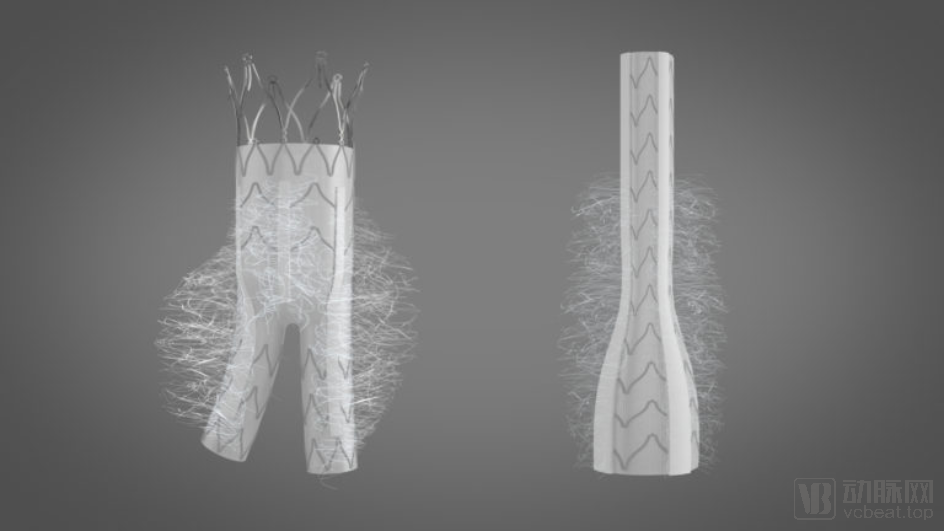
KARDIOZIS contains external thrombogenic fibers that induce coagulation upon implantation, promoting thrombus formation on the fibers to prevent aneurysm sac expansion and reduce the risk of endoleaks, thereby providing a safer and more effective surgical treatment for patients and physicians.
KARDIOZIS is in a compressed state during implantation, reducing the difficulty of the procedure. Once positioned correctly, KARDIOZIS fully expands and anchors to the aortic wall to prevent migration. During use, it is essential to ensure that the extension limbs of the prosthesis are implanted into the arteries supplying blood to the lower extremities.
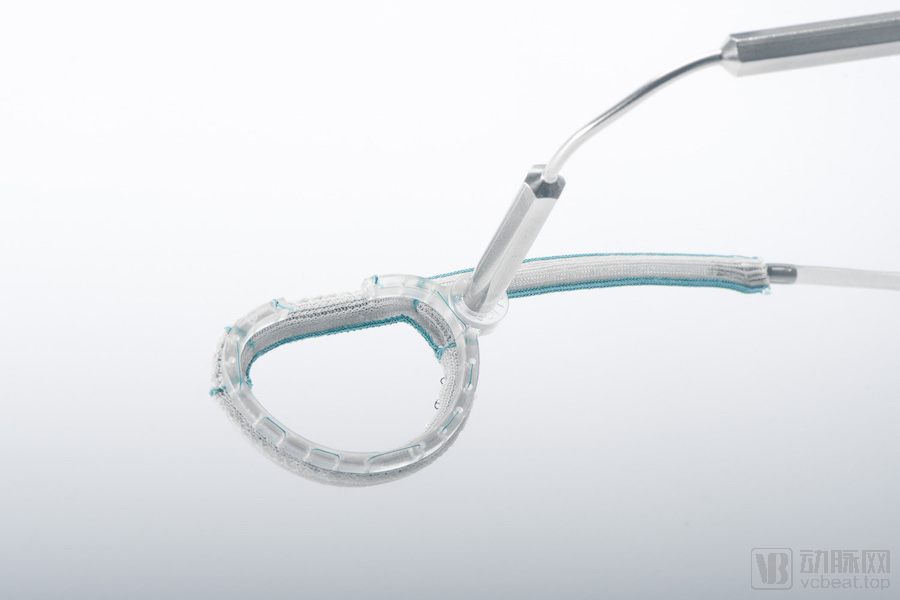
KALIOS is a mitral annuloplasty device indicated for the treatment of mitral regurgitation resulting from mitral valve insufficiency. KALIOS can be implanted as a conventional “Carpentier” ring, and its position can still be adjusted months or years after the initial surgery to optimize leaflet coaptation according to clinical needs.
Currently, the company is preparing for clinical studies on the safety and efficacy of KALIOS. It is expected that 62 patients will undergo implantation procedures at nine medical centers in Italy, Austria, Germany, and Switzerland, with patient registration scheduled to conclude in the second quarter of 2020.
In fact, preclinical trials for KALIOS had already begun by late 2019, laying the foundation for the upcoming pivotal clinical trials. Furthermore, KALIOS is expected to reach the commercialization stage within two years.
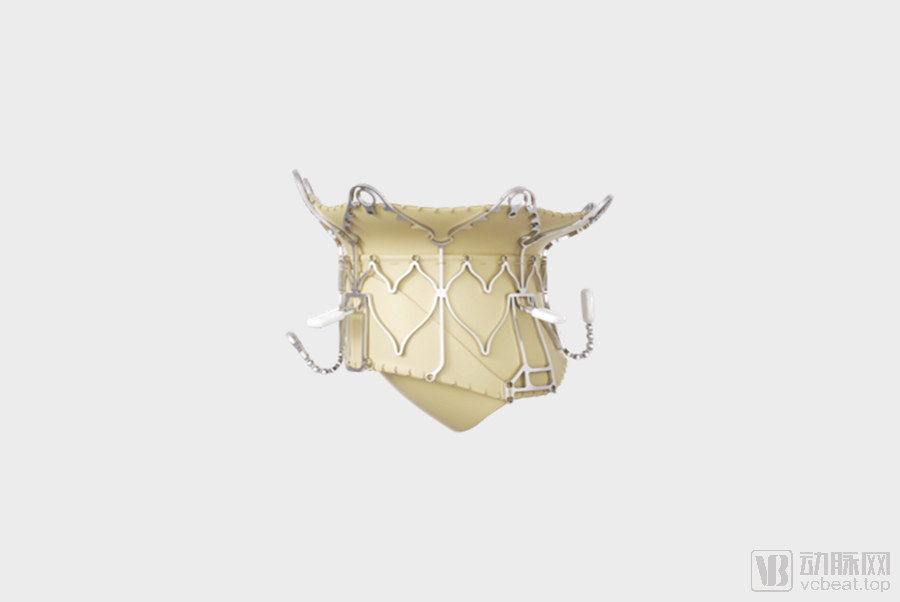
EPYGON is a “physiological” transcatheter bionic mitral valve prosthesis designed for mitral valve replacement. It restores natural blood flow vortices in the left ventricle, thereby promoting the recovery of ventricular function. Currently, there are very few mitral valve prostheses on the market capable of restoring ventricular vortices.
The device comprises a single-sandwich tissue component and a D-ring, utilizing an asymmetric nitinol frame externally to ensure stable attachment to the mitral annulus, thereby preventing left ventricular outflow tract obstruction caused by systolic anterior motion (SAM).
Affluent Medical is currently conducting clinical studies on EPYGON. Patient enrollment is expected to be completed in the first quarter of 2021, and following the trial, CE certification will be applied for based on the trial results to prepare for market launch.
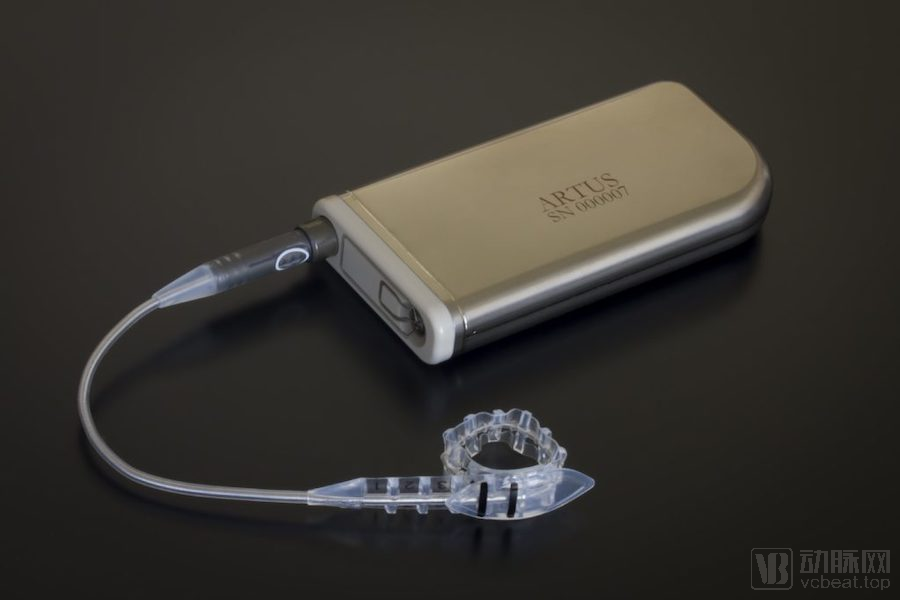
Artus is an artificial urinary sphincter designed for stress urinary incontinence. It can be implanted into the human body through minimally invasive surgery. After the procedure, patients can use a remote control to open and close the artificial urinary sphincter according to their individual needs. To better adapt to the human body, the structure and materials of Artus are designed with the standard of being permanently implantable.
During the surgical procedure, the physician places a silicone cuff around the urethra and secures it in position. Once the patient has adapted, the other end of the cuff is connected to a remote control, allowing the patient to regulate the cuff’s occlusion based on their individual physiological condition and lifestyle.
Current Status of the Development of the Domestic Interventional Device Market
In recent years, cardiovascular interventional therapy has experienced rapid development due to its advantages of being minimally invasive, fast, safe, and effective, becoming one of the relatively mature and representative techniques in interventional therapy. In China, the development process in the field of vascular interventional devices has also accelerated and gradually matured. Based on the publication of relevant papers and patent applications, research interest in the domestic cardiovascular intervention field continues to rise.
However, it is worth noting that the development of various market segments is uneven, with domestic brands replacing foreign manufacturers in certain areas. Taking coronary stents as an example, the market share of domestic brands exceeded 70% by 2017. Nevertheless, it is undeniable that many sectors remain dominated by foreign manufacturers, and high-value consumables commonly used in interventional procedures, such as catheters and guidewires, are largely monopolized by foreign companies. Therefore, there is still considerable room for innovation and development in the field of interventional devices in China.