

Checkpoint Surgical Files IPO Prospectus: Lawyer-Founded Medtech Firm Secures Seven Rounds of Funding to Advance Nerve Navigation Devices

Checkpoint Surgical
Medical Device Developer
Originally separated by mountains and seas, every continent and country on Earth has been interconnected by the internet and transportation networks. Similarly, while various tissues in the human body possess unique functions and are not physically contiguous, they are interconnected and regulated through the nervous system. Our communication with the external world and our responses to external stimuli are both dependent on the nervous system.
With the continuous advancement of surgical techniques, anatomical analysis can be performed on the vast majority of human body regions. This enables a more intuitive understanding of the patient’s condition and facilitates the formulation of more precise treatment plans. However, nerve injury is an unavoidable risk during surgical procedures. To mitigate intraoperative nerve damage, related devices such as nerve locators/stimulators have been developed.
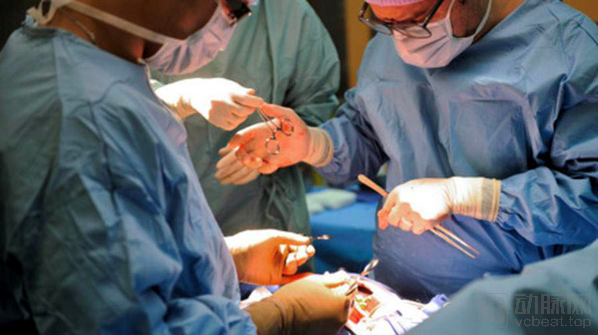
Checkpoint Surgical is a medical device company based in Cleveland, USA. Checkpoint Surgical’s handheld nerve stimulation devices help physicians locate nerves, enabling surgeons to protect, assess, and restore neural structures at anatomical sites.
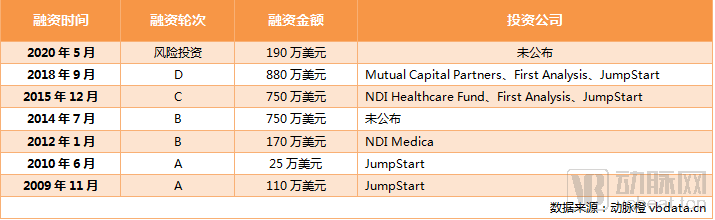
In 2014, Checkpoint Surgical raised $7.5 million through equity financing. In 2015, the company attracted investment from three firms—First Analysis, NDI Healthcare Fund, and JumpStart NEXT Fund—leveraging the unique features of its first product (Checkpoint), with the funds used to expand into new markets. In 2018, the company developed a new product (Checkpoint Head & Neck) and secured its largest funding round to date, amounting to $8.8 million.
Next, we will further explore the founder information of Checkpoint Surgical and the characteristics of its products.
Founder Without a Medical Background Establishes Checkpoint Surgical with Extensive Work Experience
Leonard Cosentino is the President and Chief Executive Officer of Checkpoint Surgical, Inc. Surprisingly, Leonard Cosentino’s professional background has limited relevance to the medical field. He graduated from Grove City College, a private liberal arts institution, and subsequently pursued legal studies at Case Western Reserve University School of Law, where he earned his Juris Doctor degree.
After completing his studies, Leonard Cosentino practiced law at Jones Day for six years. He subsequently spent 13 years working at the insurance firm Selman & Company, where he served as Chief Administrative Officer and General Counsel, and at the law firm McDonald Hopkins LLC. In 2006, he assumed the role of Managing Director at NDI Healthcare Fund, an investment firm primarily focused on investing in innovative and high-potential neurotechnology companies and assisting them in commercializing their products.
After working at NDI Healthcare Fund for three years, Leonard Cosentino decided to start his own business. In 2009, Checkpoint Surgical was established in the United States, and its first product—the CHECKPOINT Stimulator/Locator—received FDA clearance for sale in October of the same year. NDI Healthcare Fund participated in Checkpoint Surgical’s Series C financing round in 2015.
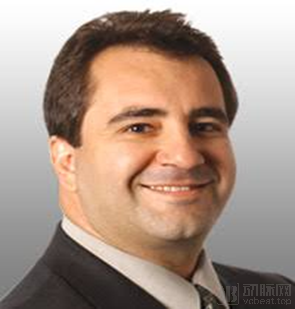
President and Chief Executive Officer of Checkpoint Surgical
In the first half of 2010, the device began trial use at a dozen surgical hospitals in the United States. In June 2010, Checkpoint Surgical’s flagship product, Checkpoint, was fully launched for sale across the United States.
Checkpoint: Precise Navigation for Surgeons to Locate Nerves
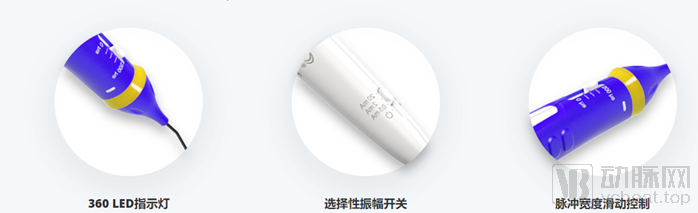
The Company's First Product: Checkpoint
Checkpoint is a handheld nerve locator/stimulator that assists surgeons in determining the location of patients’ nerves and muscles and identifying whether the nerves and muscles are excitable. It features the following functions:
Positioning: Surgeons can use Checkpoint to precisely locate nerves within human tissue, even those obscured by scar tissue, tumors, and bone.
Determining Nerve Excitability: Checkpoint Surgical incorporates an LED indicator at the instrument tip to confirm that the device is delivering electrical pulses for nerve stimulation. The nerve threshold at specific sites can be verified, and changes in nerve function can be monitored, by adjusting the amplitude selection switch and pulse width regulator on the instrument.
Inducing Complete Tetanic Contraction: Checkpoint’s waveform is biphasic, which can induce complete tetanic contraction rather than the simple “twitch” produced by traditional direct-current stimulators. This approach allows for assessment of whether the tendon can contract normally and determination of whether the stimulated tissue structure is a nerve.
Checkpoint Head & Neck: Ensure excitability of the patient’s head and neck nerves
According to the company’s official website, within one year of its launch, Checkpoint has been widely used in nerve repair, otolaryngology, plastic surgery, and oncologic surgeries. Furthermore, Checkpoint Surgical has found that facial nerve injury during head and neck surgeries can adversely affect patients’ quality of life, indicating that surgeons require appropriate devices to identify nerves in the face and head and neck regions. During parotid gland dissection and thyroidectomy procedures, temporary facial nerve weakness or even permanent muscle paralysis may occur.
Regarding the issue of facial nerve injury, the treatment guidelines of the American Thyroid Association (ATA) require visual identification of the recurrent laryngeal nerve (RLN) during thyroidectomy to reduce the likelihood of RLN injury. However, the complex structure of the RLN makes its identification challenging.
To address this industry pain point, Checkpoint Surgical launched the Checkpoint Head & Neck, a handheld stimulator for head and neck nerve identification, in 2018. The Checkpoint Head & Neck is a handheld, single-use device that provides intraoperative stimulation of nerves and muscles. It is a nerve monitoring instrument specifically developed for head and neck care. It can be utilized in the following scenarios:
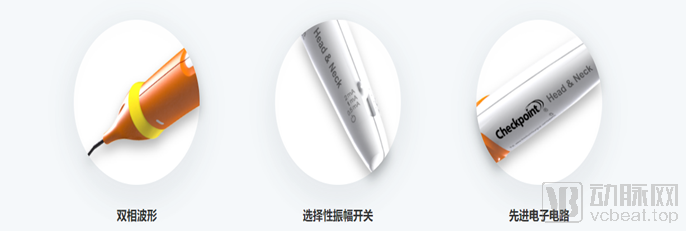
Checkpoint Head&Neck
Neck Anatomy: During neck dissection, the surgeon first uses the Checkpoint Head & Neck system to confirm whether the tissue structure is a motor nerve, then identifies individual motor nerve branches through tissue recognition, and finally employs biphasic pulses emitted by the device to induce complete tetanic contraction of the muscle, thereby verifying normal function.
Parotidectomy: Utilizing instrumentation to localize the facial nerve and nerves obscured by scar tissue or other factors, thereby enhancing the precision of surgical dissection while minimizing the risk of nerve injury. Biphasic waveforms are employed for repetitive nerve stimulation to confirm normal nerve excitability.
Thyroidectomy: During thyroid resection, nerves and muscles are stimulated to ensure that the excitability of the nerves surrounding the thyroid gland is maintained within normal limits throughout the surgical procedure.
Recruit Sales Talent to Drive Product Commercialization

Appropriate marketing strategies are essential for a company to achieve profitability. Marketing can help penetrate the market and attract more users. It can also boost investors’ confidence in the company’s products, thereby attracting additional investment to support product research and development.
To further advance the commercialization of the product.In 2012, Checkpoint Surgical hired Don Hubbard, who has extensive sales experience, as its Vice President of Sales and Marketing.
In the 10 years prior to joining Checkpoint Surgical, Hubbard served as Senior Vice President at PartsSource, a supplier of medical components. During Hubbard’s tenure, PartsSource’s sales grew from $4 million to $110 million, and its sales team expanded from 4 to more than 80 members.
Hubbard’s joining has enabled Checkpoint Surgical to plan for expanding into overseas markets. The company has already secured patent rights in multiple countries, including China, France, and Germany.
In 2017, Checkpoint Surgical appointed Rick DiBlasi as Vice President of Sales.Rick DiBlasi has extensive experience in medical sales; he helped Checkpoint Surgical expand its sales team and achieve revenue growth.
In 2018, Checkpoint Surgical secured $8.8 million in Series D funding. The proceeds from this round were allocated to expand the company’s sales operations and marketing platform, with the aim of penetrating the markets for nerve regeneration and neuropathic pain associated with neuro-oncology. To achieve this objective,Checkpoint Surgical, Inc. has hired Derek Lewis, who has many years of experience in the medical industry, to oversee the company’s operations and product research and development processes.Derek Lewis has collaborated with well-established companies and early-stage technology firms, bringing extensive experience in the development and launch of new medical device products.
With this, the establishment of the sales team is essentially complete.In 2019, Checkpoint Surgical entered into an exclusive cooperation agreement with 2MEDICAL-europe BV, a company based in the Netherlands.2MEDICAL-europe BV is a company focused on bringing medical products to the European market. In Europe, 2MEDICAL-europe BV serves as a supplier of Checkpoint Surgical products, providing relevant solutions to surgeons in Germany, the United Kingdom, the Netherlands, and Belgium.
Industry Status and Implications for Chinese Enterprises
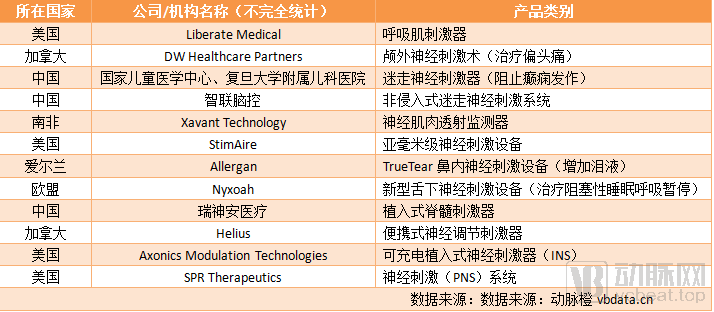
China’s neuromodulation devices have also seen significant development. Ruishen’an Medical, a company dedicated to the research and development, manufacturing, and sales of active implantable medical devices, has developed a range of medical equipment including implantable vagus nerve stimulators (VNS), concha vagus nerve stimulators, and implantable gastric electrical stimulators.
This year, the novel coronavirus has attracted significant global attention. Liberate Medical, a US-based company, has developed a respiratory muscle stimulator that works by delivering transcutaneous neuromuscular electrical stimulation to the abdominal wall muscles during exhalation. The device is designed to help COVID-19 patients who require mechanical ventilation via ventilators to wean off them. It received FDA approval in May this year.
In the same year, Helius’s portable neuromodulation stimulator received approval in Canada, and Axonics Modulation Technologies’ implantable neurostimulator was approved by the U.S. Food and Drug Administration (FDA). The FDA reclassified cranial electrotherapy stimulation (CES) devices from Class III to Class II. This indicates that sufficient clinical experience has been accumulated for these devices, ensuring their safety and efficacy. It is foreseeable that as clinical experience with these products continues to grow, patient acceptance of the related devices will increase year by year.
Analysis of Checkpoint Surgical’s Sales Model: The company has been continuously recruiting sales talent since its inception. In its early stages, it planned to expand into overseas markets and apply for patents. The implications for Chinese enterprises are as follows:
1. Establish a comprehensive marketing network.A review of successful players in the medical device sector reveals that all have invested heavily in building their marketing networks. For instance, Mindray Medical has established a professional direct sales team in North America and forged stable, favorable partnerships with five major U.S. group purchasing organizations (GPOs): MPG, MedAssets, Novation, Premier, and Amerinet. In China, the company primarily employs a distribution model for sales, collaborating with thousands of distributors.
2. Leverage inherent advantages to enter overseas markets at an early stageOverseas markets have always been crucial for Chinese medical device companies. Once products achieve a certain level of success domestically, it is essential to strategically position in overseas markets early on. Many Chinese companies often employ hundreds of sales personnel, possessing ample talent in areas such as distributor price maintenance, terminal hospital expansion, customer training, and after-sales repair services, thereby gaining a distinct advantage when entering overseas markets.