

On August 14, Roche’s IL-6R antibody satralizumab (brand name: Enspryng) received FDA approval for marketing, with the indication for neuromyelitis optica spectrum disorder (NMOSD) in adults and pediatric patients, administered via subcutaneous injection.
Satralizumab, developed by Chugai Pharma (a Roche subsidiary), was engineered from Actemra (tocilizumab), an already marketed IL-6R antibody. It is a humanized monoclonal antibody that targets IL-6R. IL-6 is a cytokine, and IL-6R is generally believed to play a crucial role in the inflammatory response in patients with neuromyelitis optica spectrum disorder (NMOSD), triggering inflammation that leads to tissue damage and disability.
Previously, the drug had already been approved for marketing in Japan and Canada, and marketing applications had also been submitted in the European Union and China. With this FDA approval, Satralizumab becomes the third drug approved for the treatment of NMOSD, following the C5 complement inhibitor Soliris and the CD19 antibody therapy Uplizna.
Satralizumab is the first and only subcutaneous therapy approved by the FDA for the treatment of AQP4 antibody-positive NMOSD, as well as the first and only active NMOSD treatment that targets and inhibits the interleukin-6 receptor (IL-6R).
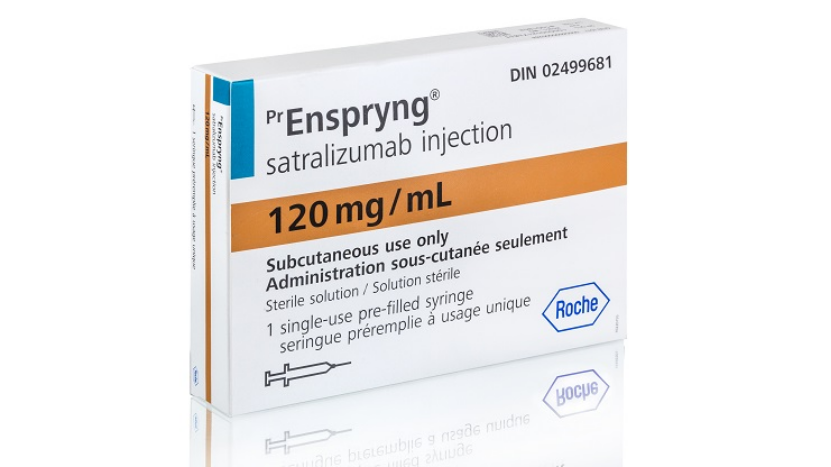
Figure | Satralizumab (Source: Roche official website)
The FDA’s approval of satralizumab for the treatment of neuromyelitis optica spectrum disorder (NMOSD) was primarily based on positive results from two pivotal clinical trials conducted in patients with NMOSD. Data from these randomized trials, SAkuraSky and SAkuraStar, confirmed that satralizumab is an effective therapeutic option for adult patients with AQP4 antibody–positive NMOSD, demonstrating sustained efficacy and a favorable safety profile, whether used as monotherapy or in combination with baseline immunosuppressive therapy.
Furthermore, satralizumab is administered via subcutaneous injection once every 4 weeks, offering greater convenience.
Currently, two therapeutic drugs have been approved for the treatment of NMOSD: the C5 complement inhibitor Soliris and the CD19 antibody Uplizna.
With this approval, satralizumab has officially become the third FDA-approved therapeutic drug for neuromyelitis optica spectrum disorder (NMOSD). Its target differs from those of the other two approved agents, positioning it to establish a unique competitive advantage in the future.
About NMOSD
Neuromyelitis optica spectrum disorder (NMOSD) is a rare autoimmune disease of the central nervous system, characterized primarily by the immune system’s attack on the optic nerves and spinal cord, leading to blindness, muscle weakness, and paralysis. The disease course is unpredictable and relapsing. Recurrent episodes result in cumulative neurological damage and disability. Generally, the prevalence is higher in women than in men, with an estimated range of 0.5 to 10 cases per 100,000 individuals. NMOSD does not resolve spontaneously; patients require regular medication and lifelong preventive therapy.
AQP4 antibodies are detected in the serum of approximately 70–80% of patients with neuromyelitis optica spectrum disorder (NMOSD). These antibodies mistakenly attack aquaporin-4 (AQP4), a specific water channel protein located on the foot processes of astrocytes in the central nervous system. The pathogenesis of NMOSD is associated with AQP4 antibodies, which target and damage astrocytes, leading to inflammatory injury of the optic nerves, spinal cord, and brain.
About Soliris
Soliris is a C5 complement inhibitor that functions by inhibiting the C5 protein in the terminal portion of the complement cascade. Developed by Alexion, a pharmaceutical giant specializing in rare diseases, it was approved by the FDA in June 2019 for the treatment of adult patients with AQP4 antibody-positive neuromyelitis optica spectrum disorder (NMOSD). In September of the same year, it received European Union approval for the treatment of adult patients with AQP4 antibody-positive NMOSD and a relapsing disease course. As the first drug globally approved for the treatment of NMOSD, Soliris has been granted orphan drug designation for NMOSD in the United States, the European Union, and Japan.
Based on Alexion’s current R&D pipeline, the company is expanding the indications for Soliris and expects to initiate Phase 2/3 clinical studies for the treatment of neuromyelitis optica spectrum disorder (NMOSD) in children and adolescents by mid-2020. The company is also exploring Ultomiris, a long-acting C5 complement inhibitor, for the treatment of NMOSD, which is currently in Phase 3 clinical trials.
About Uplizna
Uplizna is a CD19 antibody inhibitor developed by Viela Bio, an innovative pharmaceutical company focused on inflammatory and autoimmune diseases. Jiangsu Hansoh Pharmaceutical has licensed the drug, which was approved by the FDA in June 2020 for the treatment of adult patients with AQP4 antibody-positive neuromyelitis optica spectrum disorder (NMOSD). It is the first and currently only B-cell depleting agent approved by the FDA for the treatment of adult patients with AQP4 antibody-positive NMOSD.
Regarding the SAkuraSky and SAkuraStar Studies
The SAkuraSky study was a multicenter, randomized, double-blind, placebo-controlled trial that enrolled a total of 83 patients (including both AQP4 antibody-positive and antibody-negative patients), who were assigned to either the placebo plus baseline immunosuppressive therapy group or the satralizumab plus baseline immunosuppressive therapy group. The study aimed to evaluate the efficacy and safety of satralizumab combined with baseline immunosuppressants versus placebo combined with baseline immunosuppressants. Pre-specified subgroup analysis results showed that in the AQP4 antibody-positive subgroup, the relapse-free rate at week 96 was 91.5% in the satralizumab plus baseline immunosuppressive therapy group, compared with 53.3% in the placebo plus baseline immunosuppressive therapy group.
The SAkuraStar study was also a multicenter, randomized, double-blind, placebo-controlled trial that enrolled a total of 90 patients with neuromyelitis optica spectrum disorder (NMOSD), including both males and females aged 18–74 years, who were assigned to either the satralizumab treatment group or the placebo group. The study aimed to evaluate the efficacy and safety of satralizumab. The results showed that at week 96, 72.1% of patients in the satralizumab group remained relapse-free, compared with 51.2% in the placebo group.
In both trials, the proportion of patients experiencing serious adverse reactions was similar in the satralizumab and placebo groups. The vast majority of adverse reactions were mild to moderate in severity. The incidence of infections in the satralizumab group was lower than that in the control group. The main adverse reactions in the treatment group included nasopharyngitis, headache, upper respiratory tract infection, gastritis, and rash.