


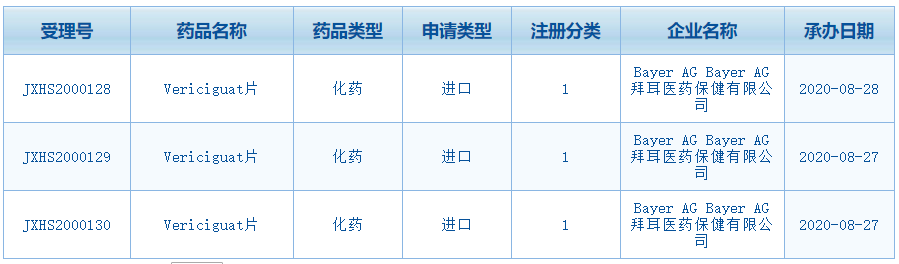
On August 27, Bayer submitted a marketing application for its novel heart failure drug, vericiguat tablets, in China. In June of this year, Bayer had already filed marketing applications for vericiguat in the European Union and Japan. On July 16, the U.S. Food and Drug Administration (FDA) accepted the marketing application for vericiguat in the United States and granted it priority review status, with a Prescription Drug User Fee Act (PDUFA) target action date set for January 20, 2021. Vericiguat is poised for simultaneous launch in the four major pharmaceutical markets: Europe, the United States, Japan, and China.
Vericiguat is an oral soluble guanylate cyclase (sGC) stimulator. In patients with heart failure, impaired nitric oxide (NO) availability leads to insufficient sGC stimulation, resulting in myocardial and vascular dysfunction. The primary basis for the marketing authorization application of vericiguat is the data from the Phase III VICTORIA study. The VICTORIA study employed a randomized, double-blind, placebo-controlled, multicenter design. It enrolled 5,050 patients with worsening heart failure and reduced left ventricular ejection fraction (LVEF <45%) within 12 months after a decompensation event at more than 600 centers across 42 countries, including Europe, Japan, China, and the United States. The study compared the efficacy and safety differences between vericiguat and placebo, each administered in combination with other standard heart failure therapies.
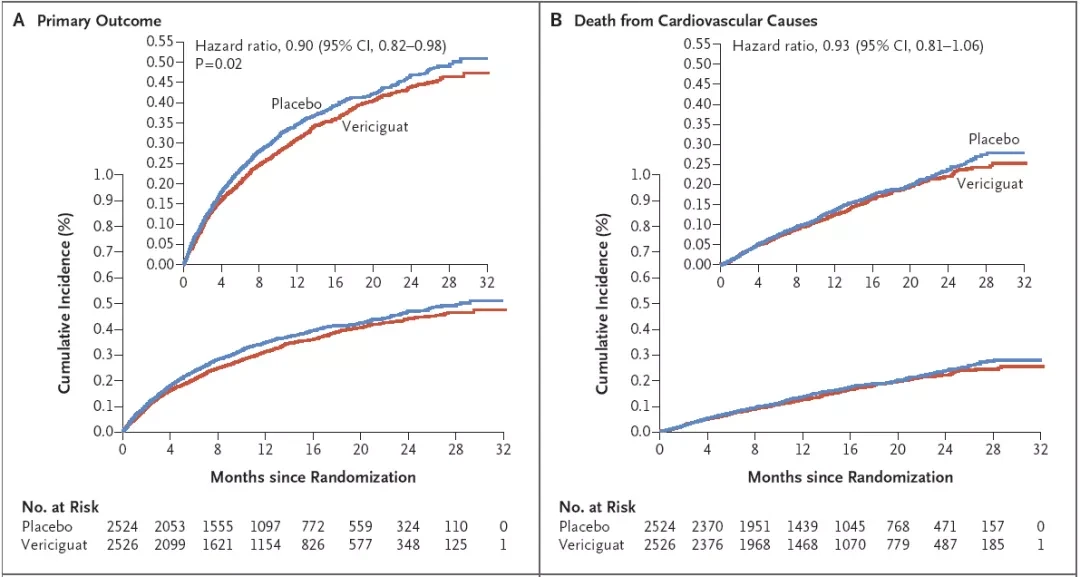
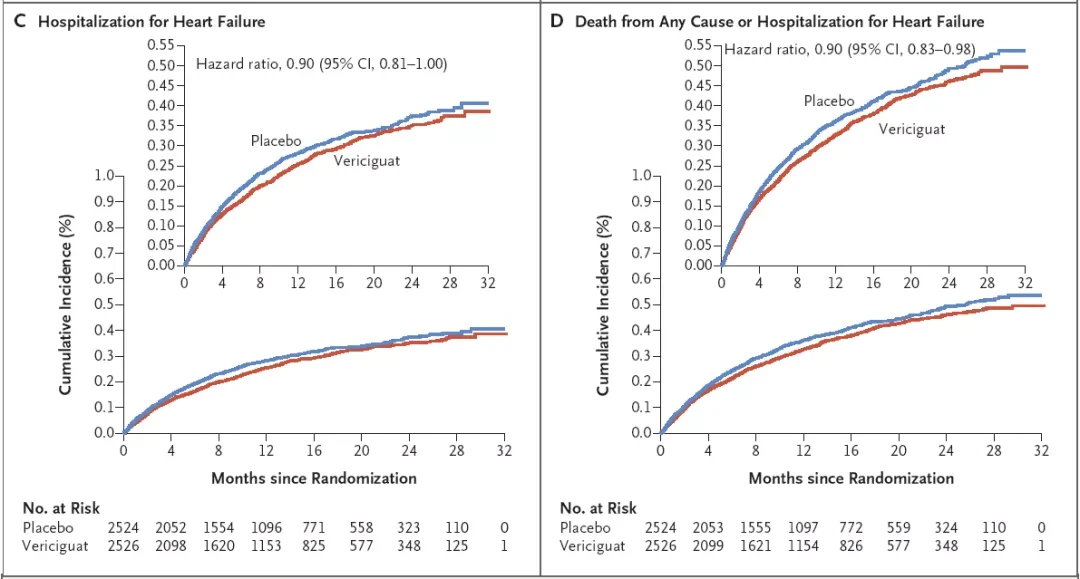
The primary composite endpoint of the study was time to first hospitalization for heart failure or cardiovascular death. Secondary endpoints included time to cardiovascular death, time to first hospitalization for heart failure, time to each heart failure hospitalization (including initial and recurrent events), time to all-cause death or hospitalization for heart failure, and time to all-cause death.
The VICTORIA study is the first Phase III trial specifically targeting patients with worsening chronic heart failure who are at high risk of cardiovascular death and recurrent hospitalizations for heart failure. The results were presented at the 69th Annual Scientific Session of the American College of Cardiology and the World Congress of Cardiology, and published in the New England Journal of Medicine.
HFrEF (Heart Failure with Reduced Ejection Fraction) is characterized by impaired cardiac systolic pumping function. There are approximately 6.5 million patients with heart failure in the United States, of whom 40%–50% have HFrEF. Each year in the United States, approximately 30% of patients with chronic heart failure at risk of progression experience disease worsening, manifested as exacerbation of symptoms or occurrence of heart failure events. Among patients with worsening chronic HFrEF, approximately 50% require hospitalization within 30 days following a heart failure event, and about one-fifth of patients with worsening HFrEF die within two years.
Merck & Co. and Bayer established a global development collaboration targeting sGC in 2014. The two companies jointly developed riociguat, the first marketed sGC stimulator, which is indicated for pulmonary arterial hypertension and achieved global sales of nearly $1 billion in 2019. If approved, vericiguat will be the first-in-class sGC stimulator for the treatment of heart failure.