

First in China! Thermal Vapor Therapy for Benign Prostatic Hyperplasia Approved

MedTecX
Medical Technology Developer
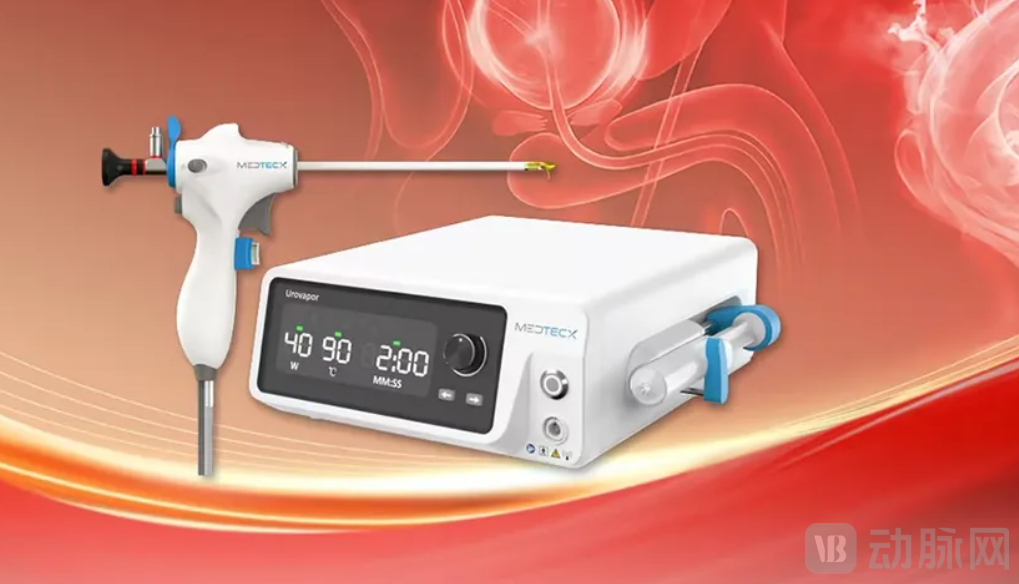
At the end of February, the National Medical Products Administration approved the registration applications for the thermal vapor therapy device (Registration No. 20263090436) and the disposable prostate thermal vapor therapy device (Registration No. 20263090437) from MedTecX Co., Ltd. (hereinafter referred to as MedTecX).
When used together, they are mainly used to alleviate symptoms and obstructions associated with benign prostatic hyperplasia, suitable for men aged 50 years (inclusive) and above with a prostate volume (with or without central zone and/or median lobe hyperplasia) of 30-80cm.3Patients with benign prostatic hyperplasia.
 Source: Boyuan Capital (Note: Boyuan Capital led the Series B investment in MedTecX Co., Ltd.)
MedTecX Co., Ltd.TMThe thermal vapor ablation system entered the National Innovative Medical Device Special Approval Process on December 31, 2024. As the first domestically produced device approved for treating benign prostatic hyperplasia using thermal vapor therapy, it signifies an innovative breakthrough in the field of male urinary health, breaking the market monopoly previously held by overseas companies.
Benign Prostatic Hyperplasia (BPH) is a common condition in elderly men, characterized by abnormal proliferation of prostate stromal and epithelial cells, leading to gland enlargement, bladder outlet obstruction, and lower urinary tract dysfunction.
Related Research1It was pointed out that in 2023, the number of global BPH patients reached 120,684,005, with 14,704,527 new cases; in China, the number of BPH patients was 25,649,289, with 3,493,467 new cases. In recent years, although the number of new cases, total patients, and YLDs (Years Lived with Disability) have risen significantly, measures such as increased early screening coverage, promotion of minimally invasive surgeries, standardized drug treatments, and widespread health education have alleviated the actual prevalence and severity of BPH to a certain extent.
Currently, common treatments for BPH patients include medication and surgical procedures. Research2It was pointed out that as a clinically progressive disease, some BPH patients will eventually require surgical treatment to relieve obstruction and its impact on quality of life and complications caused. Among them, BPH patients with moderate to severe LUTS (lower urinary tract symptoms) that have significantly affected their quality of life—especially those who respond poorly to medication or refuse drug therapy—can opt for surgical treatment.
The main means of surgical treatment include classical surgical procedures (such as transurethral resection of the prostate [TURP], transurethral incision of the prostate [TUIP], and open prostatectomy), transurethral laser resection/vaporization/enucleation of the prostate, and transurethral bipolar plasma enucleation of the prostate, among others.
As the gold-standard surgery for BPH, TURP and other resection or enucleation procedures (such as Holmium Laser Enucleation of the Prostate, HoLEP) carry inherent risks associated with more invasive surgeries: bleeding, the need for anesthesia or hospitalization, and a high rate of retrograde ejaculation (approximately 50-70% of TURP patients) due to bladder neck disruption.3。
With the innovation of minimally invasive technology and medical devices, steam thermotherapy has also begun to be applied and is increasingly gaining attention. This therapeutic technique was approved by the U.S. FDA in 2015 and introduced to China in March 2022. The therapy involves injecting high-temperature steam (up to 103°C) into hyperplastic prostate tissue. When the steam condenses back into water inside the prostate, it releases thermal energy (approximately 70°C), causing immediate cell death in the target area through convective heating. The ablated glandular tissue is absorbed or expelled, thereby reducing prostate volume and alleviating urethral compression. By avoiding damage to the nerves and muscle fibers crucial for sexual function, steam thermotherapy offers a better option for sexually active men who wish to minimize the risk of impotence or loss of ejaculation. Moreover, this procedure can be performed on an outpatient basis.
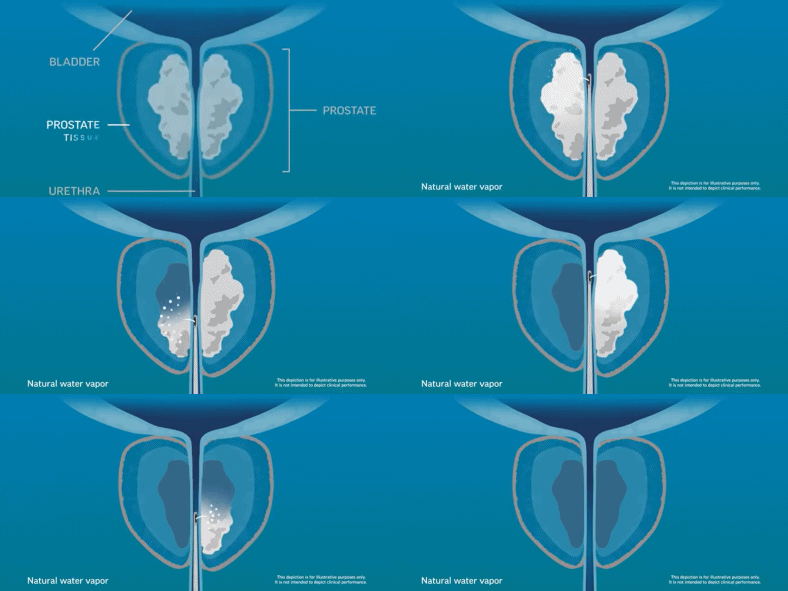
WVTT (Transurethral Prostate Thermal Vapor Ablation) Demonstration, GIF Extracted from Boston Scientific
In the actual treatment process, it mainly involves 5 steps:
Steam Generation - Precisely heat water to produce sterile saturated steam;
Steam Delivery - Insert a single-use treatment catheter through the patient's natural urethral orifice, under endoscopic guidance, until reaching the prostate area.
Steam Injection - After reaching the target area, the doctor triggers the handle, and high-temperature water vapor is injected into the benign prostatic hyperplasia tissue through a fine needle at the front end of the catheter. Each injection takes only about 9 seconds, and typically 5 to 8 injections are required.
Precision Ablation - Convection Heating Leads to Cell Death in Target Area;
Postoperative Recovery - The ablated glandular tissue is absorbed or expelled, and the prostate volume decreases.
MedTecX Co., Ltd.'s XiaolongTMThe Thermal Steam Ablation System, featuring a spiral heating design, continuously monitors steam temperature and pressure through a heating control algorithm, while adjusting output power in real time. It offers the advantages of being minimally invasive, causing less bleeding, and having a shorter operation time. Its core advantage lies in:
At the technological innovation level, based on self-developed core technologies such as steam generator design, heating control algorithms, and mechanical structure for needle insertion and retraction, the traditional thermotherapy technology bottlenecks have been overcome, achieving more stable efficacy and shorter operation time, reducing the burden on patients.
At the design optimization level, innovative structural design and cost-effective host and handle configurations achieve high reliability while optimizing cost and accessibility; exclusive steam control patented algorithm enhances the stability of steam emission, empowering medical staff with efficient operation and ensuring patient experience.The most critical aspect of the treatment is undoubtedly achieving precise and controllable heating. In MedTecX Co., Ltd.'s invention patents, the potentially related patents mainly include two: one is the ablation catheter and ablation system (Patent No.: CN117898819A), which ensures consistent and uniform heating energy at different stages and positions during the heating process; the other is the steam generation method, steam generator, and steam ablation device (Patent No.: CN118258011A), which primarily addresses automatic determination of the steam state—when the steam temperature or pressure exceeds the upper limit, the input power is reduced; conversely, if it falls below the lower limit, the input power is increased, thereby precisely controlling the steam’s temperature and pressure to remain within the appropriate range required for operating room sterilization.
At the clinical value level, it can provide long-term relief of patients' lower urinary tract symptoms while preserving sexual function. Patients experience less bleeding, recover more quickly, and can avoid complications more effectively.Compared with surgical operations, the product operates through the natural urethral cavity without incisions. Moreover, as a non-resection ablation procedure, it preserves the integrity of the urethra.
By utilizing a controlled thermal coagulation effect to induce necrosis and absorption of proliferative tissue, it relieves urethral compression and improves symptoms such as difficult urination, urinary frequency, and nocturia, significantly enhancing quality of life. This product is especially suitable for patients who are unwilling to undergo traditional surgery or face higher anesthesia risks, as well as younger individuals who wish to preserve sexual and ejaculatory functions. However, it should be noted that the product is currently applicable to men aged 50 years and above with a prostate volume (with or without hyperplasia of the central zone and/or median lobe) ranging from 30 to 80 cm³.3Patients with benign prostatic hyperplasia.
Previously, the similar product available in the Chinese market was the Rezum product from Boston Scientific, introduced in March 2022. The Rezum system is also the world's first steam thermal ablation system for treating benign prostatic hyperplasia. Now, with the launch of MedTecX Co., Ltd.'s product, the two will likely form a competitive landscape in the future.
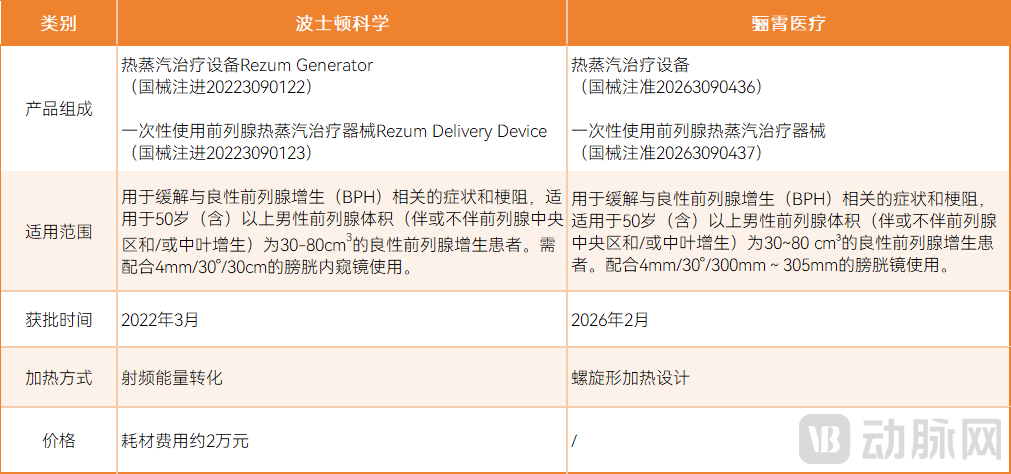
Chart compiled by VCBeat; Data sources: National Medical Products Administration, MedTalks
From a clinical perspective, MedTecX Co., Ltd. has collaborated with Academician Zhang Xu from the Chinese People's Liberation Army General Hospital and conducted clinical research in conjunction with 11 top clinical institutions across China. However, MedTecX Co., Ltd. has not yet released relevant data.
As for Boston Scientific's Rezum system, multiple clinical data currently demonstrate the effectiveness of its thermal vapor treatment——
A Single-Center Real-World Study4The results show that this surgical method has significant and stable efficacy in symptom improvement, urinary flow improvement, and prostate volume reduction, while also providing good protection of sexual function and a low re-treatment rate. In terms of sexual function protection, the IIEF-5 score in this study did not significantly decrease, with a new incidence of retrograde ejaculation of 2% to 3%, much lower than the rate associated with traditional TURP (Transurethral Resection of the Prostate). Regarding complications and re-treatment, the 12-month re-treatment rate in this study was 2% to 3%, significantly lower than the 5-year re-treatment rate of TURP (3.0% to 14.5%) and markedly better than the 5-year re-treatment rate of PUL (Prostatic Urethral Lift), which is approximately 13.6%. The study results indicate that although WVTT (Water Vapor Thermal Therapy) may not fully match TURP and HoLEP (Holmium Laser Enucleation of the Prostate) in terms of symptom improvement, its safety and advantages in sexual function protection make it an ideal treatment option between medication and classic surgery. Particularly for patients who desire preservation of sexual function, have multiple comorbidities, or wish to shorten recovery time, this therapy offers a new balance in treatment options.
Currently, with the launch of locally produced products, patients will have more treatment options, and the cost of treatment is expected to decrease further as domestic companies introduce their products. A reduction in price could lead to a broader adoption of the treatment technology within medical institutions in China, expanding its availability in more outpatient settings. Moreover, with the emergence of domestically produced products, the thermal vapor therapy for benign prostatic hyperplasia, which is currently not covered by health insurance, is expected to be included at a faster pace, ultimately driving rapid market expansion for this product.
References:
[1] Zhang Bowen, Liu Yunlong, Ding Mengdi, et al. Achievements and Challenges: Key Prevention and Control Points for the Elderly Population Amid the Declining Trend of Benign Prostatic Hyperplasia Disease Burden in China[J]. Journal of Army Medical University, 2025, 47(24): 3150-3159. DOI: 10.16016/j.2097-0927.202510054.
[2] Guidelines for the Diagnosis, Treatment, and Health Management of Benign Prostatic Hyperplasia [J]. National Journal of Andrology, 2022, 28(04): 356-365. DOI: 10.13263/j.cnki.nja.2022.04.012.
[3] NVVIMed. Water Vapor Thermal Ablation Rezūm on the Rise: Non-surgical and Non-burning Treatment for BPH, Preserves Sexual Function with Efficacy Comparable to TURP! One-needle Steam Treatment for Prostate, 5-year Recurrence Rate Only 4.4%! [EB/OL]. 2025-10-11. 2026-03-05.
[4] Wei Yong, Li Kai, Liu Fuyang, et al. Postoperative Complications and Mid-term Efficacy Analysis of Prostate Thermal Vapor Ablation for BPH: A Single-center Real-world Study[J]. Journal of Clinical Urology, 2025, 40(12): 1037-1041. DOI: 10.13201/j.issn.1001-1420.2025.12.003.