


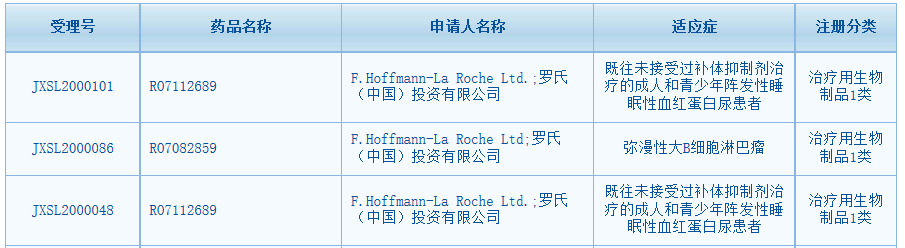
On September 9, Roche received clinical trial approval in China for two new drugs: the CD3/CD20 bispecific antibody RO7082859 (for diffuse large B-cell lymphoma) and the C5 monoclonal antibody RO7112689 (for patients with paroxysmal nocturnal hemoglobinuria).
CD3/CD20 Bispecific Antibody RO7082859
RO7082859 (glofitamab, CD20-TCB) is a novel "2:1" bispecific antibody developed by Roche, comprising two CD20-binding Fab fragments and one CD3ε-binding Fab fragment. This "2:1" CD20-TCB exhibits 10- to 1000-fold higher activity than conventional "1:1" bispecific antibodies.
Data from the Phase I/Ib dose-escalation NP30179 study presented by Roche at ASH 2019 showed that glofitamab, in combination with obinutuzumab, achieved an overall response rate (ORR) of 54% (n=15/28) and a complete response (CR) rate of 46% (n=13/28) in patients with relapsed/refractory (R/R) B-cell non-Hodgkin lymphoma (NHL) across the 0.6 mg to 16 mg dose range. Among patients with follicular lymphoma, the ORR and CR rates were 66.7% (n=4/6) and 50.0% (n=11/22), respectively; among those with aggressive NHL, the ORR and CR rates were 40.9% (n=9/22) and 50.0% (n=11/22), respectively. Across all treatment doses, the most common adverse event was cytokine release syndrome (CRS), with an incidence of 67.9% (n=19/28), mostly Grade 1–2.
In addition to glofitamab, Roche has also developed mosunetuzumab, a CD3/CD20 bispecific antibody, which is currently in Phase I clinical trials globally but has not yet been submitted for approval in China. Additionally, REGN1979 injection, a CD3/CD20 bispecific antibody licensed by Zai Lab for $190 million, has already received clinical trial approval in China (see: Zai Lab’s CD3/CD20 Bispecific Antibody Approved for Clinical Trials in China).
C5 monoclonal antibody RO7112689
Paroxysmal Nocturnal Hemoglobinuria (PNH) is a non-malignant clonal disorder caused by PIG-A mutations, clinically characterized primarily by chronic intravascular hemolysis, bone marrow failure, and recurrent thrombosis. The disease has been included in China’s “First Batch of Rare Diseases Catalogue.”
Currently, the FDA-approved therapies for paroxysmal nocturnal hemoglobinuria (PNH) include Alexion’s complement C5 monoclonal antibody Soliris (eculizumab) and the long-acting C5 monoclonal antibody Ultomiris (ravulizumab). These two drugs generated over $4 billion in revenue for Alexion in 2019. RO7112689 (crovalimab) is a novel recycling antibody that can neutralize C5 for a longer duration compared to traditional antibodies. Additionally, SKY59 can inhibit the R885H mutant, whereas eculizumab shows poor efficacy in patients with this mutation.